Pomegra
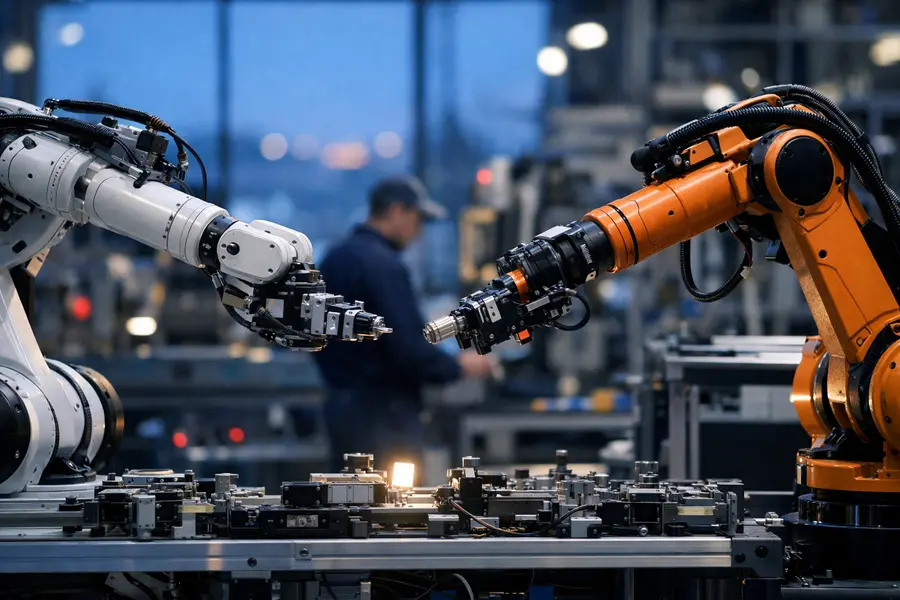
President Trump chose negotiations over immediate tariffs on imported robotics and industrial machinery, giving Commerce and USTR 180 days to report back.
- Trump signed a Section 232 proclamation on Oct. 28, 2026, ordering trade talks on robotics and industrial machinery imports.
- Commerce Secretary Howard Lutnick and USTR Jamieson Greer must report progress within 180 days.
- The proclamation imposes no new duties but keeps tariffs available if the talks fall short.
Lead
President Donald Trump directed Commerce Secretary Howard Lutnick and U.S. Trade Representative Jamieson Greer on Oct. 28 to negotiate with trading partners over U.S. reliance on imported robotics, industrial machinery and their parts and components. The proclamation holds off on new tariffs for now. It requires the two officials to report back within 180 days, which puts the first update in late April 2027.
The proclamation endorses a Commerce Department finding under Section 232 of the Trade Expansion Act of 1962. That finding held that these goods are imported in quantities and under circumstances that threaten to impair national security. Commerce opened the investigation on Sept. 2, 2025.
What Does the Proclamation Actually Require?
The proclamation requires Lutnick and Greer to pursue or continue negotiations with foreign trading partners to adjust imports of the covered goods. It also requires the Commerce Secretary to tell the president if circumstances call for further Section 232 action. The president keeps authority to impose additional import measures, including tariffs, depending on how the talks go.
The text describes robotics and industrial machinery as indispensable to virtually all modern manufacturing, and it says nearly all modern defense systems and critical infrastructure sectors depend on them. It finds that U.S. production falls short of domestic consumption and that the country lacks the capacity to meet rising demand. The White House fact sheet gives no import values, tariff rates or country-specific targets.
Why Did Trump Choose Talks Over Tariffs?
Trump chose negotiations because most U.S. manufacturers depend on foreign-made equipment, and tariffs would raise the cost of the machines used to expand domestic output. Industrial robots and machine tools are capital goods. Duties on them would fall on factories, including the defense and reshoring projects the administration says it wants to encourage.
Supply is also concentrated among U.S. allies. Japan, Germany and South Korea account for roughly 65 percent of U.S. robotics imports, while China supplies about 4 percent. Tariffs would therefore hit treaty partners far more than a strategic rival. Talks give Washington a way to seek investment commitments and market-access concessions from those suppliers before using the tariff threat.
How Does This Fit the Recent Section 232 Pattern?
This is the third consecutive Section 232 case in three months in which the White House has chosen negotiations over immediate duties. A proclamation on Oct. 22 handled wind turbines and their components the same way. A July action covered commercial aircraft and jet engines. In January, semiconductors drew a 25 percent tariff on a narrow set of chip categories, with talks on the rest.
Other sectors have been treated more harshly. Section 232 tariffs are in force on steel, aluminum, automobiles, drones and polysilicon, and drone duties reach as high as 100 percent. The split suggests the administration applies tariffs where it sees a clear adversary supply chain or domestic capacity to protect. It leans toward negotiation where allied suppliers dominate and where input costs weigh on U.S. industry.
What Comes Next for Robotics and Machinery Importers?
Importers face a 180-day period of uncertainty rather than an immediate cost increase. Duties on robotics or machinery could still follow if Commerce reports that the negotiations are not producing satisfactory agreements. The likeliest bargaining targets are the three largest suppliers. Their talks would run alongside existing bilateral trade arrangements and the separate tariff actions on steel and aluminum content.
Purchasing decisions for automation equipment will probably reflect that uncertainty over the coming months. Companies planning large factory automation projects have a six-month window before the first report, and no assurance about the outcome.
Outlook
The proclamation formally classifies robotics and industrial machinery as a national security concern but defers the tariff decision. The first checkpoint is the report due by late April 2027 from Lutnick and Greer. The pattern from the wind turbine, aircraft and semiconductor cases is that a negotiation-first approach leaves duties as a standing option rather than an immediate cost.
Mentioned tickers: None