Pomegra

Microsoft (MSFT) beat first-quarter fiscal 2027 estimates as Azure grew 48%, while $39 billion of capex undershot forecasts and kept AI returns in focus.
- Revenue rose 19% to $92.3B and non-GAAP EPS hit $4.89, ahead of consensus of $90.6B and $4.73.
- Azure grew 48% to $33.2B; cash capex was about $39B against roughly $46B expected.
- Shares rose about 4% after hours, then narrowed to roughly 2.6% in premarket trading.
Lead
Microsoft reported fiscal first-quarter results on Wednesday, Oct. 28, 2026, with revenue up 19% to $92.3 billion and non-GAAP earnings of $4.89 per share. Both beat consensus. Azure revenue grew 48% to $33.2 billion, ahead of the 44% to 45% the company had guided and the roughly 45% the market expected. Cash capital spending of about $39 billion fell more than $6 billion short of the roughly $46 billion forecast. The stock jumped as much as 4% in extended trading, then gave back part of the gain before the next session as investors weighed the cost of the AI build-out against its returns.What Did Microsoft Report for the Quarter Ended Sept. 30?
Microsoft beat on revenue, profit and cloud growth in the quarter ended Sept. 30. Revenue reached $92.3 billion, and operating income rose 21% to $46.2 billion. GAAP net income climbed 32% to $36.6 billion, or $4.92 per diluted share. Non-GAAP net income was $36.4 billion, up 18%.
Microsoft Cloud revenue reached $63.9 billion, up 30%. The company returned $10.2 billion to shareholders through dividends and buybacks. It also reorganized its reporting under new segment names. Agents and Infra generated $76.8 billion, up 25%, while Devices and Consumer slipped 3% to $15.5 billion.Free cash flow was $18.6 billion. Management said the company remains cash flow positive despite the heavy investment cycle.
How Did Azure Grow 48% on Less Spending Than Expected?
Azure grew faster than forecast because Microsoft added capacity more efficiently than the market had modeled. Management cited engineering efficiency gains and new capacity coming online. Azure revenue rose from $22.4 billion a year earlier to $33.2 billion. The company has now beaten its own Azure guidance in consecutive quarters.
The CFO guided to 49% to 50% constant-currency Azure growth in the fiscal second quarter, which implies further acceleration. The pairing of faster growth with lower outlays supports the argument that AI infrastructure is monetizing at a pace that justifies the investment.
Why Did Capex Come In Below the $46 Billion Forecast?
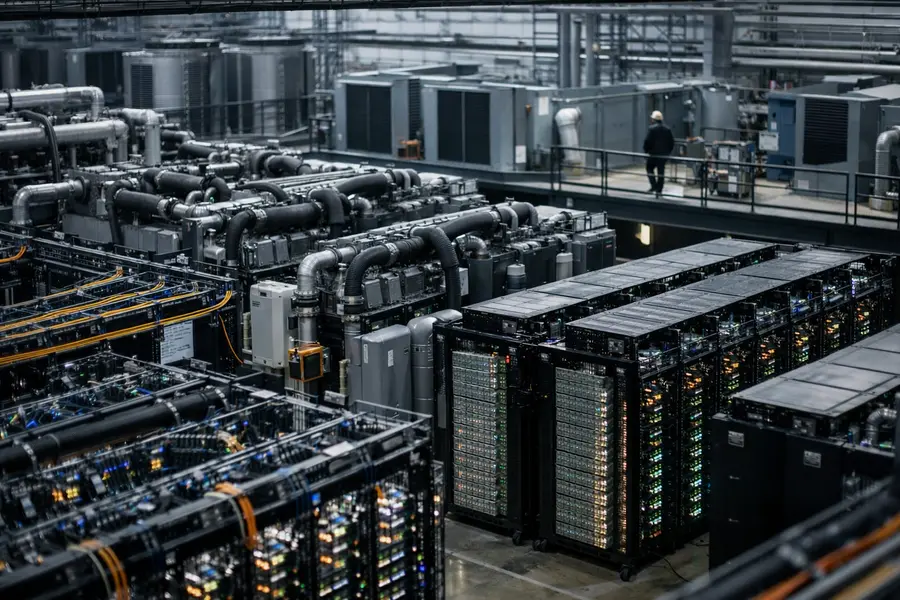
Capex came in lower mainly because of timing in data center deliveries rather than weaker demand. Cash paid for property and equipment was about $39.4 billion. Including finance leases, spending was $45.2 billion, up about 30% from a year earlier. About 75% of the total went to short-lived assets such as GPUs, CPUs and networking equipment.
Management said capex will exceed $50 billion in the December quarter, with spending accelerating through the second half of the year and an annual plan of about $170 billion. The shortfall is therefore a deferral, not a reduction. For suppliers of AI hardware and data center equipment, the lag raised a brief question about hyperscaler order timing. The forward guide largely answered it.
Why Did Shares Give Up Early After-Hours Gains?
Shares pared gains because the quarter sharpened a debate over whether AI spending is producing sufficient profit. MSFT rose roughly 4% to 5% in extended trading after the release, then narrowed to about 2.6% in premarket trading on Thursday. Investors increasingly demand evidence that heavy investment generates durable returns, rather than rewarding spending alone.
Two points tempered the reaction. The first is customer concentration: OpenAI contributed about $10 billion of revenue in the quarter, roughly 11% of the total. The second is the scale of commitments, with capex heading above $50 billion in a single quarter. Against that, Azure growth and free cash flow both exceeded expectations.
Strategic Context: Microsoft Versus Alphabet
The contrast with Alphabet (GOOGL) set the tone for the sector on Thursday. GOOGL fell more than 10% in premarket trading after missing revenue and profit expectations. It also reported a sharp slowdown in core search advertising growth and negative free cash flow. Microsoft's mix of accelerating cloud growth and positive cash generation drew a notably different response, and the divergence shows how the market now sorts ai stocks by cash conversion as well as top-line growth.
Outlook
Microsoft delivered a clean beat, with Azure at 48% and a guide for 49% to 50% next quarter. The $39 billion capex figure reflects timing, with spending set to exceed $50 billion in the December quarter. The next test is whether Azure growth and free cash flow keep pace as outlays step up. Reliance on OpenAI and the fading after-hours gain show that investors want proof of AI returns at each report.