Pomegra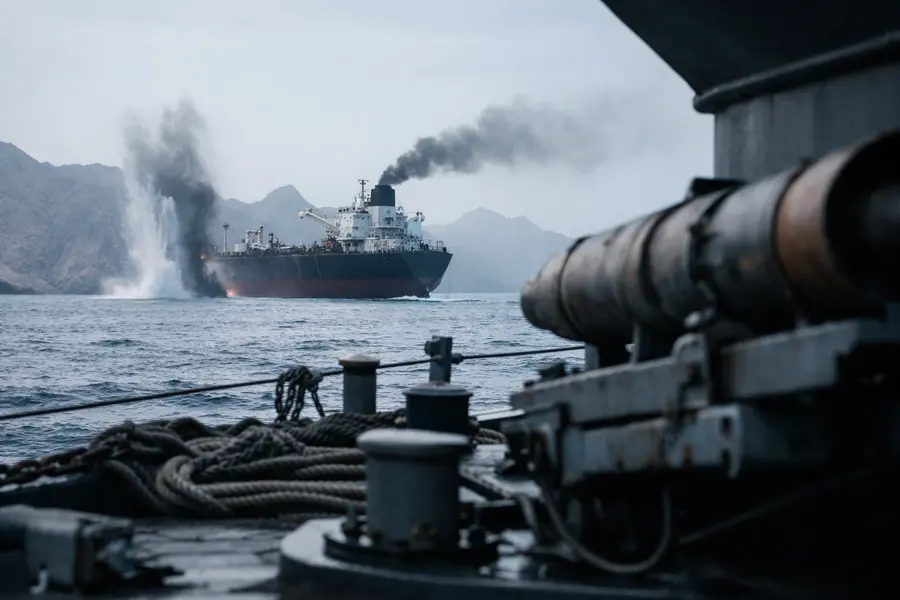
A simultaneous attack on three oil tankers in the southern Strait of Hormuz -- including a supertanker ignited by naval mines -- marks a dangerous escalation of the Gulf conflict and drives crude oil prices to multi-year highs.
- A supertanker struck two naval mines and caught fire in the southern Strait of Hormuz; two additional tankers were hit by projectiles in a coordinated strike.
- Brent crude surged above $120 per barrel, the highest level since 2022, on fears of prolonged supply disruption through the world's most critical oil chokepoint.
- Roughly 20% of global seaborne oil transits the Strait of Hormuz daily, meaning even a partial blockade carries immediate consequences for energy markets worldwide.
Lead
Three commercial vessels were struck in a coordinated attack Monday in the southern Strait of Hormuz, with a fully laden supertanker hitting two naval mines and erupting in flames while two separate oil tankers sustained projectile impacts within the same operational window. Brent crude futures surged 9.4% to breach $120 per barrel by midday London trading -- the highest settlement level in more than three years -- as shipping operators suspended transits and global insurers placed emergency holds on war-risk underwriting for the region.
What Happened in the Strait of Hormuz?
The supertanker, a very large crude carrier (VLCC) estimated to be carrying approximately two million barrels of Gulf crude, detonated two bottom-anchored naval mines roughly 40 nautical miles inside the Strait's southern approach lane before dawn local time. The vessel issued a distress call as fires spread from the engine room to the midship cargo section. Separately, two medium-range tankers -- one transiting toward Asia, another bound for European discharge -- reported projectile impacts to their hull and superstructure within a 90-minute period. All three incidents occurred in overlapping geographic proximity, pointing to coordinated planning rather than opportunistic harassment. The attacks mark a strategic expansion of hostilities that had previously centered on land-based missile strikes, drone campaigns, and targeted port infrastructure -- not the sea lanes themselves.
Why Did Crude Oil Prices React So Sharply?
The Strait of Hormuz is the world's single most critical oil chokepoint, through which an estimated 17 to 21 million barrels of crude and refined products pass daily, representing roughly one-fifth of global petroleum consumption. Previous rounds of Gulf tension produced price spikes that faded as shipping rerouted or insurance markets absorbed the risk premium. Monday's attack differs in kind: naval mines require pre-positioning, specialized maritime knowledge, and indicate a deliberate strategy to deny safe passage rather than simply threaten it. War-risk insurance premiums for Gulf voyages rose an estimated 300 basis points overnight, effectively pricing many smaller operators out of the trade. Major energy companies including ExxonMobil (XOM) and Chevron (CVX) each gained more than 4% in early New York trading, while Shell (SHEL) rose 3.6% in London. The SPDR S&P Oil & Gas Exploration & Production ETF (XOP) advanced 6.1%.
How Does This Affect Global Supply Routes?
The practical rerouting options from the Strait of Hormuz are limited and slow. The Trans-Arabian Pipeline connecting Saudi Arabia's Eastern Province to the Red Sea port of Yanbu carries a maximum of roughly five million barrels per day -- a fraction of normal Hormuz throughput. The Abu Dhabi Crude Oil Pipeline terminus at Fujairah offers a further 1.5 million barrels per day in bypass capacity. Both alternatives were already operating near full utilization prior to Monday's incident. Shipping operators that elect to reroute around the Cape of Good Hope add 10 to 14 additional days of transit time per voyage, tightening tanker availability globally and amplifying the crude oil price marketwatch signal well beyond the immediate conflict zone. Asian refiners, who source the bulk of their crude from the Persian Gulf, face the sharpest near-term cost exposure.
What Do the Mine Deployments Signal About the Conflict's Direction?
Naval mine warfare at scale represents a qualitative shift in the conflict's character. Mines are asymmetric, persistent, and extremely difficult and dangerous to clear -- rendering affected sea lanes effectively closed until professional mine-countermeasure operations are completed, a process measured in weeks rather than days. The move from missile and drone attacks against land and naval assets toward systematic sea denial suggests a deliberate attempt to impose economic costs on a broader coalition of states dependent on Gulf energy, rather than limiting hostilities to direct bilateral exchanges. Western naval forces have begun repositioning assets to the region to support emergency mine-clearing and escort operations, though officials have given no timeline for restoring normal commercial traffic.
Market Reaction
Beyond crude, the shock rippled across asset classes. Gold (GLD) rose 1.8% to $2,890 per troy ounce as investors sought safe-haven assets. The iShares MSCI Emerging Markets ETF (EEM) fell 2.1%, with South Korean and Indian equities leading declines given both nations' acute dependence on Gulf crude imports. Shipping and tanker equities, counterintuitively, saw mixed trading: operators with vessels already outside the zone reported surging spot freight inquiries, while those with vessels trapped inside the Strait faced uncertainty over insurance coverage and safe harbor access.
Outlook
The Strait of Hormuz attacks introduce a new and more dangerous phase of the Gulf conflict, one that directly threatens the physical infrastructure of global energy trade rather than merely its geopolitical backdrop. The immediate pressure point is mine clearance: until naval authorities certify safe transit corridors, commercial operators will remain unwilling to commit vessels regardless of spot freight incentives. Brent crude above $120 per barrel -- sustained over weeks rather than days -- carries material consequences for global inflation trajectories, central bank rate paths, and fiscal positions across energy-importing economies. The near-term trajectory of crude prices will depend less on OPEC+ output decisions than on the speed and credibility of naval mine-clearance efforts and whether attacks on commercial shipping continue or escalate.
Mentioned tickers: XOM, CVX, SHEL, XOP, GLD, EEM