Pomegra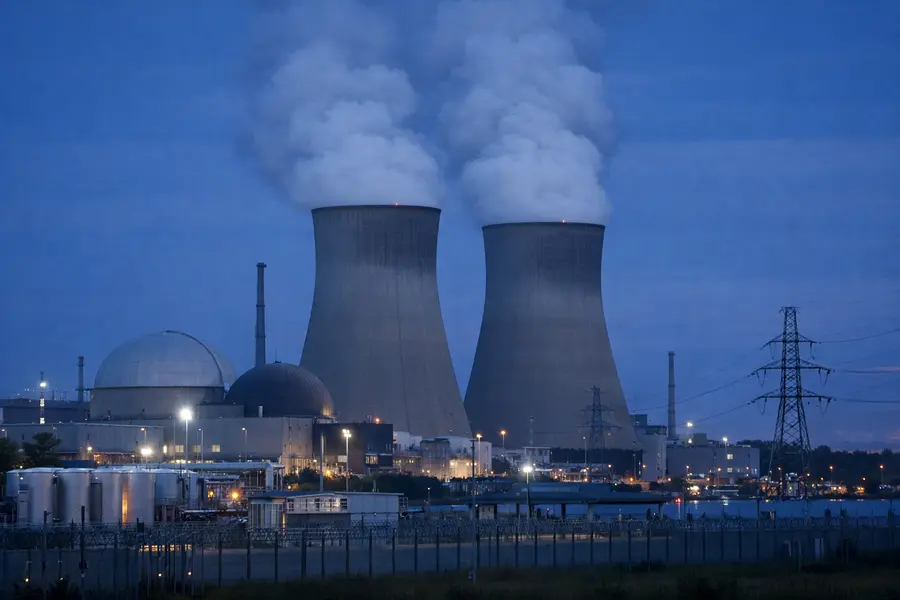
President Trump says Washington is discussing denuclearization with Beijing and Moscow, ahead of a Xi-Trump meeting at next month's APEC summit in Shenzhen.
- Trump said the US is discussing denuclearization with both Russia and China, and called Beijing less inclined to engage.
- China holds roughly 600 warheads, against more than 4,000 each for the US and Russia.
- The Asia-Pacific Economic Cooperation summit in Shenzhen next month is the first likely venue for talks.
Lead
President Donald Trump said on October 15 that the United States is in discussions with Russia and China on denuclearization, and that Beijing is probably less willing to engage because its arsenal is far smaller than those of Washington and Moscow. In an interview with Newsmax, Trump said he would like to denuclearize "if possible" and that the topic is being raised with both governments. The remarks come about a month before the APEC leaders' summit in Shenzhen, where Trump and Chinese President Xi Jinping are expected to meet.
What Did Trump Say About Denuclearization?
Trump said the US is discussing nuclear arms reductions with Russia and China at the same time. He described the talks as exploratory and gave no timetable, format or negotiating positions.
He also said China will reach nuclear parity with the US and Russia within five to six years. The comment frames Beijing's smaller stockpile as the main obstacle to a three-way arrangement. Washington and Moscow have little incentive to cut deeper while China's force is still growing, and Beijing has little incentive to accept limits before it closes the gap.
Why Is China Less Willing to Engage?
China is less willing because it is building toward a credible deterrent and has long refused to join arms control talks as the junior nuclear power. The Pentagon estimates China has about 600 operational nuclear warheads and could reach 1,000 by 2030. The US and Russia each hold more than 4,000 warheads in their total stockpiles.
Chinese officials have consistently said that the two largest arsenals should be reduced first. That position hardened as Beijing expanded its silo-based missile fields and modernized its air and sea-based forces. The pace of China's expansion has been slower in recent years than earlier projections suggested, but the direction has not changed.
Geopolitical Dimension: A Treaty Gap
The talks take place without a binding framework. The New START treaty, the last agreement limiting deployed US and Russian strategic warheads to 1,550 and launchers to 700, expired in February 2026 after reaching its maximum five-year extension. Neither side is now legally capped, and advocates of a larger US arsenal point to China's buildup as justification.
China was never a party to New START, and the rise of a third major nuclear power is the main reason Washington has pushed for a trilateral approach. Russia has said it would consider China's position in any new deal. The three-way structure is harder than the old bilateral one because it requires agreement on how to compare very different force sizes, delivery systems and verification regimes.
What Could Happen at the Shenzhen APEC Summit?
The Shenzhen summit is the most likely setting for the first high-level exchange on the issue. Xi, as host, is expected to attend alongside Trump and Russian President Vladimir Putin. The Kremlin has signaled that Xi may push for a trilateral meeting on the sidelines, and nuclear arms control would be expected to feature on its agenda if it takes place.
APEC is primarily a trade and economic forum, so the nuclear discussion would compete with other US-China priorities, including tariffs, technology export controls and rare earth supply. Strategic stability talks and economic bargaining often move in parallel in US-China diplomacy, and progress on one can affect the other.
Market and Economic Channels
Arms control rarely moves broad markets directly, but it shapes the risk backdrop that investors and corporate planners price in. A credible path to talks would ease concern over a three-way arms race and reduce pressure on defense budgets. A failed summit would reinforce expectations of higher military spending in Washington, Beijing and Moscow, which compete with civilian budgets and add to fiscal pressure.
For companies with exposure to China, the near-term issue is less the warhead count than whether the summit stabilizes the wider relationship. A constructive meeting between Xi and Trump would lower the risk of new tariffs or export restrictions in the following three to six months. A breakdown would raise it.
Outlook
Trump's comments confirm that nuclear arms control is on the agenda for the Shenzhen summit, but the gap between the three arsenals remains the central obstacle. China's roughly 600 warheads, against more than 4,000 each for Washington and Moscow, leave Beijing with little reason to accept limits soon. The most realistic near-term outcome is an agreement to begin structured dialogue rather than any cuts. The Xi-Trump meeting next month will show whether that is within reach.
Mentioned tickers: None