Pomegra
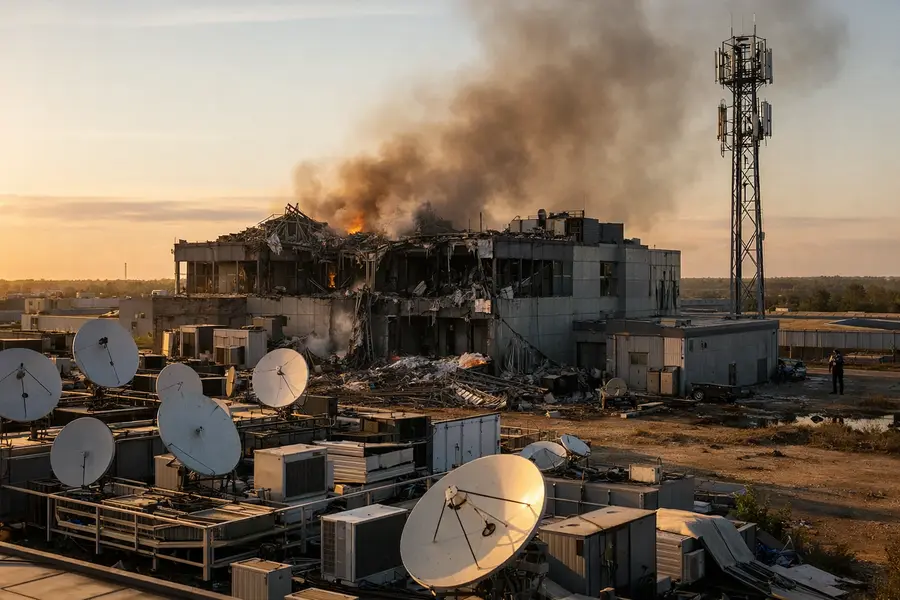
Yandex withdrew its 2026 revenue forecast after Ukrainian drone strikes on its data centers, as Russia launched 112 attack drones at Ukraine overnight.
- Yandex withdrew 2026 guidance of about 20% revenue growth and 350 billion rubles of adjusted EBITDA on October 29.
- Third-quarter revenue rose 12% to 411 billion rubles, but October strikes on data centers clouded the outlook.
- Russia launched 112 drones at Ukraine overnight; Ukrainian air defense downed 97 of them.
Lead
Yandex (YDEX), Russia's largest technology company, withdrew its 2026 financial guidance on Thursday, October 29. It cited the effect of Ukrainian drone strikes on its data centers earlier this month. The company had projected revenue growth of roughly 20% for the year and adjusted EBITDA of 350 billion rubles (about $4.3 billion). It said the attacks created "additional external factors" that make the rest of the year hard to assess. Its shares fell about 1.3% on the Moscow Exchange.The announcement came the same day Russia sent 112 attack drones across Ukraine in an overnight barrage. The two events show how the drone war now cuts both ways, reaching civilian digital infrastructure inside Russia as well as Ukrainian cities.
What Did Yandex Report for the Third Quarter?
Yandex reported consolidated third-quarter revenue of 411 billion rubles ($5.1 billion), up 12% from a year earlier. Adjusted EBITDA rose 12% to 88 billion rubles ($1 billion). Adjusted net profit rose 2% to 46 billion rubles ($571 million).
Search and AI revenue grew 4% to 144.7 billion rubles ($1.8 billion). Urban mobility and logistics, which covers ride-hailing, delivery and related services, grew 11% to 222.7 billion rubles ($2.7 billion).
The quarter covered July to September, before the strikes. The results therefore show the business at full operating strength, while the withdrawn guidance reflects what came after. Yandex said it will consider resuming forecasts from next quarter.
What Happened to Yandex's Data Centers?
Ukrainian drones struck three of Yandex's six data centers over roughly a week in early October. The reported locations were Sasovo in the Ryazan region, Kaluga and Vladimir. The outages disrupted ride-hailing, car-sharing, food delivery, maps, email, banking and streaming. Government and private services that depend on Yandex infrastructure were affected as well.
By late October, Yandex said key functions of all its services were available. Full restoration was still under way. Industry estimates put the replacement of damaged equipment at about six months, and that timeline is the main reason management cannot give a reliable full-year view.
How Did Russia's Overnight Attack on Ukraine Unfold?
Russia launched 112 drones at Ukraine overnight on October 28-29, and air defenses destroyed or jammed 97 of them. The wave included 40 jet-powered Shahed drones, along with Gerbera and Parodiya decoy drones. The launches came from Oryol and Millerovo in Russia and from occupied Donetsk.
Drones struck seven locations, and debris from downed aircraft fell on five more. Ukraine's air force used aircraft, anti-aircraft missile units, electronic warfare, unmanned systems and mobile fire groups in the response. Jet-powered Shaheds fly faster than the propeller-driven versions, which shortens warning times and puts more strain on interceptors.
Why Does This Matter for Russian Markets?
Yandex is a heavyweight in the MOEX Russia index and one of the few Russian companies with a consumer technology business at scale. A withdrawn forecast from a company of that weight signals that physical attacks on infrastructure now affect corporate earnings. The 1.3% share decline was modest, which suggests investors had already priced in some operational risk.
The channel is direct. Data centers are concentrated, costly to replace and dependent on imported hardware that is hard to source under sanctions. Yandex has six data centers and lost the use of half of them for a time. That points to limited redundancy, and a repeat strike could cause longer outages than the October ones.
Yandex's services touch daily commerce for millions of Russians. Any prolonged degradation in mobility, delivery or payments flows would feed through to consumer activity and to the company's advertising and fintech revenue.
What Are the Strategic and Geopolitical Dimensions?
Ukraine has widened its target set from refineries and military sites to civilian-facing digital infrastructure. Russia has attacked Ukrainian energy and urban targets with drones at scale for years. Each side now treats the other's economic nodes as legitimate pressure points, and the economic cost is rising for both.
For Russia, the strikes expose a vulnerability in air defense far from the front line. The three struck regions lie in central Russia, hundreds of kilometers from Ukraine. For Ukraine, the nightly barrages continue to demand heavy interceptor use against relatively cheap drones, including the jet-powered models that are harder to stop.
What Comes Next for Yandex and the War's Economic Front?
Yandex's next steps depend on how quickly it replaces damaged equipment and whether further strikes land. The six-month replacement estimate puts full recovery in the first half of 2027. Management has signaled it may reinstate guidance with the next quarterly report, but that depends on the security situation. Investors will watch whether the company shifts workloads to its remaining facilities and whether it adds redundancy.
Over a three-to-twelve-month horizon, expect technology and cloud operators in Russia to disperse capacity and harden sites. Insurance costs and capital spending are likely to rise. On the Ukrainian side, large drone raids will continue to test air defenses, and each side's strikes will keep widening the war's economic footprint.
Outlook
Yandex's withdrawn forecast is among the clearest corporate signs that drone strikes inside Russia carry measurable earnings consequences. Third-quarter revenue growth of 12% shows the underlying business remains healthy. The 2026 outlook now depends on repairs, on the security of its remaining data centers and on the course of a war in which both sides are hitting economic targets.
Mentioned tickers: YDEX