Pomegra
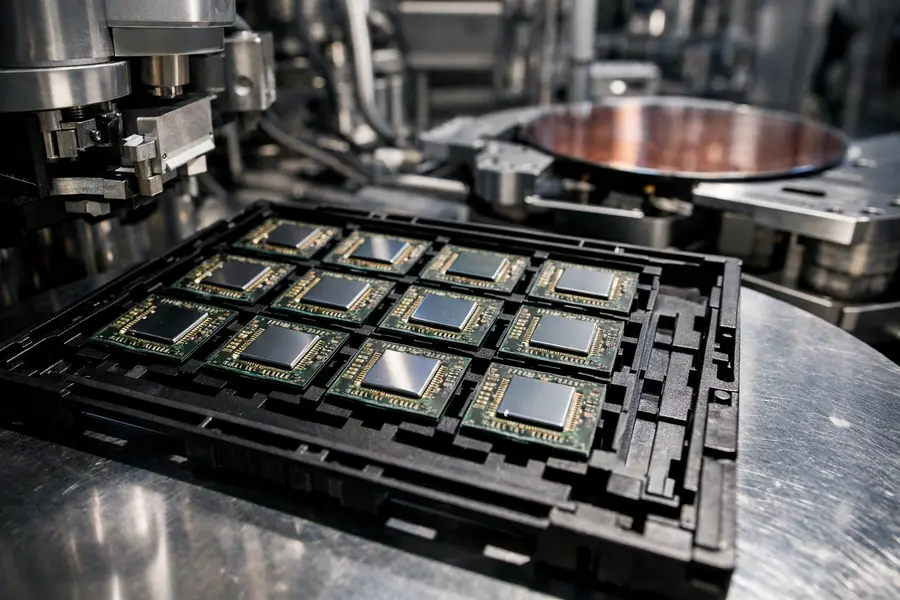
Intel (INTC) shares fell about 25% premarket after a $15-16 billion Q4 revenue forecast missed estimates, with PC demand weakening and free cash flow set to stay negative.
- Intel guided Q4 revenue to $15-16 billion, against consensus of about $17.07 billion.
- Shares fell about 25% premarket Friday from a $92.07 Thursday close.
- Management expects no positive free cash flow in 2027 and PC weakness through the first half of that year.
Lead
Intel (NASDAQ: INTC) shares dropped roughly 25% in premarket trading on Friday, October 30, after the chipmaker projected fourth-quarter revenue of $15 billion to $16 billion, well below the $17.07 billion Wall Street expected. The stock had closed at $92.07 on Thursday and traded near $70 in extended hours, erasing about $115 billion in market value. The sell-off came despite a third-quarter beat: revenue rose 21% year over year to $16.5 billion, and non-GAAP earnings per share came in at $0.52 against an expected $0.40.What Did Intel Report for the Third Quarter?
Intel's third-quarter results exceeded its own guidance, led by data center demand. Revenue reached $16.5 billion, with non-GAAP gross margin at 44.1%. Adjusted free cash flow was $1.6 billion on operating cash flow of $5.1 billion and capital spending of $4.2 billion.
The segments diverged sharply:
- Data Center and AI: revenue rose 78% to $7.3 billion, which management called its strongest data center growth in 15 years.
- Intel Foundry: revenue rose 58% to $6.7 billion.
- Client Computing: revenue fell 5% from a year earlier to $8.1 billion, a 9% drop from the prior quarter.
The data center surge puts Intel among the AI stocks benefiting from infrastructure spending. That strength was not enough to offset the outlook for the PC business and a manufacturing disruption.
Why Did Intel's Guidance Disappoint?
Intel's fourth-quarter outlook fell short because of three pressures arriving together: weak PC demand, constrained supply and a factory shutdown in Israel.
Non-GAAP gross margin is guided to 38%, about six points below the third quarter. Non-GAAP earnings per share are guided to $0.25.
- PC demand: Management cited a memory-chip shortage that has raised system costs and weakened orders, alongside limited corporate IT budgets. It expects the slowdown to last at least through the first half of 2027 and projects the PC market to shrink roughly 10% in unit terms next year. Management said it does not expect a sustained recovery until memory availability improves and pricing normalizes.
- Fab 28 in Israel: An explosion on October 14 killed two workers and shut the Kiryat Gat facility for about two weeks. The outage removes roughly $300 million from fourth-quarter revenue and about 200 basis points from gross margin. A similar revenue hit is expected in the first quarter. The plant mainly makes older-generation server products.
- Supply limits: Substrate and wafer availability is capping data center shipments. Additional Intel 3 capacity in Oregon is not due until the second half of 2027, so supply stays tight through the first half.
What Is the Cash Flow Warning?
Intel's chief financial officer said 2027 is unlikely to produce positive free cash flow, which is the cash left after capital spending. Gross capital spending is on track for about $20 billion in 2026 and is expected to rise next year as the company ramps its 18A, Intel 3 and 14A manufacturing processes at once. Equipment orders rose nearly 40% from the prior quarter.
The message to investors is that the foundry build-out will absorb more cash before it pays back. Management described 2027 as an investment year. It also reported that 18A yields are improving at double-digit rates, that costs have fallen about 40% since the first quarter, and that a preliminary design kit for the 14A process has gone to select customers.
How Did the Market React?
The reaction was severe but followed a large run-up. After the premarket drop, Intel remains up roughly 86% for 2026. The stock fell to around $70.39 in overnight trading, a decline of about $21.69 per share, or 23.6%.
The move reflects a shift in what the market is pricing. A year of gains rested on foundry credibility and AI-driven server demand. The guidance showed that the legacy PC business and near-term supply constraints still drive reported results. The memory shortage also extends beyond Intel and affects the broader PC supply chain.
What Comes Next for Intel?
Intel's near-term path depends on three variables: memory supply, data center capacity and foundry execution.
- Memory: PC shipments are unlikely to recover until memory pricing eases, and management is not optimistic about next year.
- Capacity: Server revenue growth is limited by supply rather than demand until new Oregon capacity arrives in the second half of 2027.
- Foundry: Progress on 18A and 14A, including external customer commitments, will shape whether the heavy 2027 capital spending is viewed as a growth investment or a drag.
The Fab 28 restart timeline also matters, since the first-quarter hit is expected to match the fourth-quarter shortfall.
Outlook
Intel delivered a third-quarter beat and the fastest data center growth in 15 years, but a $15-16 billion fourth-quarter forecast, 38% gross margin guidance and a no-free-cash-flow outlook for 2027 reset expectations. The stock's roughly 25% premarket fall reflects a PC market under memory pressure and a capital-intensive foundry build-out that will not self-fund next year. Later reports will show whether supply additions and 18A customer wins can offset the client slump.
Mentioned tickers: INTC