Pomegra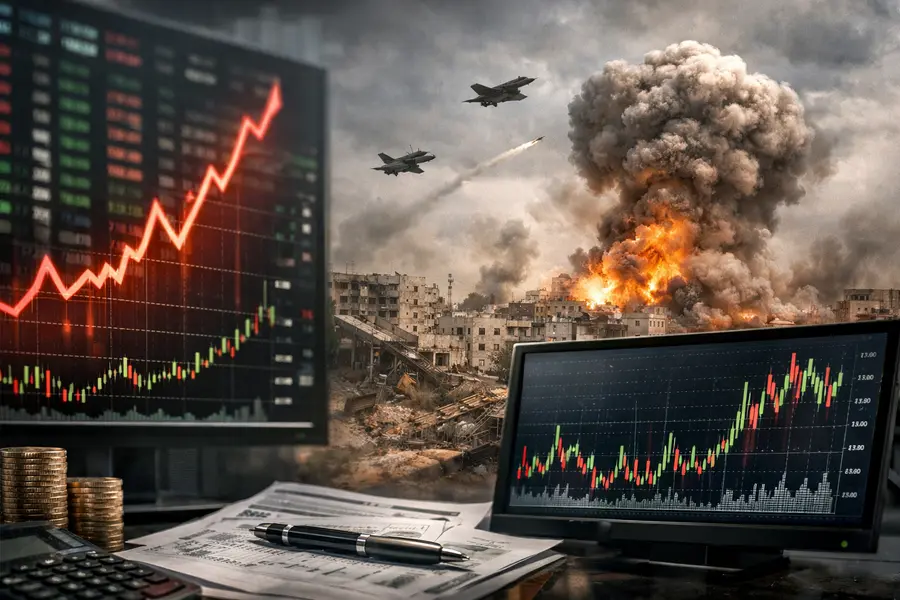
The S&P 500 extended losses and the VIX climbed back above 18 as the collapse of the U.S.-Iran ceasefire reignited oil-price inflation fears and pushed Brent crude toward $88 a barrel.
- The VIX surged roughly 14% in a single session to 18.77, signaling the sharpest spike in investor anxiety since early 2026.
- The S&P 500 shed 0.79% to 7,515 on July 13 and lost another 1.01% to 7,458 on July 17 as Iran conflict fears deepened.
- Brent crude briefly topped $90 a barrel on July 20 before easing to $87.77, keeping U.S. gasoline at $4 per gallon.
Lead
Washington, July 20 — The CBOE Volatility Index, or VIX, climbed to 18.38 in early Monday trading, capping a weekly surge of nearly 9% as investors repriced geopolitical risk after President Donald Trump declared the U.S.-Iran ceasefire "over" at a NATO summit in Turkey. The S&P 500 has shed more than 1.5% across two sessions, erasing gains accumulated during a brief diplomatic truce and sending Treasury yields to 4.57% — 19 basis points higher than a week prior.
What Happened
The immediate trigger was a series of Iranian attacks on commercial shipping in the Strait of Hormuz, the narrow waterway through which roughly 20% of global oil passes. Iran's Revolutionary Guard said it struck and disabled two supertankers; the UAE confirmed Iranian missiles hit two of its vessels in Omani territorial waters, killing one crew member. The U.S. military responded with approximately 90 airstrikes across Iranian territory — the ninth consecutive night of strikes — and simultaneously reinstated a naval blockade on ships transiting to and from Iranian ports.
Trump's declaration that the ceasefire signed in June was no longer operative formalized what energy markets had already begun pricing: a sustained disruption to global oil supply. The original memorandum of understanding, reached June 17 between Trump and Iranian President Masoud Pezeshkian, had sent the VIX back to pre-conflict levels and briefly lifted the S&P 500 to record territory.
Market Reaction
The stock market today reflects a sharp shift from the complacency that defined trading in late June and early July. The S&P 500 closed at 7,515.34 on July 13 — down 0.79% — then fell a further 1.01% on July 17 to 7,458. Brent crude surged 9.59% to $83.30 a barrel in the initial post-ceasefire session, its largest single-day move in six years, and extended gains toward $90 on July 20 before easing to $87.77 as Iranian intermediaries signaled a willingness to resume negotiations.
The VIX, which had retreated to pre-conflict levels following the June truce, reversed course dramatically. It climbed to 18.77 — a 12.19% single-session move on July 13 — and has remained elevated, reflecting a market in which options traders are paying up for downside protection. A three-month VIX measure, VIX3M, traded at 19.46 on July 9, confirming that forward volatility expectations are anchored well above recent complacent lows.
Semiconductor stocks amplified the selloff, with the sector posting its steepest drop in months on July 17. The slide reflected dual pressures: geopolitical risk sentiment and renewed concern that AI infrastructure spending by major hyperscalers may decelerate following efficiency gains demonstrated by Chinese AI models.Strategic Context
The Strait of Hormuz has now been disrupted twice in 2026, drawing comparisons to historical oil shocks that embedded inflation expectations for years. U.S. gasoline prices crossed $4 per gallon again on Monday — a psychologically and politically sensitive threshold — having briefly retreated below that level during the ceasefire period. The reacceleration of oil prices complicates the Federal Reserve's posture: markets had expected rate relief in the second half of 2026, but 10-year Treasury yields climbing to 4.57% suggest bond investors are reassessing that outlook.
The broader equity market, however, has proved more resilient than commodities. Equity vol remains meaningfully below commodity volatility measures, suggesting institutional investors are treating the conflict as an event risk rather than a structural shift in corporate earnings fundamentals. Oil volatility has exceeded 50%, while equity volatility — though elevated — is anchored in the high-teens rather than the 30+ levels associated with recession fears.
Geopolitical Dimension
The conflict carries features that extend beyond the immediate price channel. The U.S. has confirmed three American service member deaths in recent operations, a development that constrains diplomatic flexibility domestically while increasing pressure for military escalation. Iran's posture — publicly stating no oil, gas, or chemical fertilizer will transit the strait while simultaneously allowing intermediaries to signal openness to talks — is consistent with a strategy of calibrated pressure rather than all-out war.
The NATO summit backdrop complicates alliance politics. European members, heavily dependent on global LNG and oil flows, face an uncomfortable choice between diplomatic engagement with Tehran and solidarity with Washington's military campaign. Energy security has returned as a central European policy concern, reversing the complacency that had set in during the ceasefire window.
What Comes Next
The market's near-term trajectory is unusually binary. A credible diplomatic signal — such as a formal re-engagement between U.S. and Iranian negotiators — would likely push Brent crude back toward $80, relieve VIX pressure, and allow the S&P 500 to recoup recent losses. The prior ceasefire announcement produced the S&P 500's best single day since April 2025, with the Dow jumping 1,300 points.
Conversely, further escalation — particularly any disruption affecting the physical flow of tankers — would test both oil-supply buffers and equity market resilience. ETF flows into energy and volatility-linked products have already accelerated, suggesting institutional positioning for a prolonged period of elevated risk.
Outlook
The "ceasefire is over" narrative has fundamentally reset the geopolitical risk premium embedded in VIX and energy prices. Until a credible off-ramp emerges, the stock market today faces a dual headwind: energy-driven inflation that delays monetary easing, and a VIX floor that compresses risk appetite. The S&P 500 at 7,458 is pricing a scenario in which the conflict remains contained; any material escalation in Hormuz shipping disruptions would challenge that assumption.