Pomegra
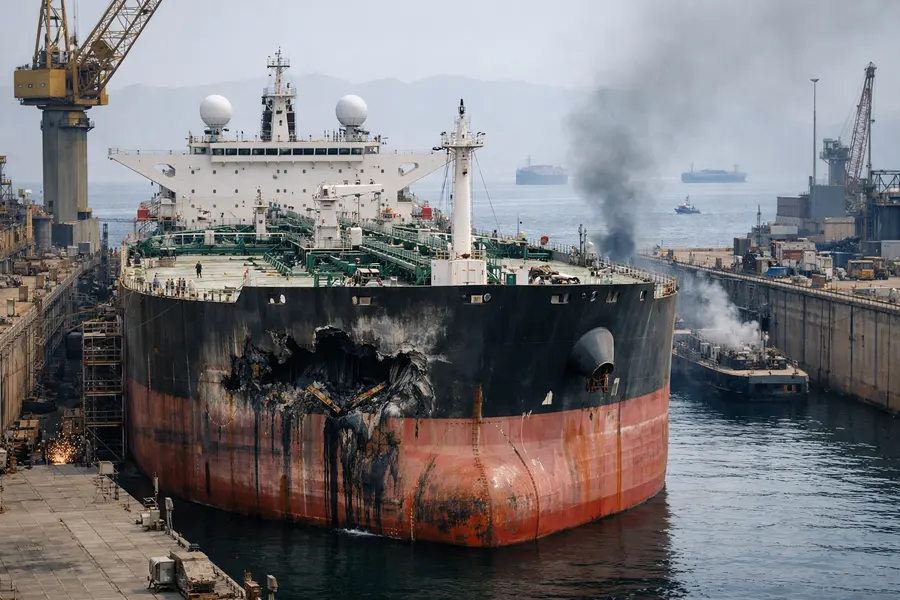
Attacks on Strait of Hormuz shipping hit a weekly record as Iran claims two supertankers struck mines and the US and Iran both assert control of the waterway.
- UKMTO logged at least 10 vessels attacked in seven days, the highest weekly count since the war began on February 28.
- Iran's Revolutionary Guards say two supertankers hit mines over the weekend. No independent maritime authority has confirmed it.
- Brent closed at $109.86 on Friday, up 3.7% on the week, and traded near $108 on Monday.
Lead
Attacks on commercial shipping in and around the Strait of Hormuz reached a record pace in the week to October 16. The UK Maritime Trade Operations centre counted at least 10 vessels attacked in seven days, and 23 incidents since the start of October, nearly double the usual rate. Iran's Islamic Revolutionary Guard Corps (IRGC) said a supertanker carrying more than 2 million barrels of crude hit a naval mine and caught fire, followed by a second on Saturday. The US and Iran both say they control the strait, which carried about a quarter of global seaborne oil and LNG trade before the war.
What Happened in the Strait of Hormuz This Week?
Attacks intensified and moved geographically, with a series of strikes on tankers, one confirmed sinking and two mine incidents claimed by Iran.
The IRGC navy said the first supertanker exploded and caught fire after striking a mine on a route Tehran had not authorised. It said the vessel had switched off its tracking and radar and was moving with US military support. The IRGC then said a second supertanker took a mine strike that caused a large explosion in its engine room. The Guards did not name either ship or give crew or damage details. The claims remain unconfirmed.
Other incidents were better documented. A tanker was struck by an unidentified projectile off Saudi Arabia, and a second was hit by a rocket-propelled grenade off Al Jubayl. Crews were reported safe in both cases. The cargo ship M/V GFS Pride sank after what Iranian media described as a mine strike.
Most attacks since early July occurred off Oman. This week's incidents shifted west and north toward the Saudi coast. UKMTO has said many attacked vessels decline to report incidents and that ships going dark on tracking systems makes counts unreliable. The true number is likely higher than the record logged.
Who Controls the Strait of Hormuz?
Both Washington and Tehran claim control, and the competing claims rest on different measures.
US Central Command says the strait is controlled by the United States and its regional partners, not Iran. It reports about 400 ships transited in the past week, including 125 outbound and 129 inbound passages in the seven days to October 13, moving roughly 100 million barrels of oil. The US has expanded flows through a shuttle system coordinated with Arab states. It also says its blockade has cost Iran about $25 billion in oil exports.
Iran's leadership disputes that account. Its acting defence minister has warned that US bombs "will explode elsewhere", pointing to the US economy and Washington's electoral calculations. The mine claims are meant to show that Tehran can still deny passage on routes it has not approved. Independent trackers present a more restrictive picture than US figures. IMF PortWatch recorded only a handful of daily transits in mid-October against a pre-crisis baseline of about 85 a day.
How Is the Crude Oil Price Reacting?
The crude oil price has climbed back toward its wartime highs. Brent settled at $109.86 a barrel on Friday, its first close near $110 since May. It had traded at $102.94 on October 9 and topped $108 on September 24. On Monday it eased about 1.7% to near $108 as traders weighed the unverified mine claims against signs that shuttle traffic continues.
Physical flows lag the headline picture. Oil moving through the strait is about 11.6 million barrels a day, against 17.1 million before the war. War-risk insurance premiums and freight rates stay elevated, so the cost of moving a cargo rises even when it reaches its destination. For importers in Asia and Europe, the added cost of insurance and rerouting reaches fuel prices with a delay.
Geopolitical Dimension
The strait is a chokepoint only 21 miles wide at its narrowest. Mines are cheap to lay and costly to clear, and they can disrupt traffic long after hostilities ease. A single confirmed mine strike on a loaded supertanker would raise insurance costs sharply and could push more owners to avoid the route. That would shrink the shuttle system the US has built.
The politics are close at hand. US midterm elections are on November 3, and gasoline prices are a central issue for the White House. Iran's naval pressure aims at that vulnerability. Washington faces a trade-off between escalating military action, which risks further supply disruption, and tolerating attacks that keep prices high.
What Comes Next for Hormuz Shipping?
Near-term outcomes depend on whether the IRGC mine claims are confirmed and whether attacks continue to spread along the Saudi coast. Confirmation would likely lift insurance premiums and the risk premium in Brent. Evidence that the claims were exaggerated, together with steady US-escorted transits, would let the oil price retreat toward the low $100s. Over the next three to twelve months, mine clearance, insurance availability and the durability of the shuttle system matter more to energy supply than any single incident.
Outlook
Hormuz attacks are running at their highest rate since the war began, and both governments are publicly claiming control of a waterway that is still operating well below normal capacity. Brent near $108 reflects a market pricing sustained disruption rather than a resolution. The November 3 US elections and any independent verification of the mine strikes are the next points that could shift the outlook.
Mentioned tickers: none