Pomegra
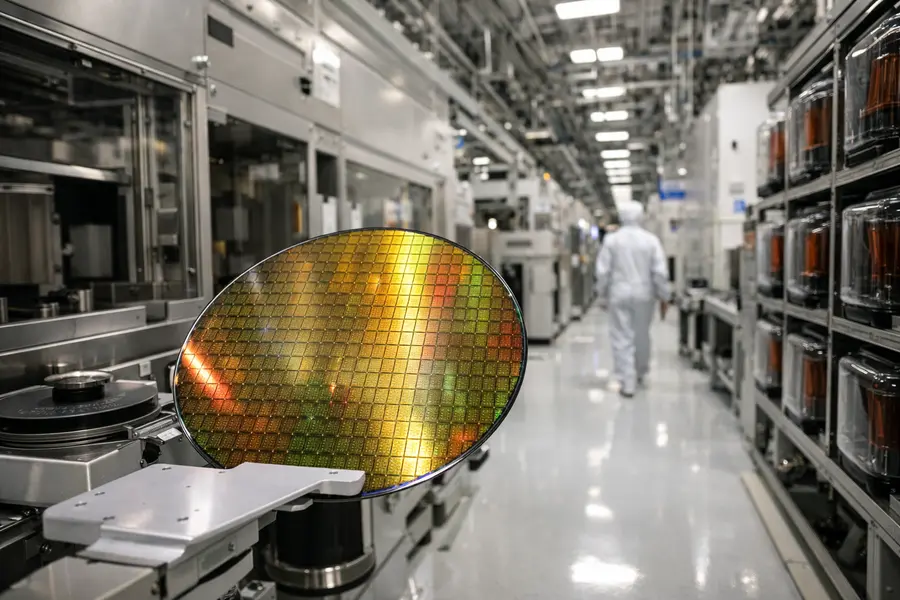
TSMC's record third-quarter profit rose 68.7% on AI demand, yet US-listed shares slipped as margins narrowed and Terafab talks with Elon Musk stayed unresolved.
- TSMC net income rose 68.7% to NT$763.06 billion, a sixth straight quarterly record.
- Gross margin slipped to 66.4% from 67.7% as the 2-nanometer ramp diluted returns.
- The company confirmed early talks on Musk's Texas Terafab but insists any TSMC fab be run by TSMC.
Lead
Taiwan Semiconductor Manufacturing Co. (TSM) reported a 68.7% rise in third-quarter net income to NT$763.06 billion (about $24 billion) on October 15. Revenue climbed 50.9% to NT$1.49 trillion, or roughly $46.7 billion. Even so, its New York-listed American depositary receipts fell about 2% to around $422, in a session that also hit other chip names. On the same call, the company confirmed for the first time that it is in early discussions over Musk's planned "Terafab" complex in Texas.What Did TSMC Report for the Third Quarter?
TSMC posted diluted earnings of NT$29.43 per share, or $4.60 per ADR, ahead of the roughly $4.45 consensus. Revenue topped the upper end of the company's July guidance of $44.6 billion to $45.8 billion.
The gross margin was 66.4%, inside the 65% to 67% guidance range but down 130 basis points from the second quarter. Management attributed the decline to the steep ramp of 2-nanometer production, which carries higher initial costs. Operating margin was 58.7%.
For the fourth quarter, TSMC guided revenue of $52.3 billion to $54.3 billion, about 14% above the third quarter at the midpoint. Gross margin is guided to 65% to 67%. Full-year 2026 revenue growth is expected near 44% in dollar terms. The company lifted its 2026 capital budget to $60 billion to $64 billion from $52 billion to $56 billion, and said spending in 2026 through 2028 will be significantly higher than in the previous three years.
Why Did TSMC Shares Fall Despite Record Profit?
TSMC's ADRs fell because investors focused on margin dilution and rising capital spending rather than the earnings beat. The stock had already slipped ahead of the report, and the results arrived during a broad pullback in semiconductor shares, with Intel and AMD also lower.
Expectations were elevated. After six consecutive record quarters, a modest decline in gross margin and a larger capex bill outweighed a revenue beat. Higher spending on advanced nodes and packaging supports growth, but it also lengthens the period before those investments earn their cost of capital. For investors tracking ai stocks, the session showed that supply-chain leaders are priced for near-flawless execution.
Chairman C.C. Wei said the underlying business remains strong. "The AI market continues to be very strong," he said on the call. "The demand, actually, is still far above our capability today to supply, and we're working very hard to narrow the gap."
What Are the Terafab Talks Between TSMC and Elon Musk?
TSMC confirmed it is in early discussions with Terafab, the AI chip manufacturing complex that Musk's companies plan to build in Grimes County, Texas. Wei said TSMC has sent teams to evaluate Texas as a site for expansion beyond its Arizona operations, and that the plan is still under deliberation.
The sticking point is control. Wei said a plant in Texas must be run by TSMC. Musk wrote on X on October 7 that "we will build and run the fab," and has indicated TSMC could potentially sublease part of the facility. The two positions have not been reconciled, and no agreement has been announced.
The dispute reflects a structural issue. TSMC's advantage rests on tightly managed process control, yield learning and a closely held operating model, which it has been reluctant to hand to a partner. Musk's ambitions, meanwhile, centre on securing a domestic supply of custom AI silicon for Tesla (TSLA) and SpaceX, as demand for chips outstrips what existing foundries can deliver.
Strategic Context: Capacity, Geography and Control
TSMC already operates an expanding campus in Arizona, part of a US push to diversify advanced chip production away from Taiwan. A second US hub in Texas would deepen that footprint and place TSMC closer to large US customers, though it would also raise capital commitments at a time when margins are under pressure from the 2-nanometer transition.
For Musk, TSMC's participation would bring a proven manufacturing process to a project that has no established production record. For TSMC, the question is whether lending its technology and name to a facility it does not control is worth the risk to its operating model. Customers such as Nvidia (NVDA) and Apple (AAPL) depend on TSMC's consistency, a factor that weighs against a shared-governance arrangement.
What Comes Next for TSMC and the Chip Sector?
The next checkpoints are TSMC's fourth-quarter results in January, where guidance implies revenue of roughly $53 billion at the midpoint, and any formal announcement on a Texas site. Gross margin will be the main variable, since the 2-nanometer ramp is expected to keep dilution at around 40 basis points in the fourth quarter.
On Terafab, a deal on TSMC's terms would extend its US manufacturing footprint, while a failure to agree on control would leave Musk to build with other partners or on his own, at a slower pace. Either outcome shapes how much leading-edge capacity is available outside Taiwan over the next several years.
Outlook
TSMC enters the final quarter of 2026 with record earnings, a strong revenue forecast and a capital budget that has risen to as much as $64 billion. The market reaction shows that, at current valuations, the focus has shifted from growth to margin and spending discipline. The Terafab talks add a potential second US expansion, but the dispute over who runs the fab remains unresolved.
Mentioned tickers: TSM, TSLA, NVDA, AAPL, INTC, AMD