Pomegra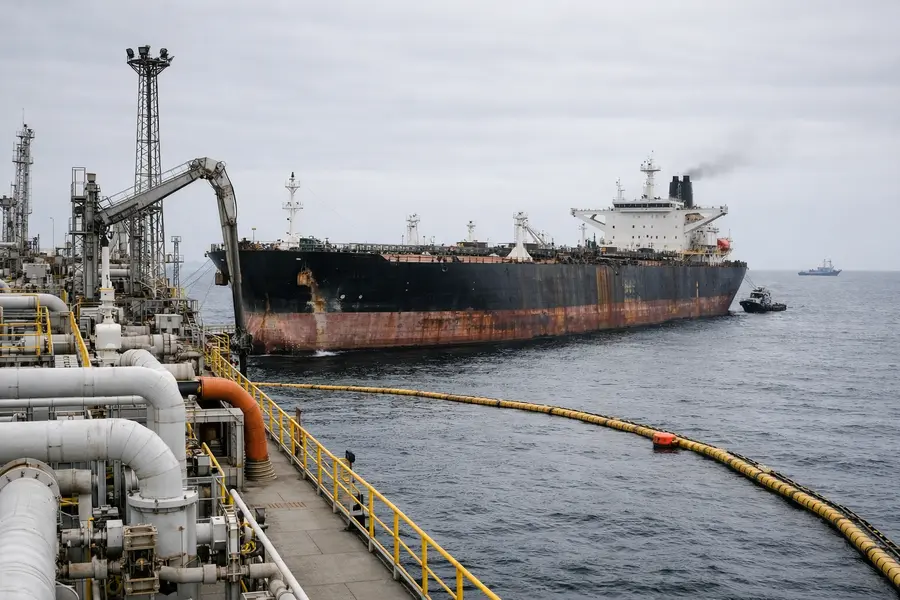
The Trump administration is weighing sanctions relief for shadow fleet tankers to curb record freight rates, days after a Russian diesel sanctions waiver.
- Washington is considering letting sanctioned tankers carry non-sanctioned oil under Treasury authorization to lower record freight rates.
- The move follows General License 135, which suspended sanctions on Russian diesel until April 7, 2027.
- Roughly 24 of 160 sanctioned supertankers could realistically return to mainstream trade, limiting the likely relief.
Lead
The Trump administration is considering easing sanctions on so-called shadow fleet tankers to bring down record global freight rates. The proposal was disclosed on October 14. Under the plan, vessels previously sanctioned for carrying Russian, Iranian or Venezuelan oil could haul "legal" cargoes, meaning crude and products not themselves under sanctions. Companies wishing to charter them would first need approval from the US Treasury Department. The proposal comes less than a week after Washington authorized the sale and import of Russian diesel, and less than three weeks before the November 3 midterm elections, in which fuel costs are a central political risk for Republicans.
What Is the Administration Proposing?
The administration is proposing a licensing channel that would let sanctioned ships carry non-sanctioned fuel, without lifting the underlying restrictions on Russian and Iranian barrels. Energy Secretary Chris Wright said at the World Petroleum Congress in Riyadh that the government was discussing easing sanctions on shadow fleet vessels to cut record freight rates. No formal Treasury guidance has been published.
The shadow fleet is a loose network of older tankers, often with opaque ownership and limited insurance, that grew up to move sanctioned oil outside Western shipping and finance systems. Tanker rates have climbed to records as the wars involving Iran and Ukraine have disrupted energy flows. US crude has become too expensive for many Asian refiners, who are instead sourcing from the Middle East and Latin America, which lengthens voyages and tightens vessel supply.
How Does This Follow the Russian Diesel Waiver?
The shadow fleet idea extends a policy shift that began on October 9. After a call with Russian President Vladimir Putin, President Trump announced that Russia would supply diesel to the US and global markets: 300,000 tonnes immediately, 500,000 tonnes in November and 1 million tonnes after that. The Treasury's Office of Foreign Assets Control then issued General License 135, authorizing the sale, delivery, offloading and import of Russian-origin diesel until April 7, 2027.
Fuel prices explain the urgency. The US national average for diesel reached a record $6.52 a gallon in September and stands near $6.20, more than double the level a year earlier. Russian diesel exports have also shrunk sharply, from about 850,000 barrels a day in the first quarter to 690,000 in the second and 190,000 in the third, so the waiver targets supply that has already been lost. Ukrainian President Volodymyr Zelenskiy called the diesel decision a "weak decision by strong partners" that plays into Russia's hands.
Will It Actually Lower Freight Rates?
Probably only marginally. Market participants have concluded that removing sanctions does not automatically create usable shipping capacity. Kpler tracks about 160 supertankers under US sanctions, roughly 22% of the commercial fleet. Of those, 46 are more than 20 years old. After excluding vessels tied to Iran's National Iranian Tanker Company, about 24 ships could plausibly rejoin global trade.
Several barriers remain:
- Many sanctioned vessels already trade, so little idle capacity would be released.
- Charterers and insurers remain bound by EU and UK sanctions, which stay in force on Russian trade.
- Ageing ships often lack class certificates from recognized inspection bodies, along with adequate insurance and maintenance records.
- Chartering recently sanctioned ships carries lingering liability concerns, particularly for vessels linked to Iranian trade.
- Licensing for sales or repossession can take months or years.
Energy Aspects assessed that the change could make a small number of additional tankers available for short Strait of Hormuz shuttle runs, but not enough to move rates broadly. Kpler said the measure would have virtually no impact on the current tanker crisis.
Market Reaction
Markets responded to the headlines before the details emerged. Aframax rates, covering 750,000-barrel cargoes from the US Gulf to Europe, fell 30 points after the discussions surfaced. The WTI-Brent spread narrowed to about $10.42 from $14.17, its widest in more than five months, as freight costs that had depressed the US benchmark relative to Brent eased. The crude oil price complex has been shaped as much by shipping constraints as by production, which is why freight relief has become a policy lever.
Geopolitical Dimension
The policy runs against the stated aim of tightening pressure on Moscow. Sanctions on Russian energy were designed to cut Kremlin revenue, and the diesel license reopens a significant export channel for six months. European governments maintain their own restrictions and are unlikely to follow, creating a transatlantic gap in enforcement that Russian exporters can exploit. For Iran, the carve-out is narrower, as its sanctioned barrels stay barred, but the logic of separating vessels from cargoes sets a precedent for future licensing.
Outlook
The next test is whether Treasury formalizes the vessel authorization and under what conditions. Even if it does, structural constraints on ship quality, insurance and European compliance suggest a modest effect on rates in the next three to six months. Freight costs are more likely to ease from changes in Hormuz transit risk or Asian refinery sourcing than from sanctions relief alone. Politically, the administration is using its sanctions toolkit as an inflation instrument ahead of November 3, and further licenses remain possible if fuel prices stay elevated.