Pomegra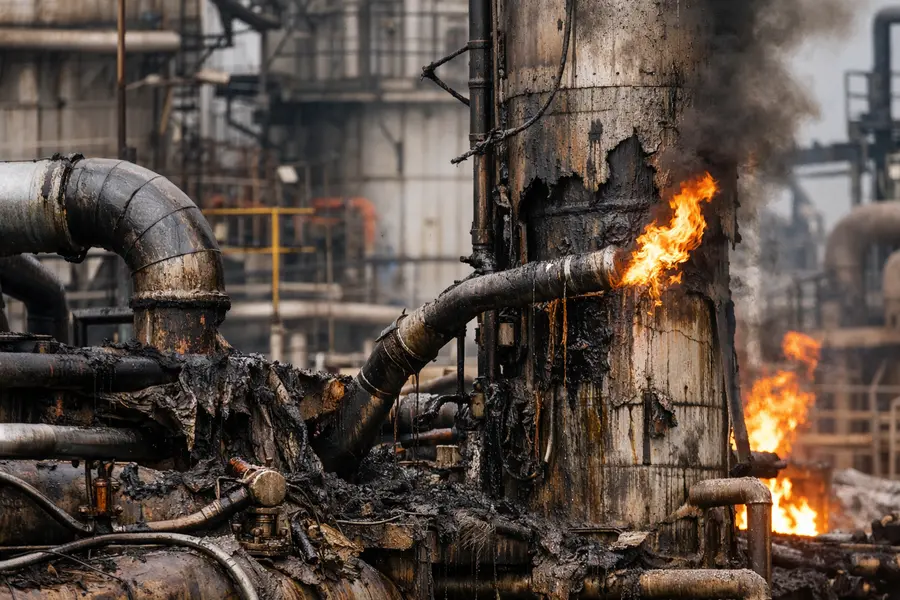
Ukraine struck Rosneft's Ryazan refinery after a three-day pause, as Zelenskiy said "we're done" and called the US withdrawal of intelligence sharing dangerous.
- Ukrainian drones set fire to the 400,000 bpd Ryazan refinery on October 15, ending a three-day pause on refinery strikes.
- Zelenskiy said "the block is out" and called the US withdrawal of intelligence sharing "dangerous."
- Brent traded near $104 a barrel as the strike collided with US efforts to broker an energy ceasefire.
Lead
Ukrainian drones set fire to the Ryazan oil refinery, about 300 kilometers (180 miles) southeast of Moscow, overnight on October 15. The strike ended a three-day halt on attacks against Russian refineries that Kyiv had observed under a US-backed "energy ceasefire." Russia's Defense Ministry and Ryazan Governor Pavel Malkov confirmed the fire and said damage was being assessed. President Volodymyr Zelenskiy told the Financial Times: "The block is out. We're done."
What Happened at the Ryazan Refinery?
Drones started a fire at the Rosneft (ROSN) plant, which supplies fuel to Moscow and handles roughly 5% of Russia's total crude refining capacity, with throughput of about 400,000 barrels per day. Authorities cancelled classes at 14 schools and 25 kindergartens in Ryazan's Oktyabrsky and Sovetsky districts.
The facility has repeatedly gone offline. It suspended operations after drone attacks in May, July and September, which makes the latest hit part of a sustained campaign against Russian downstream capacity.
Russia's Defense Ministry said it intercepted 166 Ukrainian drones overnight. Ukraine's air force said Russia launched 580 drones against Ukrainian territory in the same period and that 536 were shot down. Three civilians were killed in the Kirovohrad region.
Why Did Ukraine End Its Pause?
Ukraine ended the pause because Moscow kept hitting Ukrainian power infrastructure and fuel depots while Kyiv held back. Zelenskiy said Ukraine suspended refinery strikes for three days to comply with the energy ceasefire that President Donald Trump announced on Sunday, which called on both sides to stop attacking energy infrastructure.
Moscow disputes that account. Russia accused Ukraine of attacking two refineries on Wednesday, including Ryazan, which it described as a breach of the arrangement. Ukrainian officials denied the claim. Kremlin spokesman Dmitry Peskov said Kyiv's actions were "coming into serious contradiction with the peace efforts of the United States." Zelenskiy has tied any lasting halt in energy strikes to additional US-made Patriot interceptors for Ukrainian air defense.
How Is the Intelligence Dispute Affecting Kyiv?
The dispute has narrowed Ukraine's margin for defense at a moment of heavy Russian missile and drone fire. Zelenskiy called the withdrawal of US intelligence sharing "dangerous," saying Ukraine had been denied Western intelligence on Russian ballistic missiles and that speed restrictions had been placed on Starlink satellite internet used by Ukrainian forces.
Trump has said the United States has not stopped sharing intelligence. Asked whether he felt betrayed by Washington, Zelenskiy answered "really, yes, between us," and said Ukraine was "losing a strong partner."
Relations have also been strained by an agreement between Trump and Russian President Vladimir Putin to import Russian diesel despite sanctions, which Zelenskiy criticized as enabling the continued invasion.
Market Reaction
The strike arrived in a tight energy market. Brent crude traded around $104 a barrel on October 15, down between 1% and 2% on the session, as reports that Washington was weighing easing curbs on shadow fleet tankers offset supply concerns. The crude oil price remains elevated, and diesel is a particular pressure point. The International Energy Agency agreed on Thursday to release more than 20 million barrels of diesel as soon as possible, along with any oil remaining from the record emergency reserves release pledged in March.
Strategic Context
Refinery strikes are Ukraine's most direct tool for squeezing Russian fuel supply and export earnings. Russia's domestic market has been strained by repeated outages since 2025, and each hit on a plant of Ryazan's size forces Moscow to reroute product or draw on stocks. The campaign also carries diplomatic cost. Russia has framed the strikes as a challenge to Trump's peace diplomacy, and Washington is simultaneously considering sanctions relief and diesel arrangements that run counter to Kyiv's strategy.
What Comes Next for Oil and Fuel Markets?
Near-term fuel markets face renewed risk of Russian product supply disruption. Repair timelines for Ryazan will determine how long its output is lost. Prior outages lasted weeks, and a repeat would tighten diesel and gasoline supply in central Russia while lifting the premium on distillates globally.
The energy ceasefire is the key variable. Russian retaliation against Ukrainian power and gas facilities would extend the exchange into winter, when grid damage carries the highest humanitarian and economic cost. A restored pause would depend on Patriot deliveries and on Washington's willingness to press Moscow on its own strikes.
Outlook
Ukraine has resumed its refinery campaign with the Ryazan strike, and the US-brokered energy ceasefire has effectively collapsed after three days. Over the next three to twelve months, the contest will turn on three factors: whether Washington restores intelligence and Starlink access, whether Russian energy strikes continue, and how much spare diesel capacity the world can draw on while Brent holds above $100.
Mentioned tickers: ROSN