Pomegra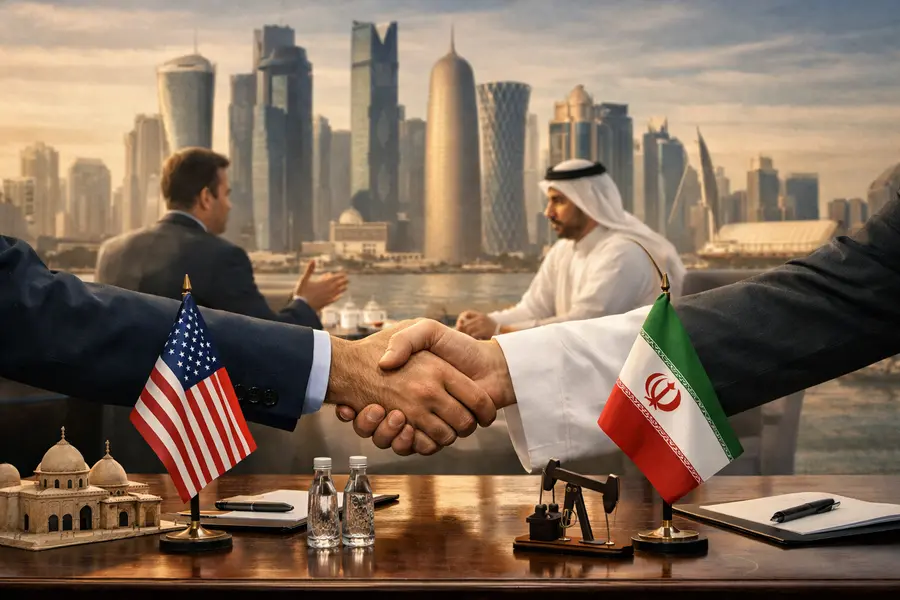
Indirect negotiations in Qatar's capital make "positive progress" on the Strait of Hormuz and frozen Iranian funds, extending the framework for a permanent settlement.
- Qatar-mediated talks in Doha on July 1–2 concluded with "positive progress" on Strait of Hormuz access and ~$6 billion in frozen Iranian assets.
- US and Iran agreed to establish a dedicated communication channel to resolve disputes under the June 17 MoU framework.
- Brent crude has retreated from a wartime peak of ~$120/barrel to near $84, as diplomacy stabilizes energy markets.
Lead
DOHA — Indirect US-Iran negotiations concluded in Qatar's capital on July 2, with both sides agreeing to open a formal communication channel and continuing technical discussions on two critical sticking points: maritime passage through the Strait of Hormuz and the release of approximately $6 billion in frozen Iranian sovereign funds. Qatar, which has mediated the talks alongside Pakistan, described the two days of separate sessions as yielding "positive progress," while signaling that the next round would be scheduled "at the earliest possible time" following the funeral ceremonies for former Supreme Leader Ali Khamenei, killed in US-Israeli strikes on February 28.What Happened
The Doha sessions were structured as indirect exchanges, with Qatari and Pakistani interlocutors shuttling between the delegations rather than facilitating direct face-to-face meetings. Iran dispatched Deputy Foreign Minister Kazem Gharibabadi to head its technical team; Foreign Minister Abbas Araghchi and parliamentary speaker Mohammad Bagher Ghalibaf did not attend, a signal from Tehran that it is treating the current phase as exploratory rather than decisive.
On the US side, special envoy Steve Witkoff and senior adviser Jared Kushner traveled to Doha and met with Qatari Emir Sheikh Tamim bin Hamad Al Thani, but did not participate in the actual negotiating sessions. Vice President JD Vance described the talks as "going well" on July 1.
According to Gharibabadi, two substantive meetings were held. The first addressed what Tehran characterized as US "violations of its obligations" under the June 17 memorandum of understanding, with the two sides ultimately agreeing to establish a dedicated channel to manage disputes. The second covered the mechanics of releasing part of the initially frozen $6 billion tranche of Iranian funds, with Iran pressing for a framework that would allow the money to be directed toward the purchase of authorized goods.
Strategic Context
The Doha talks operate within the architecture of a 14-point memorandum of understanding signed on June 17, which extended an earlier April ceasefire by 60 days. The MoU includes a suspension of US sanctions on Iranian crude exports, a commitment from Tehran not to pursue nuclear weapons development, the reopening of the Strait of Hormuz to commercial traffic, and a phased withdrawal of the US naval blockade from Iranian ports. Under the framework, approximately $24 billion in frozen Iranian sovereign funds are ultimately eligible for release, contingent on progress across all negotiating tracks.
Middle East de-escalation has moved through several distinct phases since February. The closure of the Strait of Hormuz beginning March 4 triggered what the International Energy Agency described as "the largest supply disruption in the history of the global oil market." Persian Gulf producers — Kuwait, Iraq, Saudi Arabia, and the UAE — saw collective output drop by at least 10 million barrels per day by mid-March as insurers withdrew coverage and shipping rerouted around the cape. The disruption drove Brent crude from a pre-conflict range of $65–$75 per barrel to approximately $120 per barrel by late April, the steepest sustained wartime oil price rally in more than three decades.The June 17 MoU reversed much of that shock. Following the announcement, Brent fell to approximately $83.88 per barrel and WTI settled near $80.96, as energy traders priced in the partial restoration of Hormuz traffic.
Geopolitical Dimension
The shift of US-Iran nuclear diplomacy to Doha underscores Qatar's expanded role as the indispensable broker between Washington and Tehran — a position built on Doha's longstanding back-channel relationships with both governments and its hosting of major US military infrastructure at Al Udeid Air Base. Pakistan's co-mediation adds a second Muslim-majority state with credibility in Tehran, broadening the coalition of guarantors and reducing the risk that any single mediator's political constraints become a bottleneck.
The talks face structural complications. Khamenei's death has created a succession vacuum inside Iran, generating internal pressure on surviving leadership to appear firm in negotiations. Gharibabadi's emphasis on US "violations" in the first Doha session reflects this domestic political math: Iranian officials need to demonstrate to hard-line factions that the MoU is being enforced, not merely accepted. The decision to schedule the next round after Khamenei's state funeral indicates that Tehran is managing the pace of diplomacy around domestic political stability.
On the US side, President Trump reiterated on June 20 that there will be no tolls for Strait of Hormuz passage during or after the 60-day ceasefire — walking back an earlier suggestion that the US might charge for "services rendered" — a concession that removed one friction point before the Doha sessions began.
What Comes Next
The communication channel agreed in Doha is designed to prevent localized Strait incidents from escalating into broader ceasefire violations — a mechanism both sides regarded as necessary after Iran briefly closed the strait again on June 20, citing Israeli strikes in southern Lebanon as a MoU breach. The channel is modeled on Cold War-era military hotlines and is expected to be operational within days.
Regional peace talks remain focused on four parallel tracks: Hormuz access, frozen fund release, long-term sanctions architecture, and Iran's nuclear program. Progress on the first two tracks in Doha creates momentum for the harder conversations on sanctions and enrichment, but US-Iran nuclear diplomacy analysts note that Tehran has not yet agreed to dismantle enrichment infrastructure, only to refrain from weaponization — a distinction that will define the shape of any permanent agreement.An Iranian foreign ministry spokesman confirmed that discussions are scheduled to continue "over the coming period," with the frequency of rounds expected to accelerate once post-Khamenei political consolidation in Tehran is complete.
Outlook
The Doha round marks the most substantive direct engagement between US and Iranian negotiators since the June 17 MoU, and the establishment of a formal dispute-resolution channel reduces the risk of accidental escalation in the Strait. Energy markets are pricing a cautious normalization — Brent near $84 reflects restored Hormuz transit, not a permanent peace dividend. The 60-day MoU clock expires in mid-August, leaving negotiators roughly six weeks to advance the nuclear and sanctions tracks sufficiently to justify a longer-term framework. The pace of political transition inside Iran will be the primary variable determining whether the current diplomatic window holds.