Pomegra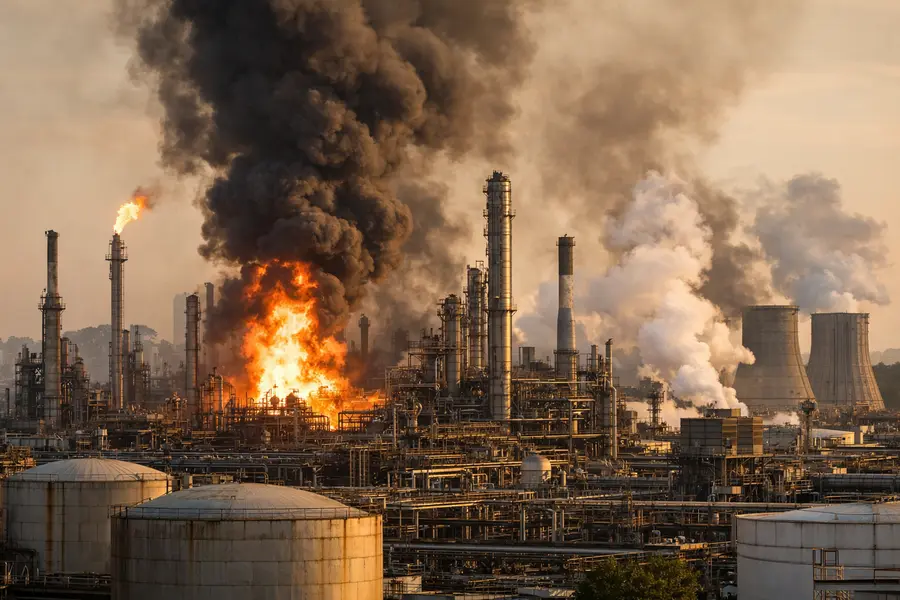
Ukraine says strikes disabled 51% of Russia's oil refining capacity, while Moscow reports 650 drones overnight, raising diesel and crude oil price risks.
- Ukraine's Defense Ministry says 51% of Russian refining capacity is disabled, up from 45% on September 21.
- Moscow reports 650 drones aimed at the capital region overnight, closing four airports and igniting a major oil depot.
- Brent crude stays near $100 a barrel, held down by Gulf export gains and a G7 reserve release.
Lead
Ukraine's Defense Ministry said on October 5 that its long-range strikes have put 51% of Russia's oil refining capacity out of action. Hours later, Russian authorities reported one of the largest drone assaults on the Moscow region of the war. The ministry's figure, as of October 4, rose from 45% on September 21. It has not been independently verified. The overnight attack on Moscow ran from the evening of October 5 to the early morning of October 6.
What Did Ukraine Claim About Russian Refineries?
Ukraine claims that recent strikes have disabled just over half of Russia's refining capacity. The ministry named refineries in Moscow, Yaroslavl, Kirishi, Perm, Saratov and Syzran, along with the Ust-Luga complex. The assessment draws on intelligence services and General Staff analysis. Defense Minister Yevhenii Khmara called the 51% figure "a significant blow to the enemy's economy, to its ability to wage aggression, and to supply its military formations."
Kyiv treats refineries as legitimate military targets because they supply fuel and revenue to Russian forces. Ukraine tripled long-range drone production in 2026, and its drones have struck targets more than 1,500 kilometers away.
Russian officials have partly confirmed the pressure. President Vladimir Putin said on October 1 that the campaign had cost Russia roughly 1% of gross domestic product, and that Ukraine had achieved its goal only "partially." Russia has 32 refineries, and some have been hit as many as 15 times since the war began. In recent months a refinery has been struck about every three days. On September 28 Putin signed a decree restricting publication of refinery data.
What Happened Near Moscow?
Russian authorities said 650 drones targeted Moscow and Moscow Oblast between 20:30 on October 5 and 05:00 on October 6, Moscow time. Mayor Sergei Sobyanin reported 105 drones destroyed on approach to the capital, most of them at long range. TASS described it as the largest attack on the capital in two years.
Flight restrictions hit Vnukovo, Domodedovo, Sheremetyevo and Zhukovsky airports before normal operations resumed after 05:00. A fire broke out at the Volodarskaya pumping and dispatching station, one of the largest oil storage depots and pipeline hubs in the region. No casualties were reported in the early accounts.
Elsewhere, Russia's Defense Ministry said it downed 199 Ukrainian drones across Russian regions, Crimea and the Black Sea. Ukraine said its air defenses shot down or suppressed 172 of 205 Russian drones launched overnight. In Kharkiv, Russian attacks killed at least four people and wounded 39, including three children.
How Are Refinery Strikes Affecting Russia's Fuel Supply?
The strikes have cut Russian fuel output and forced export controls. Diesel production has fallen about 30%, and drivers at some filling stations have waited up to 40 hours. The government extended its diesel export ban for all producers to October 31, citing delayed refinery maintenance and the need to rebuild stocks before winter. Deputy Prime Minister Alexander Novak has acknowledged that oil output has fallen since January because of unscheduled repairs.
The International Energy Agency has warned that the cycle of damage and emergency repair can degrade processing units over the long term. Damaged units are harder to restore than the headline outage figures suggest.
Why Does This Matter for the Crude Oil Price?
Refinery outages in Russia matter more for refined products than for crude. Russia exports large volumes of diesel, so lost capacity and export bans tighten global diesel supply and widen refining margins. Crude itself is affected indirectly. Domestic refiners that cannot process their feedstock can push more crude into export channels, which adds supply at the margin.
The crude oil price is currently driven more by the Middle East. Brent crude has hovered near $100 a barrel this week. It eased on October 6 as rising Gulf exports and a coordinated G7 reserve release offset supply concerns. Brent stood about 54% above its level a year earlier. Russian equities, tracked by the MOEX Russia index, are exposed to the energy sector. The damage to refiners and the attacks on storage hubs weigh on that sector's earnings outlook.
Geopolitical Dimension
The campaign is a test of attrition. Ukraine aims to convert cheap drones into lasting economic damage and fuel shortages. Russia is relying on air defenses, export restrictions and information controls to contain it. Russia's retaliation continues against Ukrainian cities, with the Kharkiv strikes the latest example.
The strikes also bring Russian energy infrastructure into focus for markets. Pipeline hubs such as Volodarskaya, Baltic ports such as Ust-Luga, and refineries across the Volga region have all become targets. That raises the risk of disruption to product exports, which move through ports and pipelines that remain within drone range.
Outlook
Over the next three to twelve months, Russia's refining system faces repeated outages and extended repair cycles, and diesel remains the commodity most exposed. Moscow is likely to keep export bans in place through winter. Crude benchmarks are expected to keep trading on Gulf supply and reserve releases rather than on Russian refining. A further rise in disabled capacity above 51% would tighten global diesel supply, while the attack on Moscow raises the odds of further strikes on storage and pipeline hubs.
Mentioned tickers: None