Pomegra
Syria's new government is converting its geographic position and untapped reserves into investment leverage, attracting $28 billion in commitments and landmark deals with Chevron, Saudi Arabia, and Gulf states as the country pursues a broad Syria economic rebuild.
- Syria attracted $28 billion in investment commitments in 2025, with Gulf states leading capital deployment into energy and infrastructure.
- Chevron and Qatar's UCC Holding signed a deal for Syria's first deepwater offshore exploration project, with field operations set for summer 2026.
- Iraq began routing 50,000 barrels per day through Syrian ports to the Mediterranean after Iran's Hormuz blockade disrupted regional energy flows.
Lead
Damascus, July 2026 — Syria's transitional government, led by President Ahmed al-Sharaa since March 2025, has deployed Middle East energy diplomacy as its primary instrument of economic restoration, signing deals with U.S. and Gulf energy companies worth tens of billions of dollars while positioning the country as an emerging regional trade corridor. The push follows the removal of decades of Western sanctions and the collapse of the Assad regime, leaving a nation where more than 90% of the population lives below the poverty line and the World Bank estimates reconstruction needs at nearly $216 billion.
What Happened
In a move that recast Damascus political standing across the region, the Syrian Petroleum Company in February 2026 signed a memorandum of understanding with Chevron (CVX) and Qatar's UCC Holding for Syria's first deepwater offshore oil and gas exploration project. The agreement was concluded in Damascus in the presence of U.S. Special Envoy Tom Barrack. On May 11, Chevron issued an official notice to proceed; technical and field operations are scheduled to begin in summer 2026.
Onshore, the Syrian Petroleum Company launched a gas field development project with Saudi energy services firm ADES Holding in the central province of Homs. The contract covers maintenance of existing wells, rehabilitation of damaged infrastructure, drilling of new exploratory wells, and technology transfer to Syrian personnel. Production targets call for a 25% output increase within six months and a 50% increase by mid-2027, lifting capacity to approximately 4 million cubic meters of gas per day.
A separate $7 billion electricity deal signed in May 2025 with UCC Holding will add four combined-cycle gas turbine power plants across Aleppo, Deir Ezzor, and Hama — a combined 4 gigawatts — alongside a 1 gigawatt solar facility in southern Syria. Electricity availability has improved from roughly three hours per day under the Assad era to approximately 13 hours, with authorities targeting round-the-clock coverage by year-end 2026.
Strategic Context
Syria's Middle East energy diplomacy pivot is inseparable from a broader sanctions unwinding. The European Union lifted all economic sanctions on May 20, 2025. The United States formally repealed the Caesar Syria Civilian Protection Act on December 18, 2025 as part of the National Defense Authorization Act for Fiscal Year 2026. The Central Bank of Syria has been delisted from U.S., EU, and UK sanctions lists, Syrian banks are rejoining SWIFT networks, and FinCEN has authorized U.S. correspondent accounts with the Commercial Bank of Syria — opening pathways for institutional capital.
Saudi Arabia has emerged as the largest single source of foreign direct investment, deploying four state-linked companies — TAQA, ADES Holding, Arabian Drilling, and the Arabian Geophysical and Surveying Company — into Syrian energy services. The Syrian-Emirati Investment Forum has outlined targets of $100 billion across energy, logistics, real estate, and agriculture. The European Commission has proposed full resumption of the EU-Syria Cooperation Agreement and committed €620 million in assistance for 2026–2027. In October 2025, President al-Sharaa stated that Syria had attracted approximately $28 billion in investments in the first six months of post-sanctions diplomacy, with $14 billion in memoranda signed at a single Damascus ceremony in August 2025.
Geopolitical Dimension
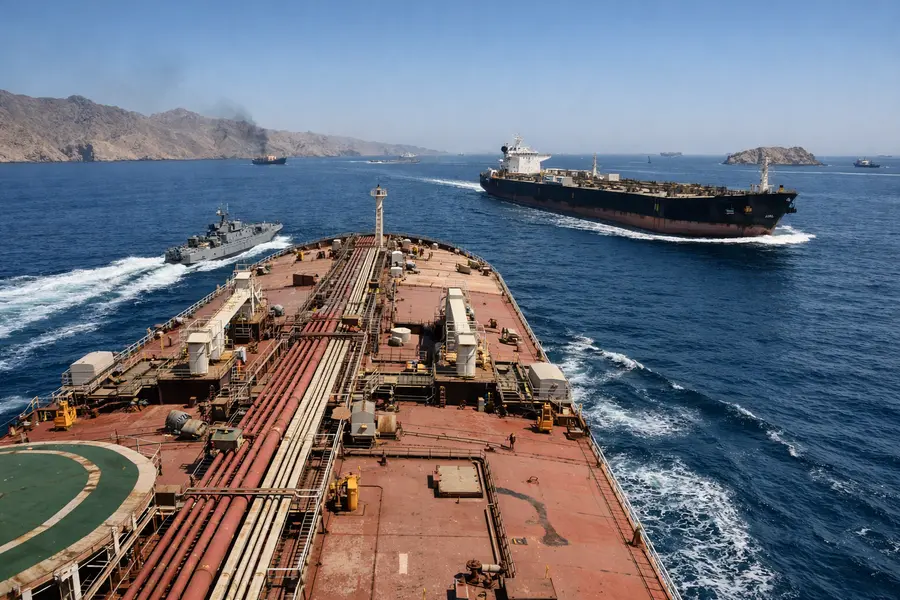
The Syria economic rebuild has gained an unexpected accelerant from the 2026 Strait of Hormuz crisis. Following U.S. and Israeli military operations against Iran beginning in late February, Tehran's disruption of the Strait forced regional producers to seek alternative export routes. Iraq's state oil marketer SOMO moved quickly, agreeing to route 50,000 barrels per day of Basra medium crude through Syrian territory to the Mediterranean port of Baniyas for European delivery.
The episode validated Damascus's pitch that Syria's geography — bridging the Gulf to the Levantine coast — carries intrinsic strategic value. Proposals to revive the Kirkuk-Baniyas pipeline linking Iraq's northern fields to the Mediterranean, estimated to cost $4.5 billion, are under active technical assessment alongside three other major regional trade projects: the Arab Gas Pipeline, the Qatar-Turkey gas pipeline, and the Trans-Arabian Pipeline. Syria, Jordan, and Turkey have also established a trilateral body to build a formal land-bridge corridor, with discussions underway to rehabilitate the Hejaz Railway connecting Jordan's port of Aqaba to Turkish ports via Syrian territory.
What Comes Next
Syria's GDP stands at approximately $21–22 billion in 2026 — roughly one-tenth of the World Bank's reconstruction cost estimate. The government projects a 149% revenue surge in 2026 as customs receipts, taxes, and hydrocarbon revenues normalize. Wood Mackenzie forecasts a meaningful recovery in Syrian oil and gas output this year as the new government completes handover of key producing assets.
Structural barriers remain: financial sector depth is limited, rule-of-law institutions are still consolidating, and residual targeted sanctions on Assad-era individuals restrict certain capital channels. The current deal flow is primarily memoranda and preliminary agreements — conversion to active construction and sustained production will determine whether Syria's energy diplomacy translates into durable growth.
Outlook
Syria's new government has made measurable early progress in converting energy assets and geographic leverage into foreign capital, anchored by the landmark Chevron offshore deal and Saudi ADES gas development, and accelerated by the Hormuz disruption. The country's reconstruction timeline — $216 billion against a $21 billion economy — remains long, but the pace of sanctions removal, Gulf investment commitment, and transit infrastructure proposals signals a structural reengagement with Middle East energy diplomacy that would have been unthinkable eighteen months earlier. Near-term milestones, including the launch of offshore drilling operations and the Homs gas field ramp-up, will serve as the first concrete tests of whether investment pledges translate into operating output.
Mentioned tickers: CVX