Pomegra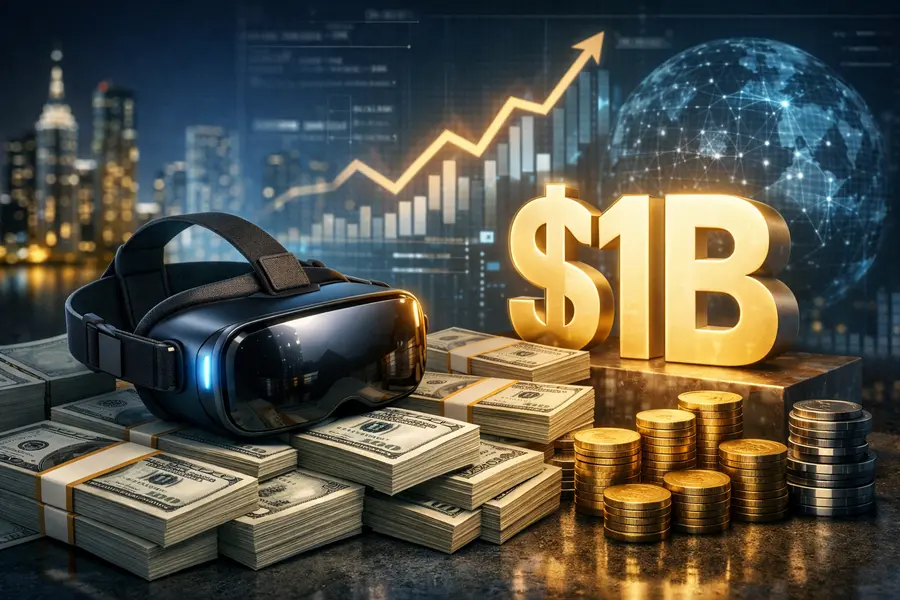
Shenzhen-based AI smart glasses startup Even Realities hits unicorn valuation after closing a $150M pre-Series B round led by Meituan and Tencent, challenging Meta's dominant Ray-Ban lineup.
- Even Realities raised $150M at a $1B unicorn valuation in a pre-Series B led by Meituan and Tencent.
- The camera-free Even G2 AI smart glasses average 8–10 hours of daily wear, far outpacing wearable category norms.
- Global smart glasses shipments surged 167% year-over-year in Q1 2026 to 2.25M units, per IDC.
Lead
Even Realities Technology, the three-year-old Shenzhen startup building camera-free AI smart glasses, closed a $150 million pre-Series B round on July 6, 2026, achieving a $1 billion Even Realities unicorn valuation backed by Chinese internet giants Meituan and incumbent investor Tencent. The raise positions the company as the leading privacy-first challenger to Meta Platforms' dominant Ray-Ban lineup and marks one of the largest single funding events in the wearable tech investment cycle.What Happened
The pre-Series B was co-led by food-delivery-to-retail platform Meituan and Tencent, which had participated in prior funding rounds. The transaction values Even Realities at exactly $1 billion, conferring unicorn status on the privately held firm.
CEO Will Wang, a former Apple engineer who contributed to the mass production of both the iPhone and Apple Watch between 2016 and 2018, founded the company in 2023 alongside co-founders drawn from the technology and luxury eyewear sectors. The tech startup will deploy fresh capital toward its next-generation smart glasses platform, deeper AI integration, international operations, and accelerated product development.
Product and Technology
Even Realities' current flagship, the Even G2, weighs 36 grams and carries an IP65 weather-resistance rating with a 48-hour active-use battery. The glasses embed a waveguide heads-up display directly into prescription-grade lenses, surfacing a suite of real-time AI smart glasses features — including Conversate for meeting assistance, live translation, transcription, and a general Even AI inference layer — without any camera or recording hardware on the device.
The no-camera architecture is a deliberate product decision. While Meta's Ray-Ban line centers on content capture and AI-assisted photography, Wang has positioned Even Realities as a display-first platform that delivers ambient intelligence without compromising the privacy of bystanders or the wearer's own data footprint.
Users wear the G2 an average of 8 to 10 hours per day, a figure the company says substantially outperforms standard wearable display benchmarks. Frames retail from $599, with prescription lenses and the optional Even R1 companion ring pushing average order values to approximately $1,000. More than half the installed base is in the United States, and roughly 80% of the developer community is U.S.-based.
Strategic Context
The round arrives as the global smart glasses market enters a period of rapid expansion. IDC data shows category shipments jumped 167% year-over-year in Q1 2026, reaching 2.25 million units worldwide. Meta, through its EssilorLuxottica partnership — now extending to Oakley-branded performance frames — holds approximately 72% market share, a position built on consumer conditioning and retail distribution that no competitor is close to matching.
Even Realities' $150 million in wearable tech investment represents one of the largest raises for a display-only smart glasses platform to date. Meituan's participation signals Chinese platform capital's appetite for hardware categories in which domestic companies can compete internationally and at scale. Meta's dominant position has also faced pressure in 2026 after reports that contractors accessed footage captured from users' private spaces — a development that has sharpened the commercial case for display-only architectures.
The broader tech startup ecosystem is watching closely: Apple is expected to enter the smart glasses category in the second half of 2026, and several Shenzhen-based hardware studios have positioned for the same display-first segment Even Realities now leads by valuation.
Outlook
With unicorn status secured and two of China's most capitalised technology platforms as backers, Even Realities enters the second half of 2026 with the resources to accelerate its next hardware generation and deepen its AI software layer. Whether the display-first thesis can convert a privacy tailwind into durable market share against Meta's scale — and a forthcoming Apple entry — will depend on Even Realities' ability to broaden consumer distribution, expand its developer ecosystem, and sustain the differentiation that current privacy concerns have temporarily amplified.
Mentioned tickers: META, TCEHY