Pomegra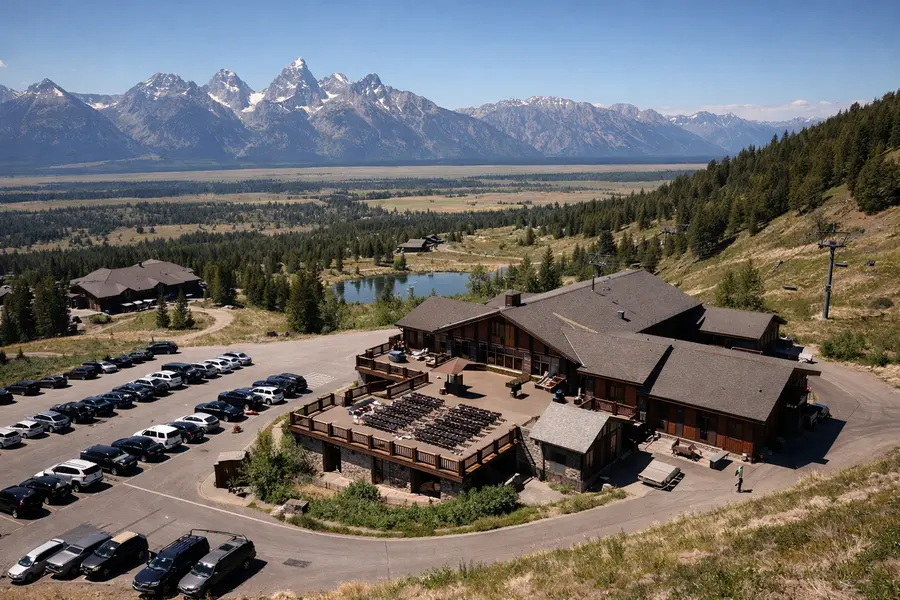
Federal Reserve Chair Kevin Warsh heads to the annual Jackson Hole, Wyoming symposium on August 28 for his inaugural keynote address, with global markets bracing for a signal on the September 16 rate decision and the future of U.S. monetary policy.
- The Fed held its benchmark rate at 3.50%-3.75% at the July 29 FOMC meeting, with three officials dissenting in favor of an immediate 25-basis-point hike.
- Warsh has telegraphed that his Jackson Hole address will tackle "big questions" on monetary foundations rather than offer near-term rate guidance.
- A review of the Fed's policy framework by 15 external experts may be formally unveiled at the symposium, with average inflation targeting potentially on the chopping block.
Lead
Attention shifts to Jackson Hole, Wyoming this week as the Federal Reserve Bank of Kansas City convenes its annual Economic Policy Symposium from August 27-29, drawing roughly 120 central bankers, economists, and policymakers from more than 70 countries. The event carries unusual weight this cycle: Chair Kevin Warsh, who took office in May 2026, is scheduled to deliver the keynote on Friday morning, August 28 - his first major set-piece address since assuming the position, arriving just 19 days before the September 16 Federal Open Market Committee decision.
The symposium's theme, "Financial Innovation: Implications for Payments and Policy," frames a moment already charged by persistent above-target inflation, a fractious July FOMC vote, and an unresolved debate over whether Warsh intends to formally overhaul the frameworks that have governed U.S. monetary policy for years.
What Is Warsh Expected to Say?
Warsh has deliberately kept markets guessing. At his July 29 post-meeting press conference, the chair declined to preview specific rate signals, instead framing the upcoming address as a chance to step back from "near-sighted debates" and raise "big questions" about monetary policy's role in an era of artificial intelligence and structural supply-side shifts. He added that the Fed is "not constrained by market prices" in setting policy - language markets interpreted as a reminder that rate cuts cannot be assumed.
The framing points toward a strategic document rather than a tactical one. Warsh has mandated 15 external monetary economists to complete a review of the Fed's policy architecture by year-end 2026, and the Jackson Hole address is widely expected to mark the public launch of that exercise. The central question: whether the Fed abandons average inflation targeting - the framework adopted in 2020 that allowed inflation to run above 2% to compensate for prior undershoots - in favor of a strict and unconditional 2% mandate.
Why Did the July FOMC Decision Unsettle Markets?
The Fed held its benchmark federal funds rate at 3.50%-3.75% on July 29, but the vote was a narrow 9-3, with Cleveland Fed President Beth Hammack, Minneapolis Fed President Neel Kashkari, and Dallas Fed President Lorie Logan each dissenting in favor of a 25-basis-point increase. That degree of internal dissent is rare and signals that a portion of the rate-setting committee views current policy as insufficiently restrictive.
Warsh acknowledged that inflation remains above the Fed's 2% target, attributing part of the overshoot to import tariffs functioning as a persistent supply-side price shock - raising consumer costs independently of underlying demand conditions. He reiterated that the central bank "won't hesitate" to raise rates if prices continue climbing, explicitly ruling out a soft tolerance for above-target readings. The bond market has yet to fully price a hike, but the three dissents have shifted the distribution of September outcomes meaningfully toward no change or a tightening rather than easing.
How Does This Shape the September Rate Decision?
Jackson Hole has historically served as a forward-guidance vehicle for the September FOMC: in several recent cycles, the chair's late-August remarks effectively pre-announced the direction of the next move. With the September meeting 19 days away, Warsh faces a narrow window to recalibrate expectations without triggering disorderly moves in rates or equities.
If the address leans toward framework reform and structural credibility - rather than near-term rate path signaling - markets may read the silence on September as a hold, consistent with the July decision. A more hawkish tonal shift, particularly any language reinforcing the dissenting bloc's logic, would revive expectations for a 25-basis-point hike. Futures markets heading into the symposium assign roughly even odds between a hold and a hike at the September meeting, an unusually wide distribution for a near-term FOMC decision.
The attendance of central bankers from the European Central Bank, Bank of England, and major emerging-market institutions adds a multilateral dimension. Global peers are navigating their own inflation-versus-growth tradeoffs, and any Warsh signal that the Fed intends sustained higher rates for longer carries immediate implications for dollar strength, capital flows, and debt-service costs across emerging markets.
What Comes Next for Monetary Policy?
The framework review is the structural wildcard. Abandoning average inflation targeting would represent the most significant shift in Fed doctrine since the 2020 strategy update - removing the implicit promise that the Fed would tolerate above-2% inflation if prior years ran below target. A return to a strict symmetric mandate would compress the policy optionality Warsh's predecessors retained and could shorten the timeline for action when inflation reaccelerates.
The external expert panel's involvement - unusual in both its size and explicit mandate - suggests Warsh wants an institutional anchor for whatever framework emerges, insulating it from political pressure and lending technical credibility to future rate decisions.
Outlook
The Jackson Hole address on August 28 stands as the most consequential Fed communication since Warsh took the chair. Markets are pricing a coin-flip on September, the internal FOMC has fractured in a way that demands resolution, and the framework review adds a layer of structural uncertainty that persists well beyond the immediate rate decision. How Warsh handles the tension between signaling and deliberate opacity will define the opening chapter of his tenure and calibrate global expectations for U.S. interest rates into 2027.