Pomegra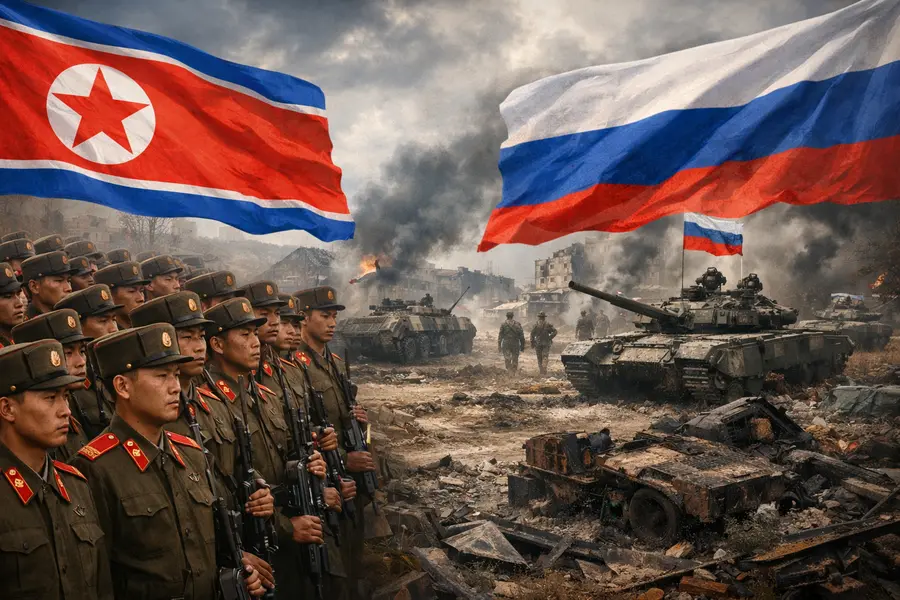
Ukraine President Zelenskyy warns Russia is readying a fresh wave of North Korean forces as the two-year military partnership between Moscow and Pyongyang deepens into a structural alliance.
- Russia is preparing Voronezh region to host an additional 30,000 North Korean troops, per Zelenskyy.
- More than 14,000 North Korean soldiers are already fighting for Russia, with roughly 6,000 killed or wounded.
- Pyongyang supplies approximately half of Russia's artillery shells, receiving technology, food, and hard currency in return.
Lead
Russia is preparing to receive as many as 30,000 additional North Korean troops for deployment in the Ukraine-Russia war, Ukrainian President Volodymyr Zelenskyy announced on July 26, 2026. The staging ground identified by Ukrainian intelligence is Russia's Voronezh region — 289 miles south of Moscow — where Moscow has been marshaling new manpower since June. The disclosure marks the most significant reported expansion yet of a Russia-North Korea military arrangement that has already placed over 14,000 Korean People's Army soldiers on European soil.
What Happened
Zelenskyy's warning comes as more than 14,000 North Korean soldiers are currently engaged in active combat alongside Russian forces, according to South Korean and Ukrainian intelligence assessments released in May 2026. The initial deployment began in the fall of 2024, when roughly 10,000 combat troops and 1,000 engineer troops were stationed in Russia's Kursk Oblast. A further 3,000 reserve personnel were subsequently sent to offset battlefield attrition.
The human cost for Pyongyang has been steep. By early 2026, North Korean losses in Kursk Oblast alone had reached approximately 6,000 troops killed or wounded — a toll that intelligence services attribute partly to North Korean soldiers' limited familiarity with drone-intensive, modern combined-arms warfare. Neither Moscow nor Pyongyang has acknowledged any casualty figures.
The planned 30,000-strong reinforcement wave would more than triple the current North Korean presence, elevating what began as a tactical manpower supplement into a structurally significant component of Russia's order of battle.
Geopolitical Dimension
NATO Secretary-General Mark Rutte characterized the existing deployment as "a significant escalation" and "a dangerous expansion of Russia's war," warning that the deepening military cooperation between Russia and North Korea constitutes a threat to both Euro-Atlantic and Indo-Pacific security simultaneously. The framing is deliberate: analysts note that the deployment has effectively collapsed the geographic firewall that historically separated these two regional security architectures, forcing Western capitals to coordinate responses across theaters that were once managed independently.For Pyongyang, the partnership extends well beyond troop payments. North Korea now supplies roughly half of Russia's artillery ammunition — South Korean intelligence estimates Pyongyang has delivered over 12 million 152mm shells in approximately 28,000 containers. In return, North Korea receives Russian military technology transfers, food aid, and hard currency, alleviating economic pressure that previously incentivized diplomatic engagement with Washington over denuclearization. The practical effect: Pyongyang's negotiating leverage on nuclear risk reduction has increased as its economic vulnerabilities have declined.
Strategic Context
Russia's appetite for North Korean ground forces reflects a persistent manpower constraint that artillery and air power have not resolved. More than 600,000 Russian soldiers have been killed or wounded since 2022, according to NATO estimates — a rate of attrition that has strained Moscow's domestic recruitment base. North Korean troops, trained for high-casualty infantry engagements and politically insulated from public accountability for losses, represent a supply of manpower Pyongyang can provide at scale without triggering the domestic political costs that Russian conscription carries.
Ukraine's response has been to demand an easing of Western restrictions on long-range strikes against Russian territory. Kyiv argues that the introduction of third-country forces onto the battlefield changes the legal and strategic calculus governing the use of Western-supplied weapons. The United States has stated that North Korean troops Russia deploys to Ukraine are legitimate targets for Ukrainian attack and would not trigger additional U.S. weapons-use constraints — a position that effectively endorses expanded Ukrainian strike authority without formal policy revision.
Economic and Market Channels
The geopolitical risk 2026 dimension of the Russia-North Korea alliance carries measurable spillover effects for global markets and supply chains. Extended conflict duration, underwritten by Pyongyang's ammunition pipeline, sustains elevated European energy costs and defense procurement cycles. South Korean defense contractors — already benefiting from surging NATO member orders — face the additional variable of Pyongyang diverting industrial capacity toward Russian demand rather than domestic stockpiles, altering the threat calculus on the Korean Peninsula. Emerging-market sovereign spreads in countries with Russian energy dependencies have remained elevated as the alliance signals no near-term path to ceasefire.
Global security news flows increasingly reflect the integrated nature of what was once treated as two distinct regional crises: the war in Ukraine and North Korea's weapons program have merged into a single strategic transaction with consequences for non-proliferation regimes, export control frameworks, and the credibility of international sanctions.Outlook
The potential deployment of 30,000 additional North Korean troops represents a qualitative shift in the Russia-North Korea axis — from transactional arms supply toward a sustained, co-deployed military partnership. For Ukraine, the immediate concern is a reinforced Russian front capable of absorbing attrition at scale through an externally replenished manpower pool. For NATO and Indo-Pacific allies alike, the deeper concern is that the arrangement has created a precedent: a sanctioned state transferring combat personnel across hemispheres with limited effective international response. How Western governments calibrate their next moves — on long-range strike authorization, sanctions architecture, and technology transfer controls — will define the trajectory of both the Ukraine war news cycle and the broader global security order through the remainder of 2026.
Mentioned tickers: None