Pomegra
Russia agreed in principle to resume three-way talks with Kyiv and Washington, then fired 21 ballistic missiles at Kyiv within hours, as Brent held near $114.
- Moscow agreed in principle on October 21 to resume three-way talks, with no date fixed.
- Kyiv took 21 ballistic missiles in three waves on October 22, days after a 16-missile, 200-drone strike.
- Brent traded near $114 a barrel on October 26, a six-month high, as energy infrastructure came under fire on both sides.
Lead
Russia said on October 21 that it would resume three-way negotiations with Ukraine and the United States "in principle". Within hours, it launched a heavy overnight attack on Kyiv. The statement came from Kremlin foreign-policy aide Yuri Ushakov after President Vladimir Putin met U.S. envoy Steve Witkoff in St. Petersburg. Witkoff had met Ukrainian President Volodymyr Zelenskyy in Norway the day before.
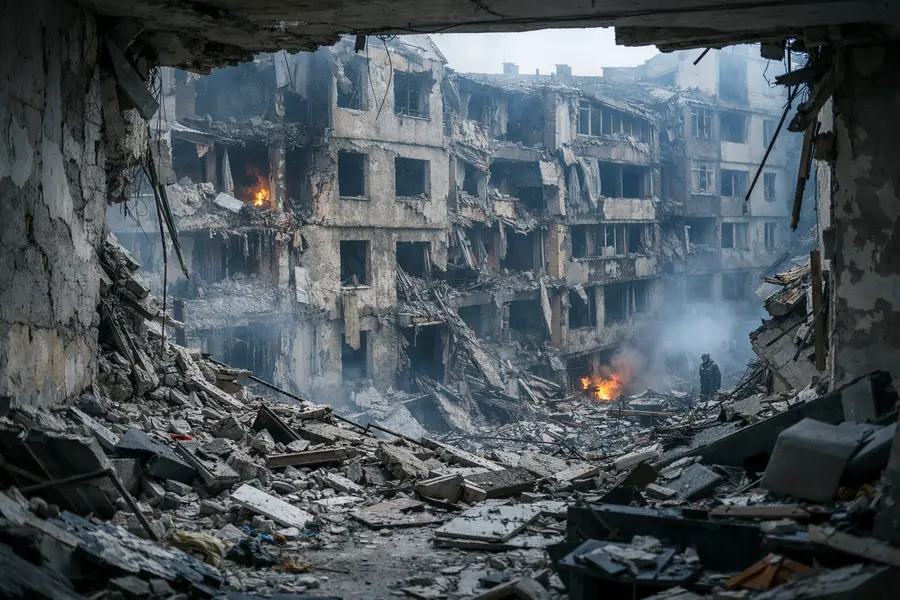
The overnight strike on October 22 involved 21 ballistic missiles fired at Kyiv in three waves. At least four people were killed and dozens wounded, including five children, in strikes across 12 Ukrainian regions. A port in the Odesa region was also hit. The attack followed an October 19 assault in which Russia fired 16 ballistic missiles and more than 200 drones, damaging over 10 energy facilities and cutting power to about 550,000 households.
What Did Russia Actually Agree To?
Russia agreed only to the principle of resuming talks, and no meeting date has been confirmed. Moscow has pointed to a session after November 10, and Abu Dhabi has been cited as the likely venue. The previous round took place in Geneva in February and produced little beyond prisoner and body exchanges.
Ushakov said Washington had "sensed some new nuances" in Moscow's position, but that these "do not entirely satisfy us". Putin has said Russia is "ready to negotiate" while insisting its objectives will be achieved. The Kremlin has also praised the U.S. administration's role and criticised European capitals for fuelling escalation.
Why Did Moscow Strike Hours After Signalling Talks?
The strikes fit a pattern in which Russia negotiates and escalates at the same time. Russia's defence ministry described the October 19 attack as aimed at defence-industry sites. Ukrainian officials said energy facilities were the main targets, along with a clinic, a school, a metro station and homes.
Zelenskyy said there had been "no real change" in Moscow's attitude, and said Ukraine had accepted every ceasefire proposal put forward by partners. Foreign Minister Andrii Sybiha said "appeasement, servility, and flattery will not stop this war. Only strength will."
The exchange is not one-sided. Russia said its air defences intercepted 808 Ukrainian drones overnight, 630 of them headed for Moscow. Ukraine had fired more than 1,000 drones at Russian energy and oil sites the previous weekend. Both sides are now targeting each other's power grids and refineries as the war enters its fifth year.
Geopolitical Dimension
The negotiating gap remains wide. Russia demands full control of Donetsk, Luhansk, Zaporizhzhia and Kherson, recognition of its hold on Crimea, and a Ukrainian renunciation of NATO membership. It already occupies roughly 20% of Ukraine. Kyiv rejects territorial concessions and wants a ceasefire along current front lines first.
On security guarantees, Washington has ruled out NATO membership for Ukraine. Kyiv is seeking a direct U.S. commitment modelled on Article 5, along with a European "coalition of the willing" of about 30 countries. Earlier rounds made no progress on the security arrangements needed to sustain a deal.
Washington's posture adds complexity. President Donald Trump has declined to impose new sanctions on Russia and has criticised Ukrainian strikes on Russian oil infrastructure. A U.S.-Russia diesel supply arrangement has been reported, and Washington is weighing easing sanctions on Russian tankers. Kyiv has said U.S. satellite support was disrupted after it refused to halt refinery strikes. Relations between Zelenskyy and Trump are described as at a new low.
What Comes Next for the Crude Oil Price?
The crude oil price is driven mainly by the Middle East, with the Russia-Ukraine strike cycle as a second factor. Brent crude reached $110 a barrel on October 16, its first time at that level since May, then hit $114 intraday on October 23. It traded near $114.5 on October 26, down about 1.9% on the day.
Two supply channels are in play. Houthi attacks on Saudi airports and Aramco facilities tightened the Middle East outlook. Separately, Ukrainian drones forced the Ryazan refinery to shut a main crude distillation unit on October 15 and ignited fires at a St. Petersburg oil terminal that exports about 120,000 barrels a day of refined products. These hits reduce Russian diesel and fuel-oil exports and raise product prices in Europe and Asia.
Over the next three to twelve months, the oil market faces two scenarios. A credible ceasefire or a pause in energy strikes would ease the risk premium on Russian products and could shift sanctions policy. Continued escalation would keep refining capacity impaired and keep Brent supported near current levels. Any easing of U.S. tanker sanctions would add barrels to the market but would not offset the Middle East disruption on its own.
Outlook
The diplomatic track has restarted in name only. Russia has agreed to a principle, not a date or an agenda, and its military pressure on Ukrainian cities and power infrastructure has continued. The decisive questions are whether the November session is scheduled, whether it addresses territory and security guarantees, and whether either side pauses energy strikes. Until then, the war and the oil market's risk premium are likely to move together.
Mentioned tickers: None