Pomegra
Russia and Ukraine agreed a temporary local ceasefire in occupied Oleshky for humanitarian aid and civilian evacuation, brokered by Melania Trump, the White House says.
- Russia's general staff sets a "silence regime" from Oct. 27; the White House dates the ceasefire from Oct. 29.
- An estimated 1,700 to 2,000 civilians remain in Oleshky, down from about 24,000 before the war.
- Technical-level peace talks are planned for the first half of November, possibly in Abu Dhabi.
Lead
Russia and Ukraine have agreed to halt military action in the Russian-occupied city of Oleshky in the Kherson region so humanitarian aid can enter and civilians can leave. The White House says first lady Melania Trump brokered the ceasefire in her role as an intermediary between the two governments. Russia's general staff says a "silence regime" along the Kherson front begins at 04:00 Moscow time on Oct. 27. The White House dates the ceasefire itself from Oct. 29. The arrangement is local and temporary, and it does not alter the wider front line.
What Does the Oleshky Ceasefire Cover?
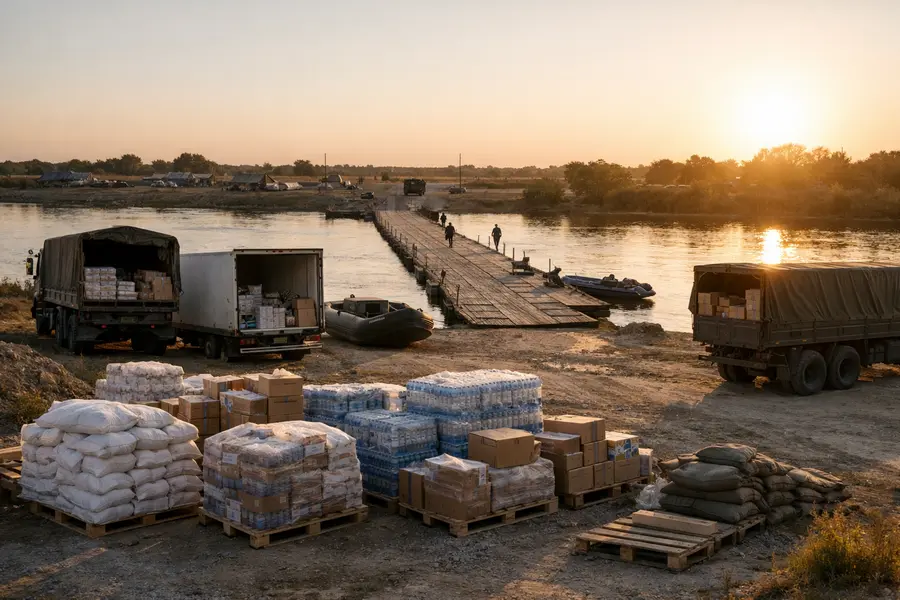
The agreement covers three steps: a halt to fighting around the city, delivery of emergency supplies, and phased evacuation of residents who wish to leave. Ukraine's human rights commissioner, Dmytro Lubinets, and Russia's negotiating lead, Yana Lantratova, worked out the humanitarian terms. Both sides have assigned technical teams to handle implementation, including de-mining of access routes.
Residents may choose their destination. Some are expected to go to Russian-controlled territory and others to Ukraine. The operation will run in stages because of mined exits, damaged utilities and the tactical risks on the ground.
Why Is Oleshky a Humanitarian Priority?
Oleshky is a left-bank town across the Dnipro River from the city of Kherson. It has been under Russian occupation since early 2022 and has been cut off from commercial freight and aid since late May. The remaining population is mostly elderly and in need of medicine, food, clean water and medical care. The White House estimates that about 50 children are among the 1,700 to 2,000 people still there.
The United Nations human rights chief and Pope Leo XIV had both previously urged access to the enclave. The localized format reflects a pattern in this war: narrow, verifiable arrangements that both militaries can monitor are easier to agree than a broad truce.
Why Do the Start Dates Differ?
The dates differ because the political announcement and the military order were set separately. The civilian-track talks and the White House statement pointed to Oct. 29. The military channel set the silence regime for 03:00 Kyiv time, 04:00 Moscow time, on Oct. 27, two days earlier. In practice, fighting around Oleshky is due to stop first, with aid deliveries and evacuations following in sequence. The gap between the two dates is a point for the technical teams to settle, and it is the first test of whether both armies observe the pause.
Diplomatic Context
The truce comes as Washington tries to restart wider negotiations. U.S. envoys Steve Witkoff and Jared Kushner have been involved in the discussions. Technical-level meetings among Ukrainian, Russian and U.S. negotiators are planned for the first half of November, with Abu Dhabi cited as the venue and Switzerland as an alternative. Ukrainian President Volodymyr Zelensky has said he hopes a leaders' summit can follow.
Other disputes continue alongside the Oleshky arrangement. Restrictions on Starlink speeds in Ukraine remain a point of friction with Washington, and Russia has announced diesel tankers bound for North America. Neither dispute is part of the ceasefire terms.
What Comes Next for the Ceasefire and Peace Talks?
The near-term question is whether the pause holds long enough to deliver aid and move the first evacuees. A clean first phase would give both governments a template for similar local arrangements elsewhere on the front, and it would strengthen the case for the November talks. A breakdown would add to existing doubts about whether front-line commitments can be verified and enforced.
For markets, the direct effect is limited. Oleshky has no meaningful commodity or shipping footprint, and the agreement leaves energy sanctions, export flows and front-line operations elsewhere unchanged. Investors in Russian and European assets are more likely to watch the November talks than the Oleshky truce for any shift in the 3 to 12 month risk picture.
Outlook
Oleshky's ceasefire is a limited humanitarian measure with real diplomatic weight. Russia's silence regime begins Oct. 27, the White House date follows on Oct. 29, and the evacuation will unfold in phases. Its success or failure in the first week will shape expectations for the peace talks planned for early November.
Mentioned tickers: None