Pomegra
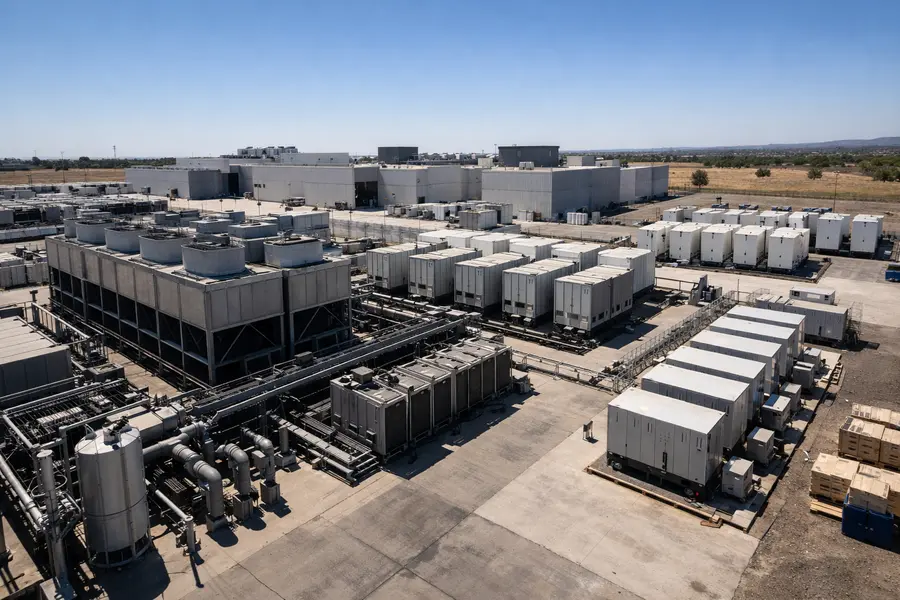
OpenAI trimmed its funding round target to as much as $20 billion from about $30 billion at a $1.25 trillion valuation as the AI selloff deepens spending doubts.
- OpenAI cut its round target to as much as $20 billion from about $30 billion, at a $1.25 trillion post-money valuation.
- The valuation fell from the $1.4 trillion discussed a month earlier, a $150 billion reduction.
- The Nasdaq closed Friday 7.8% below its October 6 record as doubts over AI capital spending spread.
Lead
OpenAI lowered the size of its latest private funding round on October 31, seeking as much as $20 billion instead of about $30 billion, with a post-money valuation of $1.25 trillion. The change follows a sharp pullback in AI stocks that has raised questions about whether the industry's data center and chip spending will earn adequate returns. Some investors reduced their allocations ahead of Friday's commitment deadline, and the first close is expected to raise less than the full $20 billion.What Happened to OpenAI's Funding Round?
OpenAI cut its target by $10 billion after a lukewarm response from some large backers. The company had lined up roughly $11 billion by the deadline.
A consortium of UAE investors that includes the state-backed fund MGX is expected to be the largest participant. As part of the arrangement, OpenAI gains an option to lease newly developed computing capacity in the region. Coatue, Founders Fund, Sequoia Capital and Andreessen Horowitz are also in the group of investors. Wealthy individuals will be offered a later retail tranche at the same $1.25 trillion valuation.
The revised terms mark a retreat from late September, when the company was reported to be pursuing $30 billion at $1.4 trillion. The new valuation is still well above the $852 billion set when OpenAI closed a $122 billion round on March 31.
Why Is the AI Selloff Raising Doubts About Spending?
Investors are questioning the returns on hundreds of billions of dollars committed to GPUs and data centers. Capital expenditure figures from Microsoft (MSFT), Alphabet (GOOG) and Amazon (AMZN) came in below analyst estimates this earnings season, which unsettled a market that had priced in continued acceleration.
Alphabet had its worst trading day after search revenue missed expectations. Its chief business officer pointed to lower monetization in the company's AI Mode. That bears directly on the central business-model question: whether AI-generated answers can earn as much as the traditional search results they replace.
Private AI valuations depend on public-market sentiment. A lower multiple on listed AI names makes a $1.4 trillion private price harder to defend, and late-stage investors have less room to absorb new supply.
How Is the Selloff Hitting AI Stocks?
The Nasdaq Composite fell 2.9% on Friday and sits 7.8% below its October 6 record close. Several chip and hardware names took heavy losses:
- Intel (INTC) dropped about 25% after weak revenue guidance.
- Micron Technology (MU) fell 5.5%.
- Nvidia (NVDA) declined 4%.
Memory and accelerator makers had been among the clearest beneficiaries of AI infrastructure spending, so a slowdown in budgets reaches them first. The pattern also shows that the market is separating companies with demonstrated AI revenue from those relying on spending forecasts.
What Does the Smaller Round Mean for OpenAI's IPO Plans?
OpenAI is pursuing a public listing in 2027, partly to stay ahead of the imminent IPO of rival Anthropic. The smaller private round does not change that timetable on its own, but it sets a reference price. A public offering priced well below $1.25 trillion would undercut the valuation investors accepted this week.
The company's funding needs remain large. Training and serving frontier models requires long-term compute commitments, and the UAE capacity option is one way to secure supply without financing all of it up front. A round that closes below target leaves OpenAI more reliant on its retail tranche, partner financing and revenue growth to cover those obligations.
Strategic Context
Investors are still willing to fund OpenAI, but they are pricing the company more cautiously and want more proof that spending converts into revenue. For investors weighing how to invest in AI, the episode shows that private marks can reset quickly when listed comparables fall.
For the largest cloud providers, the pressure runs the other way. Spending below estimates calms some concerns about overbuilding but reduces expected demand for chips, power and construction tied to OpenAI's expansion.
Outlook
The next signals are the final size of the round and whether the retail tranche fills at $1.25 trillion. Quarterly results from chipmakers and cloud providers will show whether spending plans are being cut or only delayed. If the Nasdaq decline continues, further pressure on private valuations ahead of the 2027 listings from OpenAI and Anthropic is likely. A recovery in AI stocks would restore the case for the higher price.