Pomegra
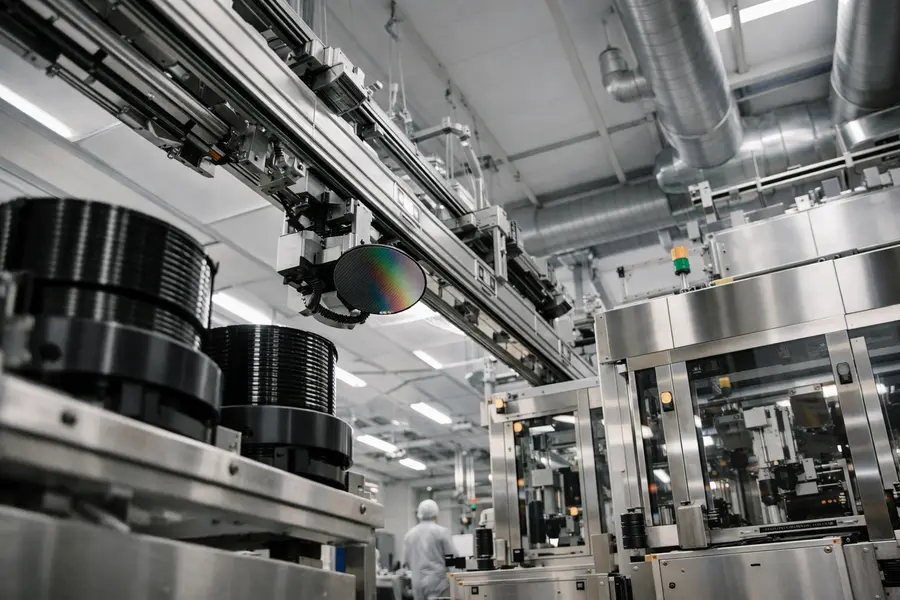
NXP Semiconductors shares fell as much as 9% after hours as a $3.85 billion fourth-quarter revenue forecast only matched Wall Street expectations despite a third-quarter beat.
- NXPI fell roughly 8% to 9% in extended trading after guiding Q4 revenue to about $3.85B, in line with consensus.
- Q3 revenue rose 19% to $3.79B and non-GAAP EPS reached $4.20, ahead of the $4.11 consensus.
- NXP authorized a new $5B buyback, lifting total repurchase capacity to $6.3B.
Lead
NXP Semiconductors (NASDAQ: NXPI) shares dropped sharply in after-hours trading on Tuesday, October 27, 2026. The Dutch chipmaker guided fourth-quarter revenue to roughly $3.85 billion at the midpoint, plus or minus $100 million. That figure sits essentially on top of the average market estimate of about $3.87 billion. The stock traded near $234 in extended hours, down more than 7% at the time of the first quotes, and the decline deepened toward 9%. The reaction followed a third quarter in which NXP beat on revenue, margins and earnings per share.What Did NXP Report for the Third Quarter?
NXP reported third-quarter revenue of $3.79 billion, up 19% from a year earlier and 8% from the prior quarter. Non-GAAP earnings per share came in at $4.20, up 35% year over year and above the $4.11 consensus. GAAP net income attributable to stockholders was $884 million, or $3.48 per diluted share.
Profitability improved alongside sales. Non-GAAP gross margin was 58.6%, up 160 basis points from a year earlier. Non-GAAP operating margin reached 37.1%, up 330 basis points. Non-GAAP free cash flow totaled $1.21 billion, or 32% of revenue.
Segment Performance
Growth was concentrated in industrial and infrastructure markets rather than handsets:
- Automotive: $2.07 billion, up 13% year over year.
- Industrial and IoT: $802 million, up 39%, led by data centers, factory automation and healthcare.
- Communication infrastructure: $503 million, up 54%.
- Mobile: $411 million, down 4%.
Combined, automotive and industrial revenue grew about 30% from a year earlier. The company pointed to data center infrastructure as a source of continued momentum.
Why Did NXP Shares Fall Despite the Earnings Beat?
NXP shares fell because the fourth-quarter outlook offered no upside to what the market had already priced in. Guidance of $3.85 billion implies about 15% year-over-year growth and a sequential gain of roughly 2%. That is a slower pace than the 8% sequential increase in the third quarter.
The earnings forecast followed the same pattern. Non-GAAP EPS guidance of $4.36 at the midpoint implies roughly 30% annual growth, but it adds only 16 cents to the third-quarter result. The projected non-GAAP gross margin of 59% is a modest step up from 58.6%, attributed to manufacturing utilization and product mix.
In semiconductors, a stock that has rallied on a cyclical recovery tends to need a beat-and-raise pattern to hold its gains. A forecast at the midpoint of expectations leaves no margin for disappointment, and after-hours trading, with thinner liquidity, often magnifies the reaction.
Capital Returns and Longer-Term Targets
NXP's board approved a new $5 billion share repurchase authorization, bringing total buyback capacity to $6.3 billion. The company's capital allocation policy also directs about 25% of operating cash flow to dividends.
Management also reiterated a longer-term goal of doubling non-GAAP EPS by 2030 from a 2024 baseline of $13.09. That implies annual earnings of about $26 by the end of the decade, a target that depends on continued share gains in automotive electrification, industrial automation and data center connectivity and power management.
Why Does the Mobile Weakness Matter?
Mobile revenue matters because it is the only major end market still shrinking, and it shows how uneven the recovery remains. A 4% decline to $411 million is small against a total of $3.79 billion. It does show that growth rests on a narrower set of drivers, chiefly automotive content per vehicle and infrastructure demand. If either slows, there is little offset elsewhere.
Automotive growth of 13% is also slower than the 30% pace for automotive and industrial combined, which signals that the faster expansion is coming from industrial and data center exposure. Those segments are also more tied to capital spending cycles.
What Comes Next for NXP?
NXP's next catalyst is the fourth-quarter report, when the company will show whether the $3.85 billion forecast was conservative. Past patterns in the sector suggest that guidance set at consensus is often followed by results at the upper end of the range, though that outcome is not assured.
Three variables will shape the path. The first is the trajectory of automotive demand as vehicle production schedules adjust. The second is whether industrial and data center orders keep growing at current rates. The third is the pace of buybacks, which can support earnings per share even if revenue growth moderates. The immediate market question is whether NXP's stock, which entered the report after a strong run, can hold its valuation without raised expectations.
Outlook
NXP delivered a clean third quarter, with revenue up 19%, a 37.1% operating margin and $1.21 billion in free cash flow. Its fourth-quarter guidance of about $3.85 billion matched consensus rather than exceeding it, and the stock fell about 8% to 9% in after-hours trading. With a larger buyback in place and a 2030 earnings target on the table, the focus shifts to whether industrial and data center growth can offset soft mobile demand and a plateauing automotive recovery.
Mentioned tickers: NXPI