Pomegra
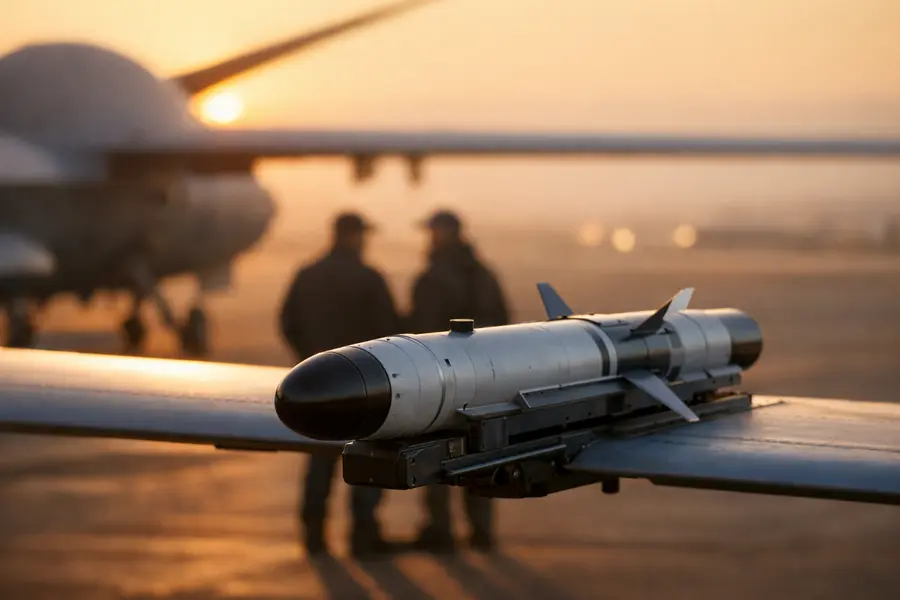
Calgary's North Vector Dynamics closed a Series A above US$20M led by Tech Horizons to scale production of its low-cost CM-70 counter-drone missile in 2027.
Key Takeaways
- North Vector Dynamics raised C$29M+ (over US$20M) in a Series A led by Tech Horizons, announced October 26, 2026.
- The round values the Calgary company above US$90M (about C$126M).
- Proceeds fund factory buildout, supply chain control, hiring and new offices in the US and Europe.
Lead
North Vector Dynamics (NVD), a Calgary defence startup building missile interceptors for small drones, announced on October 26, 2026 that it closed a Series A of more than C$29M, or over US$20M. Tech Horizons, a European venture fund that backed the company earlier, led the round. ONE9, Garage Capital, CSG, Ripple Ventures, Feld Ventures and Conconi Growth Partners also took part. The post-money valuation sits above US$90M.
The company says the money will go to manufacturing and assembly, tighter control of its supply chain, hiring, and offices in the United States and Europe. It is a sizable cheque for a Canadian defence hardware company at this stage, and one of the larger defence-tech rounds raised in the country.
What Is the CM-70 and Who Is It Meant to Replace?
The CM-70 is a precision-guided missile designed to destroy fast, maneuverable drones, and it targets the cost gap between cheap attack drones and the expensive interceptors used to stop them. Published specifications put it at under one metre long and roughly 3 kg, with a top speed near 900 km/h and a range of about two miles. It can launch from ground, vehicle, drone or air platforms and is built to plug into existing air defence systems.
The company markets the missile as free of US ITAR export controls, which matters to allied buyers wary of American licensing delays. The implied competitor is the APKWS, the guided rocket kit from BAE Systems that militaries have adapted for counter-drone work. NVD has not disclosed a unit price for the CM-70, so its cost advantage remains a claim rather than a figure.
Who Is Behind the Round, and What Does the Cap Table Say?
Canadian investors hold a minority of the round, with the balance from European and US backers. That mix reflects where the demand is: Ukraine and the Gulf are the theatres NVD's chief executive, Paul Ziadé, has pointed to when discussing urgency. CSG, a Czech defence group, is both an investor and a commercial partner, with a deal covering European manufacturing and integration of the CM-70 into CSG systems.
The founders came from academia. Ziadé and chief science officer Craig Johansen are former University of Calgary engineering professors, and co-founder Colin Hill brings rocket propulsion and aerodynamics experience. Tom Lawson, a retired general and former Chief of Defence Staff, serves as strategic adviser. The company was founded in 2022 as an engineering research firm and moved into air defence in 2024.
Is the Valuation Justified Before Fielding a Weapon?
The valuation looks aggressive on its face, because no military has yet fielded the CM-70 and the company has not named a launch customer. Investors are pricing in demand more than revenue. Government support so far is modest: a four-year, C$4.2M contract with Defence Research and Development Canada covering high-speed aeropropulsion, and a C$2.5M grant under the national defence innovation program.
The counterweight is the market. Drone attacks have forced armies to burn through interceptors costing many times the price of the targets, and procurement officials in several allied countries are looking for cheaper options. A round of this size also gives NVD the cash to build capacity before orders arrive, which is the usual constraint for defence startups. The risk is that qualification and procurement cycles run longer than a funding runway.
What Comes Next for NVD's Production Plans?
NVD plans a 25,000-square-foot manufacturing facility and is targeting production in the thousands of missiles a year during 2027. It also intends to bring fuzes and other supply chain components in-house, which should reduce dependence on outside vendors. The roadmap includes later work on hypersonic propulsion.
Ottawa's 2026 Defence Industrial Strategy, which favours domestic suppliers, improves the odds of Canadian orders. Ziadé said the strategy's signals have changed the defence environment in Canada. The next milestones to watch are a named launch customer, a disclosed unit price and the first deliveries.
Outlook
NVD has raised enough to move from validation to volume production, with a European lead investor, a Czech industrial partner and a Canadian policy tailwind. What it lacks is a fielded product, a stated price and a confirmed buyer. Delivery of the factory and the first CM-70 units in 2027 will show whether the valuation above US$90M was earned or merely anticipated.