Pomegra
Rivian acquired UK simulation startup Third Dimension AI on Oct. 22, 2026, to turn its fleet's driving footage into editable 3D test scenes for autonomy.
Key Takeaways
- Rivian bought Third Dimension AI on Oct. 22, 2026; terms were not disclosed.
- The startup raised a $7M seed round led by Felicis in October 2024.
- Its 15 staff, mostly UK-based, join Rivian's autonomy and AI group.
Lead
Rivian announced on Oct. 22, 2026 that it had acquired Third Dimension AI, a 15-person startup that converts real driving footage into editable 3D simulation environments. The price and structure were not disclosed. The team joins Rivian's autonomy and AI organization, led by James Philbin, and the deal lets Rivian expand its AI hub in London.
This is a capability purchase aimed at a specific bottleneck. Rivian wants to rerun rare, dangerous road events with different lighting, weather and traffic, without waiting for them to happen again.
What Does Third Dimension AI Actually Build?
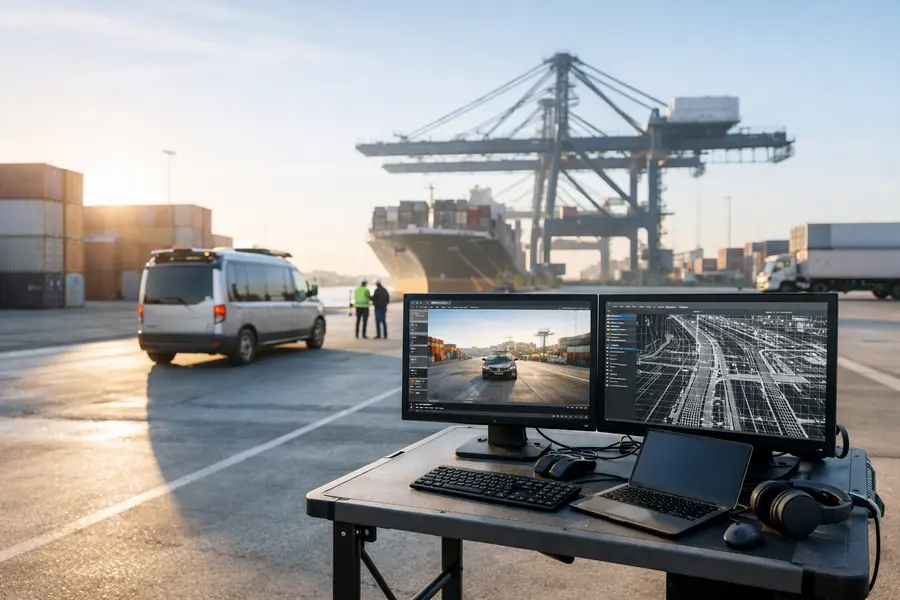
Third Dimension builds a platform that reconstructs real-world scenes from sensor data and turns them into controllable 3D environments. Engineers can then change variables such as lighting, weather and the behavior of other road users, and replay the same situation many ways.
The company was founded in 2024 by CEO Tolga Kart and Piotr Sokolski. Kart previously ran Autopilot technical program management and simulation at Tesla, was a senior director on Call of Duty at Activision, and later served as VP of Engineering at synthetic-data company Parallel Domain. Sokolski spent four years at Wayve building photorealistic neural simulators.
The startup came out of stealth in October 2024 with a $7M seed round led by Felicis. Abstract Ventures, MVP and Soma Capital also took part, and Solari Capital is listed among the backers. No later round or valuation was disclosed. The company's early pitch targeted game and content creators as much as automakers, so the Rivian deal narrows its focus considerably.
Why Did Rivian Buy a Simulation Startup?
Rivian bought the company because rare edge cases are what stall driver-assistance systems, and real fleets rarely capture them on demand. A mattress in the fast lane, an officer waving traffic through a red light, or a child stepping out between parked cars appears too seldom in raw footage to train on reliably.
Rivian already has the raw material. Its fleet of R1T, R1S, R2 and commercial van owners who opt in to data sharing sends back more than 400,000 driving sequences a day. Philbin said the technology lets engineers "shift other agents" and try "different lighting or weather conditions" on events that actually happened, rather than on purely synthetic scenes. He also described simulation as central to how Rivian trains and validates its driving systems.
That distinction matters. Fully synthetic data can drift from reality, while edited real scenes keep the original geometry and behavior as an anchor. Whether the method holds up at scale is unproven, and Rivian has not published validation results.
Is This an Acquihire or a Technology Buy?
It is closer to a technology and talent buy by a company with a defined use case. Rivian absorbed the full 15-person team, and most of them remain in the UK, which expands a London presence the automaker has been building for AI work.
The price tag was not disclosed, though a seed-stage company with $7M raised and a small headcount suggests a modest sum. Rivian gets a working pipeline from fleet data to scene generation, plus engineers who have built similar systems at Tesla, Wayve and Parallel Domain. Building that in-house would have required hiring from the same small pool.
What Is the Autonomy Roadmap Behind the Deal?
The deal sits inside a staged plan with firm dates attached. Rivian is rolling out a point-to-point driving feature to select Autonomy+ owners in 2026, targets "eyes-off" driving in 2027, and plans Level 4 capability in 2028 on its Gen 3 hardware. Rivian currently offers Universal Hands-Free driving on highways.
The commercial anchor is its partnership with Uber, which covers up to $1.25 billion in investment for 10,000 driverless R2 robotaxis. Deployments are scheduled to begin in San Francisco and Miami in 2028 and expand to 25 cities through 2031. A robotaxi carries no safety driver, so the validation burden is much heavier than for a consumer assist feature, and simulation is how developers cover miles that road testing cannot.
How Does This Compare With Rivals?
Tesla, Waymo and Wayve all run large simulation programs, and Rivian is smaller and later to the field. Buying a team with direct experience at two of those organizations is a faster route than building from scratch. It also gives Rivian a proprietary tool rather than a licensed one, which keeps its edge-case library in-house.
Consensus among industry observers is that simulation quality will matter as much as fleet size over the next several years. Rivian's fleet is far smaller than Tesla's, so extracting more training value from each clip is a rational priority. The acquisition is a bet that editing each captured event many times can partly offset that gap.
What Comes Next?
Three things will show whether the purchase pays off. First is integration: how quickly Third Dimension's tooling plugs into Rivian's training pipeline and the Gen 3 hardware program. Second is evidence, meaning whether Rivian shows that models trained on edited scenes handle real-world edge cases better. Third is the 2027 eyes-off milestone, the first public test of whether the autonomy stack is on schedule for the 2028 robotaxi launch.
Risks are plain. Reconstructed scenes can contain artifacts that teach a model the wrong lessons, and regulators will want safety evidence that does not rest only on simulated miles. A slip in the 2027 or 2028 dates would also put pressure on the Uber timeline.
Outlook
Rivian paid an undisclosed sum for a $7M-seed team whose product turns the 400,000 clips its fleet sends back each day into reusable test scenarios. The deal gives Rivian in-house simulation tooling and a larger London footprint as it works toward eyes-off driving in 2027 and driverless R2 robotaxis in 2028. Results from those milestones, rather than the acquisition itself, will show whether the technology closes the edge-case gap.