Pomegra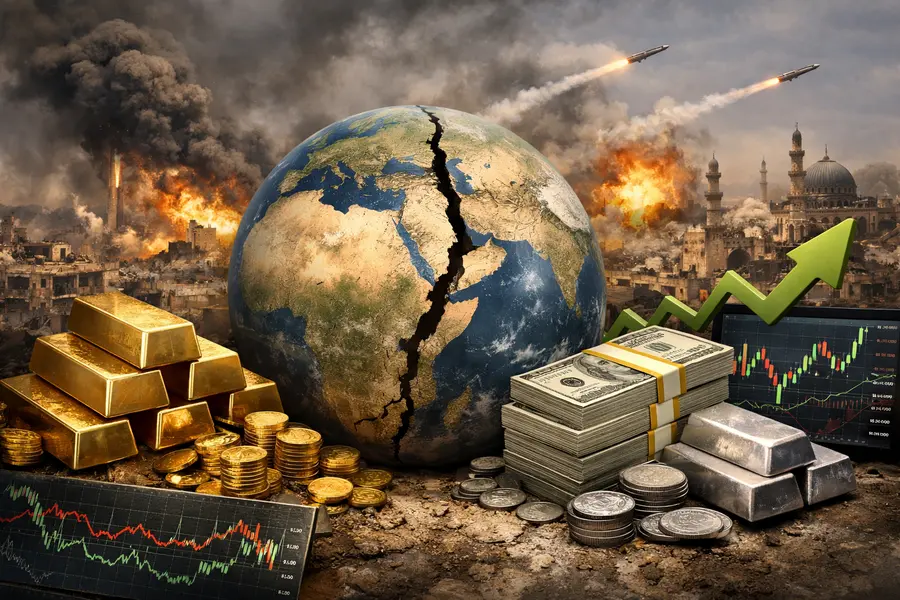
Iran's war has upended safe-haven hierarchies, lifting gold to a record $5,405/oz while redirecting capital toward the dollar as Strait of Hormuz tensions persist into July.
- Gold surged to a record $5,405/oz in January 2026 before retreating toward $4,000 as rising Treasury yields competed with safe-haven demand
- The Strait of Hormuz blockade has been described by the IEA as the largest oil supply disruption in the history of global energy markets
- The yen and U.S. Treasuries have failed as textbook safe havens; the dollar and Swiss franc have emerged as the conflict era's most durable defensive instruments
Lead
Gold, U.S. Treasury bonds, and the dollar were each redefined as safe-haven instruments during the first half of 2026, as the conflict between the United States, Israel, and Iran — ignited by coordinated strikes on February 28 — produced what strategists describe as a seismic shift in the geography of capital flight. The collapse of the interim ceasefire on July 8, followed by renewed U.S.-Iranian exchanges in the Strait of Hormuz that sent Brent crude up more than 4 percent on July 13, has investors once again reassessing which assets can genuinely protect portfolios in a world where inflation is itself a weapon of war.What Happened
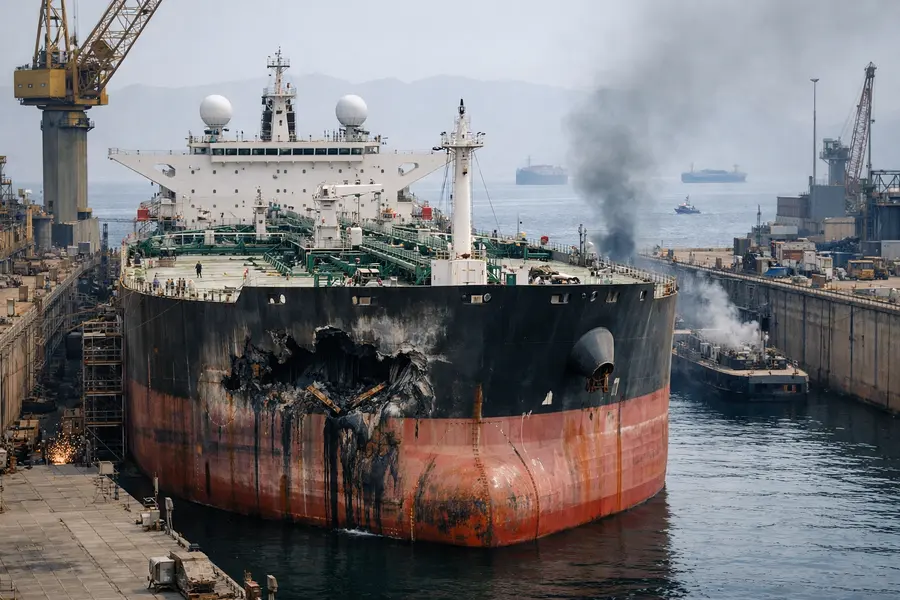
The conflict began with U.S. and Israeli air strikes against Iran on February 28, 2026, prompting Tehran to close the Strait of Hormuz to commercial shipping. The International Energy Agency characterized the closure as the largest supply disruption in the history of the global oil market, pushing Brent crude from roughly $60 per barrel at year-end 2025 to above $120. The shock triggered an immediate flight to safety: gold surged to a record $5,405 per ounce in January 2026 on escalating anticipation of a wider conflict, and Wall Street pivoted to what strategists labeled a "haven-first" strategy, positioning across physical gold, sovereign bonds, and defensive currencies.
A 60-day Islamabad Memorandum of Understanding, signed June 17 between U.S. and Iranian leadership, briefly eased the standoff. Oil retreated, bond yields steadied, and gold slid back toward $4,000 as the geopolitical premium partially unwound. That relief proved short-lived. Iran's Revolutionary Guard struck a Qatari LNG carrier in the Strait on July 7, the truce formally collapsed the following day, and markets re-entered a risk-off posture.
Market Reaction
The renewed breakdown exposed deep fractures in the conventional safe-haven framework. Gold fell below $4,000 per ounce by mid-July, trading near $3,988, despite escalating hostilities — a paradox that market participants attribute to competing macro forces. Sustained Strait of Hormuz disruption has kept oil elevated, lifting inflation expectations and pushing the U.S. 10-year Treasury yield to nine-month highs near 4.45 percent. Higher real yields make yield-bearing assets more attractive relative to non-yielding gold, suppressing the metal's risk premium.
U.S. Treasuries themselves have failed the textbook safe-haven test. Yields have risen during risk-off sessions rather than fallen — a dynamic last observed clearly during the 2022 inflation shock — as fiscal uncertainty and oil-driven inflation expectations overpower the traditional flight-to-quality bid in sovereign debt. German Bund yields have simultaneously climbed to their highest levels since February 2026, recording their largest weekly rise in more than a year.The New Safe-Haven Hierarchy
The fracturing of conventional safe-haven behavior has produced clear winners and losers. The U.S. dollar, trading near a DXY of 98, has emerged as the dominant near-term defensive instrument, benefiting simultaneously from safe-haven demand and a yield advantage over most G10 peers. The Swiss franc has gained to an 11-year high against the greenback, making it the most consistent safe-haven performer of the conflict era. Switzerland's insulation from energy-imported inflation — unlike Japan or the eurozone — has preserved the franc's defensive mechanics while the Japanese yen has weakened to multi-decade lows against the dollar, illustrating how an oil-dependent, energy-importing economy fundamentally undermines the yen's crisis-period role.
The European Central Bank has warned that prolonged conflict risks triggering stagflation and could push Germany and Italy into technical recession before the end of 2026.
Structural Demand and Gold's Long-Term Floor
Beneath the near-term volatility, a structural reorientation in gold demand is reshaping long-term price support. Central banks in emerging markets — particularly across Asia and the Middle East — have accelerated purchases of physical gold as monetary insurance, seeking assets free of counterparty risk and immune to asset freezes. Eastern household and institutional demand now provides durable price floors even as Western financial flows determine short-term direction.
Gold has still gained approximately 18 percent in 2026 as a whole, building on a decade-long rally of roughly 240 percent since the early 2020s. The retreat toward $4,000 is therefore occurring at historically elevated levels — consolidation within a structurally bullish cycle rather than a regime reversal.
Geopolitical Dimension
The 2026 Iran conflict differs from prior Middle East crises in its market mechanics. Unlike the 2022 Ukraine invasion, which produced a sharp but short-lived safe-haven spike across bonds, gold, and the franc, the Iran conflict has generated a sustained stagflationary backdrop — high oil, rising yields, and slowing growth simultaneously. That combination has split the risk-off trade in ways investors rarely encounter, rewarding assets tied directly to the conflict's economic transmission channel — oil, the dollar, and physical commodities — while penalizing the older textbook playbook of bonds and the yen. Gulf real estate has fallen approximately 30 percent in value since March 2026, and shipping insurance premiums for Hormuz-adjacent routes have surged, compounding inflationary pressure across global supply chains.
Outlook
The collapse of the July ceasefire has reset market expectations for a swift resolution. As long as the Strait of Hormuz remains contested, elevated oil prices will likely keep Treasury yields high, limiting gold's traditional safe-haven premium in the near term. The dollar and Swiss franc appear positioned as the most durable defensive instruments in the current environment. Gold retains long-term structural demand from central bank diversification and Eastern buyers, and any de-escalation that eases oil price pressure could rapidly revive the metal's appeal. The seismic shift in safe-haven behavior this year reflects not just a regional conflict, but a deeper market reassessment of which assets preserve wealth when inflation and geopolitical risk arrive simultaneously.