Pomegra
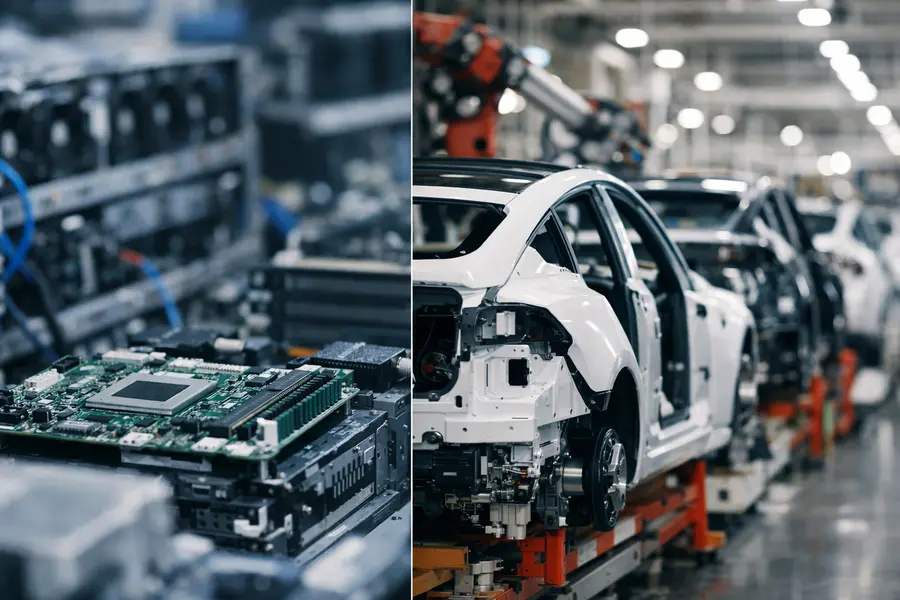
Meta and Tesla report Q3 2026 results after the bell today, with Meta's $41B AI capex and negative free cash flow and Tesla's margin squeeze in focus.
- Meta is forecast to post $63.3B in revenue and spend about $41B on capital expenditure, up 117% from a year earlier.
- Tesla is forecast to report flat revenue near $28.1B and adjusted EPS of $0.44 to $0.45, down from $0.50.
- Both companies report after the close on Wednesday, October 21, opening Big Tech earnings season.
Lead
Meta Platforms (META) and Tesla (TSLA) report third-quarter results after the closing bell on Wednesday, October 21. They are the first of the large technology names to report this season. The two companies pose different questions. Meta must show that record artificial intelligence spending is compatible with positive cash generation. Tesla must show that its core automotive business can hold margins while revenue stalls. Wall Street's major indexes were higher heading into the reports, with the S&P 500 near 7,764 and the Nasdaq Composite near 26,742.What Is Meta Expected to Report for Q3 2026?
Meta is expected to report revenue of about $63.3B and earnings per share of $3.56, against $51.2B in revenue a year earlier, a gain of roughly 24%. Year-ago EPS of $1.05 was depressed by a one-time charge, which inflates the headline growth rate in profit.
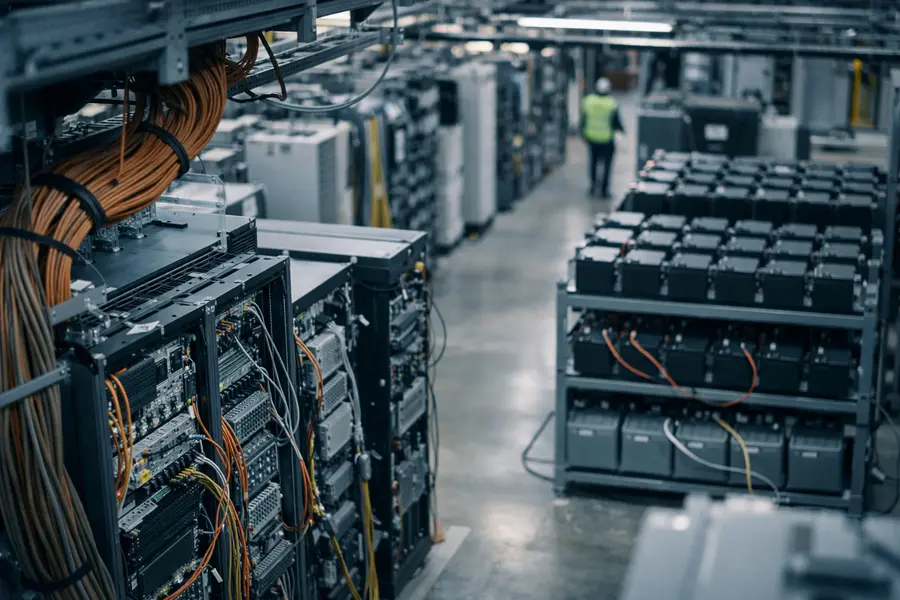
The more important number is spending. Capital expenditure is forecast at roughly $41B for the quarter, more than double the prior-year level. Reality Labs, the company's metaverse and wearables unit, is expected to post an operating loss of about $5.2B. For anyone tracking nasdaq meta as a bellwether for the AI buildout, the quarter will test how much of the advertising windfall the data center program is absorbing.
Why Does Meta's AI Spending Matter for Free Cash Flow?
Meta's AI spending matters because it is consuming nearly all of the cash its advertising business generates. In the second quarter, Meta spent about $31B on capex and produced only $784M of free cash flow, compared with $8.55B a year earlier. The shares fell about 10% after that report.
Consensus for the third quarter points to negative free cash flow. Full-year capex guidance stands at $130B to $145B. The sharper focus is 2027. Some estimates have next year's capital spending rising by a similar dollar amount to this year's increase, around $70B, and expense targets above current consensus. A signal on that trajectory will matter more to the share price than the quarterly revenue figure. Management comments on monetizing excess computing capacity, including a possible cloud business raised after the last report, will also draw scrutiny.
What Is Tesla Expected to Report for Q3 2026?
Tesla is expected to report revenue of $28.06B to $28.13B, flat from $28.1B in the third quarter of 2025, with adjusted EPS of $0.44 to $0.45 and adjusted EBITDA of $3.66B. Estimates for EPS range from $0.30 to $0.70. Consensus operating income is about $760M, a 2.7% margin, up from $400M in the second quarter.
Deliveries were stronger than expected. Tesla delivered 486,532 vehicles, down 2.1% from the record 497,099 in Q3 2025 but about 24,000 above consensus of roughly 462,000. Model 3 and Model Y accounted for 478,237 units, while other models, including Cybertruck and Semi, fell 48% to 8,295. Energy storage deployments rose 9.6% to 13.7 GWh, short of the roughly 15.9 GWh expected.
Why Is Tesla's Margin Under Pressure?
Tesla's margin is under pressure because falling prices, rising operating costs and weaker regulatory credit income have compressed profitability even as volumes hold up. Automotive gross margin dropped to 16.3% in the second quarter from 19.2% in the first. Operating income fell 57% to $398M, while operating expenses rose 47% to $4.35B. Regulatory credit revenue declined 67% to $146M.
Consensus gross margin for the third quarter is 17.7%, against 16.8% in the second. Cash flow is the second pressure point. Tesla burned $1.09B of free cash flow in the second quarter and spent $5.8B on capex, with full-year capital spending guided above $25B. That outlay funds the robotaxi, Full Self-Driving, Optimus humanoid robot and AI compute programs that underpin much of the valuation. Merger speculation around Elon Musk's wider business empire adds a secondary storyline to the call.
What Comes Next for Big Tech Earnings?
Wednesday's reports set the tone for the rest of the season. If Meta confirms a steep 2027 capex step-up while cash flow stays negative, scrutiny shifts to every large spender in the ai stocks group that follows. If Tesla's margin recovers toward the 17.7% consensus, the market narrative on its auto business stabilizes. If it does not, the stock leans even more heavily on autonomy and robotics milestones.
Outlook
Meta enters the print with revenue growth near 24% and a cash balance sheet absorbing an unprecedented investment cycle. Tesla enters with flat sales, a delivery beat and a profit squeeze. Guidance on 2027 capex at Meta and on margins and capital spending at Tesla will drive after-hours trading and set the template for the Big Tech reports that follow.
Mentioned tickers: META, TSLA