Pomegra
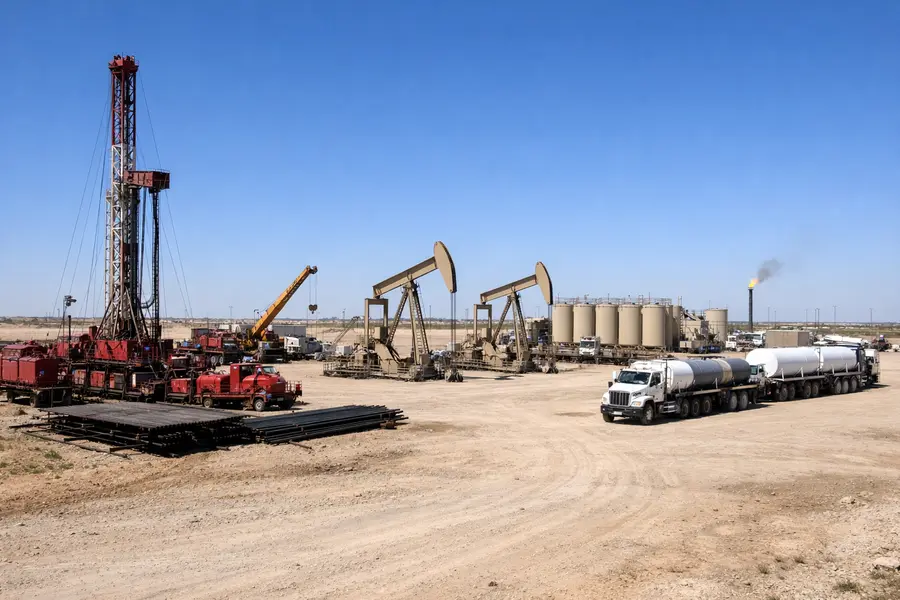
Halliburton (HAL) and KeyCorp (KEY) beat Q3 2026 estimates; HAL targets about 15% operating margins in 2027 while KEY jumped about 4.5% on record revenue.
- Halliburton adjusted EPS of $0.60 beat the $0.58 consensus on $5.7 billion in revenue.
- The CEO projects mid-single-digit 2027 revenue growth and operating margins near 15%.
- KeyCorp adjusted EPS rose 24% to $0.51 and revenue hit a record above $2.0 billion.
Lead
Halliburton shares rose roughly 2% to 4% on Tuesday after the oilfield services provider reported third-quarter 2026 adjusted earnings of $0.60 per share, ahead of the $0.58 consensus, on revenue of $5.7 billion. Chief Executive Jeff Miller said he expects mid-single-digit revenue growth and operating margins of about 15% in 2027. Separately, KeyCorp gained about 4.5% after the Cleveland-based regional bank posted adjusted earnings of $0.51 per share against estimates of $0.46.What Did Halliburton Report for the Third Quarter?
Halliburton reported revenue of $5.7 billion, flat from the second quarter, with net income of $417 million, or $0.50 per diluted share. Adjusted earnings rose to $0.60 per share from $0.55 in the prior quarter. Adjusted operating margin was 12.8%, and reported operating margin was 10.9%. Adjusted EBITDA reached $1.0 billion, up from $948 million.
International revenue was $3.5 billion, up 3% sequentially, led by higher activity in the Middle East and Asia. North America revenue fell 5% to $2.2 billion as stimulation activity on U.S. land declined.
The segments split along the same line. Drilling and Evaluation revenue rose 4% to $2.6 billion, and operating income climbed 16% to $391 million on strength in the Middle East and Latin America. Completion and Production revenue slipped 4% to $3.1 billion, with operating income of $457 million, also down 4%.
Operating cash flow was $368 million and free cash flow was $156 million. The company repurchased about $250 million of stock and maintained its dividend at $0.17 per share.
What Does the 2027 Outlook Mean for Halliburton?
The 2027 outlook implies operating margins about 200 basis points above current levels, with revenue growing in the mid-single digits. A basis point is one hundredth of a percentage point, so the target amounts to roughly two percentage points of margin expansion.
The outlook assumes a flat North American market and does not depend on a recovery in U.S. hydraulic fracturing. Management treats any rebound there as upside. The plan rests instead on international and offshore activity, where contracts run longer and pricing has held steadier than in U.S. shale.
Investors rewarded the visibility. North American weakness has weighed on the oilfield services group this year, and a margin path that does not need a domestic recovery addressed the main concern.
Why Did KeyCorp Shares Jump on Its Q3 Beat?
KeyCorp shares rose because the bank beat on profit and reached a return target it had set for itself. Adjusted earnings of $0.51 per share were up 24% from a year earlier and 10.9% above consensus. Revenue rose 8% year over year to a record of about $2.04 billion, just under the $2.05 billion forecast.
Return on tangible common equity topped 15% for the first time under the bank's profitability framework. The ratio measures profit against shareholder capital net of goodwill and is a primary yardstick for bank valuations.
Net interest margin, the spread between what a bank earns on loans and securities and what it pays on deposits, widened 6 basis points sequentially to 2.95%. Drivers included commercial loan growth, deposit growth, funding optimization, securities and swap repricing, and one extra day in the quarter.
Average total deposits rose $3.6 billion from the second quarter. Client deposits excluding certificates of deposit increased $2.8 billion, or 1.9%. Credit quality also improved, which reduced pressure on loan-loss provisions.
Market Reaction
Both stocks advanced on earnings day, and KeyCorp's gain was the larger of the two. Its shares traded near $20.56 during the session. Halliburton's move was smaller, as international strength was partly offset by the decline in North America.
The two reports show different parts of the economy. Halliburton is exposed to global energy capital spending, where demand is shifting toward the Middle East and offshore projects. KeyCorp reflects commercial lending and deposit trends tied to the interest rate path set by the federal reserve.
Strategic Context
For Halliburton, the quarter reinforces a pivot toward international work, where margins are more resilient than in the U.S. land market. Buybacks of about $250 million in a single quarter show the company is returning cash even as free cash flow remains modest.
For KeyCorp, the result puts the bank on track with its stated return goals. Record revenue and a widening margin suggest the earnings drag from earlier balance-sheet repositioning is fading.
Outlook
Halliburton enters 2027 with a stated target of about 15% operating margins and mid-single-digit revenue growth. It will have to show that international gains can offset a soft North American market. KeyCorp now has a 15% return benchmark to defend. Its next test is whether net interest margin can keep expanding from 2.95% while deposit growth continues and credit quality holds.