Pomegra
South Korea's KOSPI surged 3.6% to 6,813 on semiconductor strength while Hong Kong's Hang Seng board dropped 1% to 25,137 and Shanghai slipped 0.5%.
- KOSPI climbed 3.56% to 6,813, with SK Hynix up 5.9% and Samsung Electronics up 4.9%, reclaiming bull-market territory.
- Hong Kong's Hang Seng board fell 1% to 25,137 as offshore investors trimmed China exposure faster than domestic buyers.
- Shanghai's composite slipped 0.5% to 3,927, reinforcing a structural split between internationally accessible and mainland markets.
Lead
Seoul, August 15 — South Korea's KOSPI closed 3.56% higher at 6,813.34, driven by a broad surge in semiconductor and AI hardware stocks, as the seoul exchange emerged as Asia's clearest beneficiary of the global artificial-intelligence investment cycle. The gain pushed the index more than 20% above its July trough, meeting the technical threshold for a bull market. Hong Kong's Hang Seng board moved in the opposite direction, falling 1% to 25,137 as offshore investors reduced China exposure, while Shanghai's benchmark declined 0.5% to 3,926.
What Happened
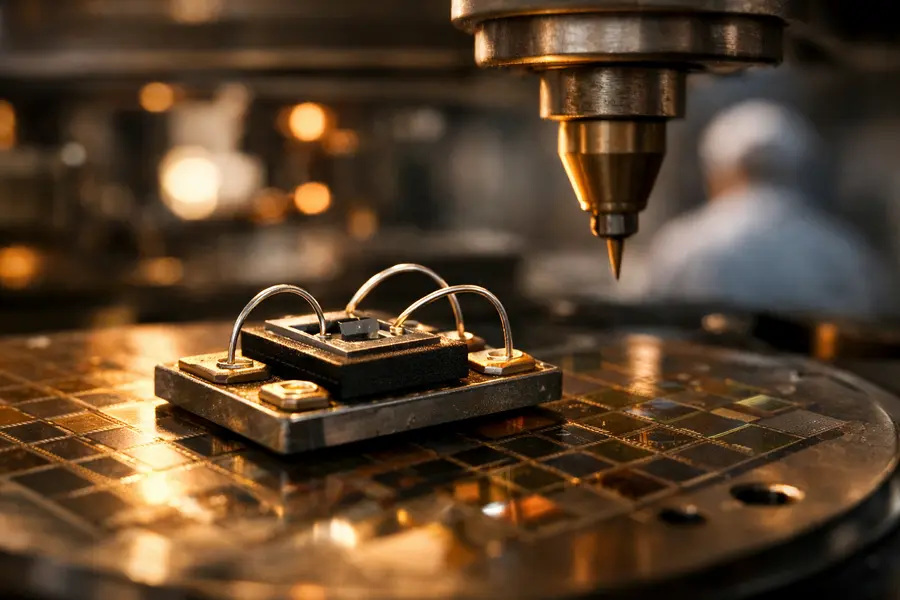
Samsung Electronics advanced 4.89% and SK Hynix climbed 5.92%, with Samsung Electro-Mechanics leading the session with a 12.58% surge as investors rotated into the broader semiconductor supply chain. The moves reflected sustained demand signals for high-bandwidth memory chips used in AI accelerators, a segment in which the two Korean heavyweights hold dominant global positions.The seoul exchange entered a sharp corrective phase through late July, with forced selling from leveraged positions compounding the decline. The recovery has been equally swift: the KOSPI has risen more than 20% from its July low at a pace that outstrips every other major Asian index over the same period.
Softer-than-expected U.S. inflation data released earlier in the week reduced expectations for a Federal Reserve rate increase in September, providing a supportive macro backdrop. Japan's Nikkei 225 also benefited, rising 1.16% to 68,308 on the same chip-sector tailwind, though the magnitude of Korea's gains was roughly three times larger.
Hang Seng Board Under Pressure
The Hang Seng board closed at 25,137, shedding approximately 1% in a session marked by sustained selling from offshore institutional investors. The decline stands in contrast to Shanghai's more modest 0.5% pullback, a divergence that reflects differing investor bases: Hong Kong, freely accessible to international capital, amplifies shifts in global risk appetite, while mainland China's markets remain partially insulated by capital controls and domestic liquidity flows.
The pattern of the Hang Seng board falling faster than Shanghai during China risk-off episodes is well established. Offshore investors reassessing earnings visibility for Chinese technology and property-adjacent companies have consistently used Hong Kong-listed shares as the path of least resistance for trimming exposure.
Strategic Context
The session crystallized a structural theme building across the seoul exchange since early 2026: Korea's semiconductor industry is disproportionately positioned to capture AI infrastructure spending. SK Hynix is the primary supplier of high-bandwidth memory to the world's leading AI chipmakers, and Samsung Electronics commands the leading share in both DRAM and NAND flash production. As hyperscalers in the United States and Asia accelerate data center buildouts, order visibility for Korean chip makers has extended well into 2027.
Strategists at major investment banks have identified the KOSPI as their highest-conviction equity market in Asia, citing a 2026 earnings growth projection of approximately 300% — a figure that reflects the depth of the prior-year earnings trough as much as the current recovery. That expansion rate is the steepest for any Asian market since the recovery from the 1999 Asian financial crisis.
Samsung Electro-Mechanics, which manufactures advanced multilayer ceramic capacitors and camera modules for AI-capable smartphones and servers, has also become a direct proxy for the AI supply-chain trade, explaining its outsized gain on Friday.
Geopolitical Dimension
The divergence between Seoul and Hong Kong reflects not only cyclical positioning but longer-term capital allocation decisions by international institutional investors. Korea's semiconductor industry has benefited from close alignment with U.S. technology policy, including preferential treatment under chip-export frameworks, while Chinese-exposed assets continue to carry a geopolitical premium that offshore investors have grown less willing to absorb.
China's absence of large-scale stimulus — confirmed again this week — reinforces the preference for Korea over China among Asia-focused equity allocators seeking earnings momentum rather than policy-driven recoveries.
Outlook
The seoul exchange faces near-term tests as investors evaluate whether the rally has outpaced underlying earnings delivery. KOSPI valuations have expanded sharply from the July trough, and any deterioration in AI capital expenditure guidance from U.S. hyperscalers would reverberate quickly through Korean chip stocks. On the Hang Seng board, sentiment remains sensitive to Beijing's policy signaling and to further shifts in global risk appetite; a sustained close below 25,000 would attract fresh technical attention. Shanghai's muted movement suggests domestic investors are absorbing the current environment without panic, but without stimulus as a near-term catalyst, material upside on the mainland remains constrained.