Pomegra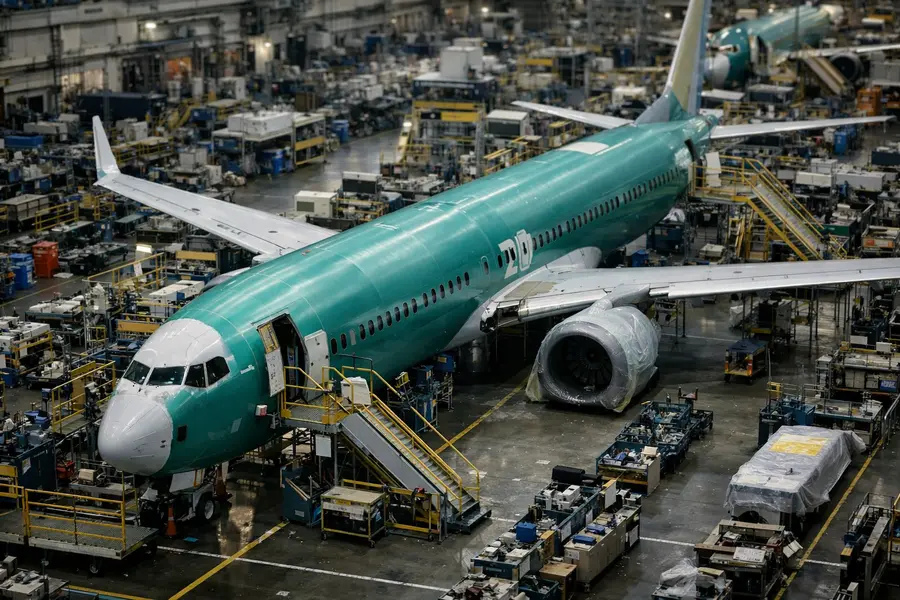
Boeing shares fell nearly 7% on Sept. 28 after the FAA delayed 737 MAX 10 certification over a software glitch, a setback for Boeing in its rivalry with Airbus.
- Boeing shares closed down about 6.9% on Monday after the FAA paused MAX 10 certification.
- The flaw is in GE Aerospace-supplied software and affects automated flight guidance during a go-around.
- Certification had been expected in October; the FAA gave no estimate of the delay.
Lead
Boeing (NYSE: BA) shares closed down about 6.9% on Monday, Sept. 28, 2026, after the Federal Aviation Administration said it would hold off certifying the 737 MAX 10 until a newly disclosed software issue is resolved. The stock had fallen as much as 6.8% earlier in the session and extended its losses after FAA Administrator Bryan Bedford spoke. The Boeing 737 MAX 10 certification delay pushes back the largest variant of the company's narrowbody family, which is designed to compete with the Airbus (EADSY) A321neo.What Is the Software Issue Behind the Delay?
The flaw could prevent pilots from accessing automated flight guidance during a go-around, the maneuver in which a crew abandons a landing, applies power and climbs to set up a second approach. Pilots keep control of the aircraft, but their workload rises during a high-demand phase of flight.
The software was supplied by GE Aerospace (GE). It is unrelated to the flight control software implicated in the two 737 MAX crashes in 2018 and 2019. Boeing is developing a software update to correct the issue.
WestJet said it has seen no in-service problems. Alaska Air Group (ALK) and United Airlines (UAL) said their aircraft do not use the affected software version.
How Long Will the Certification Delay Last?
The FAA has not said how long the pause will last. Bedford said the agency would delay the MAX 10 "until we're satisfied that we don't have an issue here." He said he did not know whether the fix would take days, weeks or months, though he suggested GE may move faster because of the attention on the problem. A Corrective Action Review Board is unlikely to convene before next week.
Certification had been expected in October. Boeing said it continues to follow the FAA's lead as it works through the process.
Why Did Boeing Shares React So Sharply?
Boeing shares fell because the MAX 10 is central to the company's plan to recover ground in the single-aisle market. Investors also read the delay as a risk to delivery timing and cash flow, at a time when Boeing is working to restore confidence in its manufacturing and regulatory record.
The MAX 10 has been in development for years and has already missed several targets. Each slip extends the period in which Airbus sells the A321neo, the longest-range and highest-capacity model in its narrowbody line, without a direct Boeing counterpart in service.
Strategic Context: The Contest With Airbus
Airlines that operate high-density, medium-haul networks favor stretched narrowbodies for their lower per-seat costs. The A321neo has been a leading choice for that role. The MAX 10 was meant to give Boeing a competitive answer and to protect its position with existing 737 customers who want a larger aircraft.
A longer delay could cause some carriers to reconsider order timing or shift capacity plans toward Airbus. Existing MAX 10 orders remain in place, and the FAA has not raised any concern about aircraft already in service.
What Comes Next for Boeing?
The near-term sequence is set by GE's software correction, Boeing's submission of the update and the FAA's review. The Corrective Action Review Board meeting will be the first official step, and the FAA's timing will follow its own assessment of the fix rather than a fixed calendar.
If the correction is delivered quickly, the delay could be measured in weeks and the October target would slip only modestly. A longer process would push first deliveries further into the future and prolong pressure on the stock.
Outlook
The FAA's decision to hold the 737 MAX 10 adds a fresh regulatory hurdle for Boeing and a near-term advantage for Airbus in the large narrowbody segment. Boeing shares fell nearly 7% on the news. The next signals are the review board's meeting, GE's software timeline and any change to the certification schedule.
Mentioned tickers: BA, GE, EADSY, ALK, UAL