Pomegra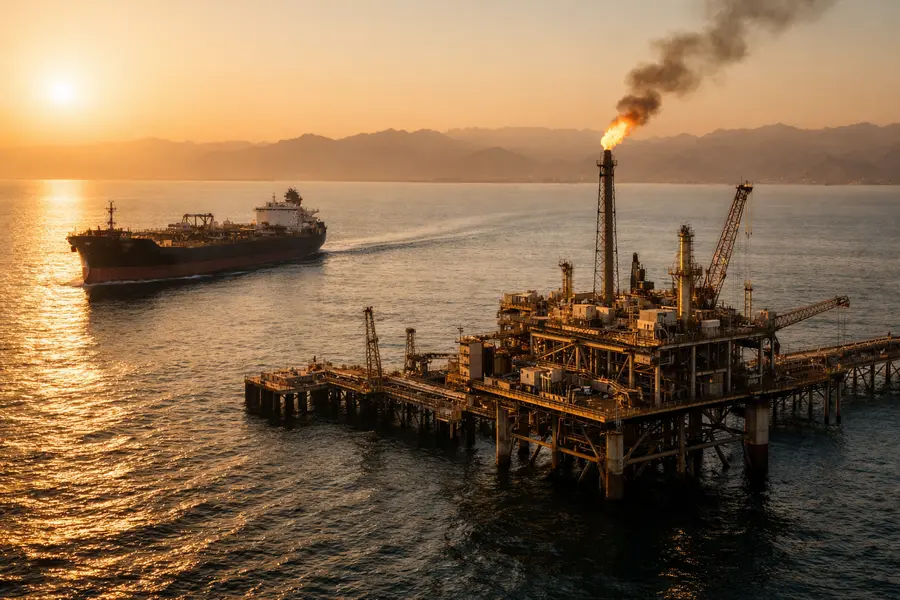
Tehran's sweeping demands for U.S. political concessions before reopening the Strait of Hormuz cement a geopolitical risk premium in crude oil heading into September, with Brent rising 2.93% on August 31 after fresh U.S. strikes on Iranian rocket launchers.
- Brent crude climbed to $90.69 a barrel on August 31 after U.S. forces struck Iranian rocket launchers on Larak Island in the strait's first military action in a month.
- Tehran demands an end to the U.S. naval blockade, full sanctions relief, release of frozen Iranian assets, and war reparations before allowing commercial passage.
- Hormuz vessel traffic has collapsed from more than 100 ships a day to roughly five, disrupting an estimated 5 to 7 million barrels of Gulf crude per day.
Lead
Brent crude settled at $90.69 a barrel on August 31, rising 2.93% on the session, after U.S. Central Command confirmed airstrikes against two Iranian rocket launchers on Larak Island that Revolutionary Guard forces were preparing to use to seed the Strait of Hormuz with sea mines. The attack - the first American military action in the strait in approximately a month - underscored how far the corridor from full reopening remains, as Iran insisted any settlement hinges on the United States meeting a sweeping list of political conditions that Washington has not accepted. The waterway, through which roughly 20% of globally traded oil passed before the conflict began, now sees barely five transiting vessels a day.
What Is Iran Demanding Before Reopening the Strait?
Tehran's national security body has formally listed five preconditions: an end to U.S. military threats against Iran, a halt to aggression toward Iran and its regional allies, removal of the U.S. naval blockade of the Gulf, a full lifting of American sanctions, and the release of frozen Iranian assets. Foreign Minister Abbas Araghchi added a sixth demand - compensation for damage caused by American and Israeli airstrikes since February 2026. He described an Oman-brokered framework as "very close" but stated it could not be implemented until Washington honors commitments made in the June memorandum of understanding that, by Tehran's account, Washington violated within weeks of signing.
The United States and Iran concluded that June 17 accord with the intention of opening the strait to commercial shipping. The agreement collapsed almost immediately as armed clashes erupted over competing claims on permissible transit routes. Iranian forces resumed attacks on commercial shipping in July against vessels Tehran deemed noncompliant with its directives, prompting the fresh U.S. mine-clearance and the August 30 strikes.
Why Did Crude Oil Prices Jump on August 31?
The August 30 strikes snapped more than a month of relative quiet along the strait and rekindled concern that the conflict could intensify before any diplomatic track solidifies. Iran swiftly vowed retaliation, a posture the market priced in immediately. Crude oil price readings reflect two simultaneous supply constraints: a structural deficit caused by the loss of Hormuz throughput, and a geopolitical risk premium tied to the unpredictable tempo of military exchanges. Brent crude surged to approximately $120 a barrel in March 2026 when the disruption first materialized; the subsequent retreat to the $88 to $92 range reflects partial adaptation - rerouting, stockpile drawdowns, emergency OPEC+ coordination - rather than a resolution of the underlying blockage.
Direct crude exports moving through the strait have dropped to an average of 2.2 million barrels a day, down sharply from pre-war levels, according to commodity tracking data. Total Gulf crude exports have fallen roughly 47%, from approximately 17 million barrels a day in 2025 to about nine million barrels a day in August 2026. Analysts place the net daily disruption at 5 to 7 million barrels, a figure that keeps Brent structurally elevated absent a verified settlement.
The Geopolitical Dimension
The backdrop complicates any near-term resolution. The June MOU represented the first formal U.S.-Iran understanding since the aerial campaign that began in late February 2026, and its rapid collapse has eroded trust on both sides. CENTCOM's decision to strike the Larak Island launchers - which were actively being loaded with sea-mine-equipped rockets - may have prevented an immediate escalation of the chokepoint crisis, but Iran's retaliatory rhetoric has hardened. Oman's continued role as a back-channel intermediary is the most active diplomatic thread remaining, but Muscat has been explicit that Tehran's demands require Washington's political response, not just technical maritime protocols.
The U.S. naval blockade of the Gulf, which Tehran lists as a primary precondition for reopening discussions, was imposed in April 2026 after the Islamabad ceasefire talks broke down. Removing it would represent a significant strategic concession, one the administration has declined to make.
What Comes Next for Oil Prices?
The crude oil market enters September with no credible timeline for a Hormuz settlement. The dual-constraint pricing regime - geopolitical premium plus supply deficit - limits downside for Brent even as Chinese demand data and European manufacturing indicators remain mixed. Any further escalation in the strait, including Iranian mine-laying, additional airstrikes, or a breakdown in the Oman channel, would push prices back toward the triple-digit range last seen in the spring. The U.S. Energy Information Administration has not incorporated a full Hormuz reopening into its 2026 demand model, reflecting institutional consensus that the standoff outlasts the northern hemisphere heating season.
ExxonMobil (XOM) and Chevron (CVX), both with significant exposure to global crude benchmarks and Middle East operations, have seen elevated revenue from higher Brent realizations. The United States Oil Fund (USO), the most widely held crude proxy vehicle for retail investors, has tracked Brent's volatile arc since February.Outlook
Brent crude is likely to remain supported above $88 a barrel for as long as the Hormuz diplomatic channel stays blocked. Tehran's maximalist opening position - spanning sanctions relief, reparations, naval withdrawal, and political guarantees - represents a negotiating baseline far above what Washington has indicated willingness to offer. With the strait carrying a fraction of its pre-war throughput and the August 30 strikes injecting fresh uncertainty, the geopolitical risk premium in crude oil heading into September is durable, structural, and unlikely to unwind without a verified political breakthrough.