Pomegra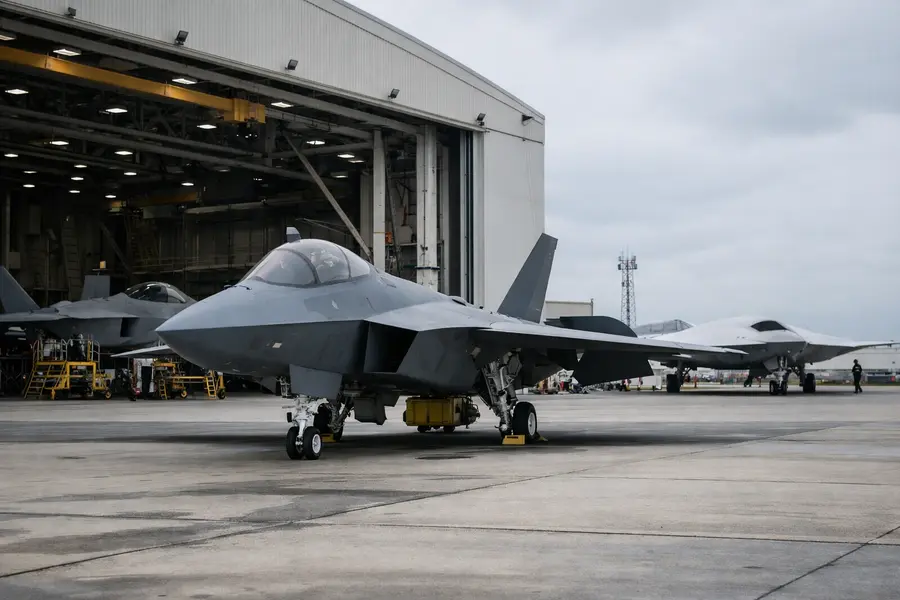
Boeing won a Navy contract worth more than $20 billion to build the F/A-XX stealth fighter, lifting its shares about 2% as Northrop Grumman fell 3.5%.
- Boeing (BA) won the Navy's F/A-XX development contract, valued at more than $20 billion, over Northrop Grumman (NOC).
- Boeing shares rose about 2%, while Northrop Grumman shares fell about 3.5%.
- Boeing now holds both U.S. crewed sixth-generation fighter programs, the Navy's F/A-XX and the Air Force's F-47.
Lead
Boeing (NYSE: BA) was selected by the U.S. Navy on September 29 to build the F/A-XX, the service's first sixth-generation carrier-based stealth fighter, in a full-scale development contract valued at more than $20 billion. Boeing shares rose about 2% on the news. Northrop Grumman (NYSE: NOC), the only remaining rival, fell about 3.5%. Boeing is a component of the dow industrials average, and the move added to a recovery in sentiment toward its defense unit.What Did the Navy Award Boeing?
The Navy awarded Boeing the full-scale development phase of the F/A-XX program, including multiple test aircraft for ground, airworthiness, systems and weapons integration testing. The aircraft is designed to replace the F/A-18E/F Super Hornet and the EA-18G Growler from the 2030s.
The jet is intended to extend the carrier air wing's operational reach and to operate alongside uncrewed aircraft, including Collaborative Combat Aircraft. Lockheed Martin (NYSE: LMT) had been eliminated from the Navy competition earlier, leaving Boeing and Northrop Grumman as the final two bidders.
Why Did Northrop Grumman Shares Fall?
Northrop Grumman shares fell about 3.5% because the loss removes the company from the last open crewed fighter competition in the United States. Northrop had been viewed as a credible challenger given its stealth experience with the B-2 and B-21 bombers. Its fighter ambitions now rest on other programs, including uncrewed and autonomous aircraft.
Boeing's gain was smaller in percentage terms because the market had priced in part of the outcome and because development contracts convert into revenue gradually. The award is a multi-year development effort, with production volumes and margins determined later.
Strategic Context
The decision gives Boeing an industrial position without modern precedent. The company was selected in March 2025 to build the Air Force's F-47, and it is now the exclusive U.S. supplier of sixth-generation crewed fighters. Boeing's St. Louis defense site, which had faced questions about the future of its fighter line as F/A-18 Super Hornet production wound down, gains a long-term design and development workload.
For Boeing, the contract also shifts the balance of a company long dominated by the fortunes of its commercial aircraft business. Defense and space operations have been a source of both revenue and cost pressure in recent years because of fixed-price development programs. The F/A-XX award adds scale and visibility to the unit, though it also adds execution risk across two simultaneous clean-sheet fighter programs.
What Comes Next for the F/A-XX Program?
The next phase is detailed design, test aircraft construction and flight testing, with the Navy planning to field the aircraft as Super Hornets and Growlers retire in the 2030s. Key milestones will include first flight, weapons integration and carrier suitability testing, which are typically the stages where cost growth and schedule slips emerge.
Congressional appropriations will shape the pace. The Navy must fund F/A-XX alongside shipbuilding, Collaborative Combat Aircraft and the existing F-35C fleet, and the Air Force F-47 will draw from the same defense budget. Northrop Grumman is expected to focus on its bomber, space and autonomous systems portfolios, while rivals and suppliers reassess teaming arrangements around Boeing's two programs.
Outlook
Boeing's win concentrates U.S. crewed sixth-generation fighter work in a single prime contractor and secures a development stream worth more than $20 billion. Northrop Grumman faces a narrower path in tactical aviation. Near-term share price moves reflect that reallocation, while the longer-term test for Boeing is delivering two complex fighters on schedule and on budget.
Mentioned tickers: BA, NOC, LMT