Pomegra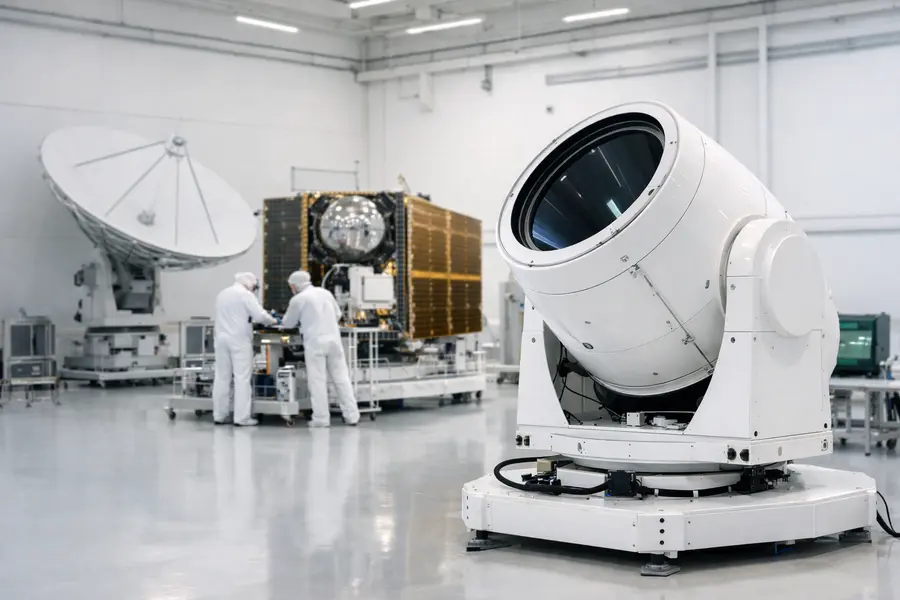
London's Foundational exited stealth on 1 October 2026 with an £8.2M pre-seed round to build a commercial satellite laser ranging network, backed by Inflection and Final Frontier.
Key Takeaways
- Foundational raised £8.2M ($10.8M) pre-seed, led by Inflection; valuation undisclosed.
- It plans 10-20 laser ground stations; the first 4-5 are under development.
- The service is due in early 2027, with 16 retroreflectors already in orbit.
Lead
Foundational, a London space-infrastructure startup, emerged from stealth on 1 October 2026 with an £8.2M ($10.8M) pre-seed round. The company says it is the largest space-tech pre-seed in Europe to date. Inflection led, with BACKED, Final Frontier, Adjacent and Type One Ventures also participating. The valuation was not disclosed.
The money will fund automated ground stations, in-house hardware manufacturing, more retroreflector production and a data platform. Foundational was founded in 2025 by CEO Hira Virdee and CTO Dave Gooding.
What Does Foundational Actually Build?
Foundational builds a vertically integrated satellite laser ranging (SLR) service. SLR fires laser pulses from a ground station at a retroreflector on a satellite, then times the return to fix the satellite's position to within millimetres.
The company combines three parts: retroreflectors mounted on customer satellites, automated laser stations on the ground, and a software platform that processes and delivers the data. The platform is called Origin. Each ground station is roughly the size of two pickup trucks.
The method is not new. Virdee describes SLR as the gold standard for precision, but says it has been too costly and too complex to use at scale. Foundational's bet is that automation and owning the whole chain can change that cost structure.
Where Does the Technology Come From?
The technology builds on laser-ranging work done at Lumi Space, which Virdee founded in 2018 with support from the European Space Agency and the UK Space Agency. Foundational was set up to move that research-stage work into commercial deployment.
Virdee holds a PhD in astrodynamics from University College London, funded by the US Air Force Research Laboratory. Gooding has co-authored laser ranging papers with her since 2022.
That lineage helps explain the speed of the raise. Virdee called the process "very, very quick" and credited the earlier work at Lumi Space. A pre-seed of this size is unusual in European space, and investors appear to be paying for an existing technical track record rather than a slide deck.
How Far Along Is the Network?
Foundational has 16 retroreflectors in orbit and about 60 more awaiting launch. It plans 10-20 ground stations across multiple continents, with the first four or five now in development. The service is expected to go live in early 2027.
The limitation is plain. For now, the network tracks only satellites carrying Foundational's own retroreflectors. That ties early revenue to operators willing to add hardware to their spacecraft. The company expects first demand from commercial operators in low Earth orbit navigation, in-orbit servicing and communications.
Later plans are broader: space surveillance and tracking, debris tracking, and tracking of satellites without reflectors. Derived data products such as atmospheric density and space weather models are also on the list. None of these has a stated date.
Who Else Is Competing for This Market?
Competition comes from several directions. LeoLabs tracks objects with ground radar, Aavuus in Finland operates laser stations, and Space DOTS in London works on orbital intelligence. Radar is cheaper to deploy for uncatalogued debris, while laser ranging offers far higher precision for cooperative targets.
Foundational's pitch to satellite operators, insurers and governments is accuracy: positioning precise enough to cut collision-avoidance uncertainty and improve orbit determination. Whether buyers will pay a premium for millimetre-level data, rather than the coarser tracking they get from existing providers, is the commercial question the 2027 launch will begin to answer.
What Does the Round Signal?
The round signals investor appetite for infrastructure that sits beneath the satellite economy rather than on top of it. Congestion in low Earth orbit is rising, and operators face growing pressure to prove where their spacecraft are.
The structure also carries risk. Ground stations are capital-intensive, the 10-20 station target requires sites on several continents, and the retroreflector model depends on operators adopting the hardware before the service exists at scale. An £8.2M pre-seed covers the first stations, not the full network.
Outlook
Foundational enters the market with a proven technical lineage, a round large by European standards, and 16 reflectors already in orbit. The next test is delivery: the first four or five stations must come online and the service must launch in early 2027. Customer contracts, the pace of retroreflector launches and any follow-on funding will show whether laser ranging can move from a niche research tool to a commercial service.