Pomegra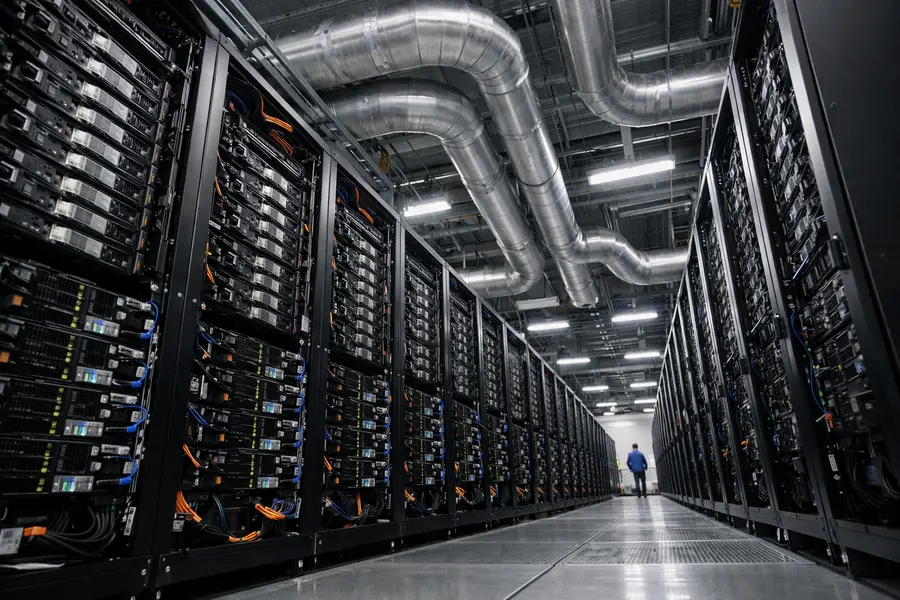
Hewlett Packard Enterprise (HPE) shares hit an all-time high after a $1.2B Vultr order for AMD Helios AI racks and a higher networking growth forecast.
- HPE shares rose roughly 4% to 5% to a record on Sept. 30, 2026, taking the year-to-date gain to about 166%.
- Vultr ordered $1.2B of AMD Helios AI racks, HPE's first Helios order.
- FY2027 networking revenue growth is now guided to the high teens to low 20s percent, up from 14% to 17%.
Lead
Hewlett Packard Enterprise (NYSE: HPE) closed at a record on Wednesday, Sept. 30, 2026. The stock gained roughly 4% to 5% after the company disclosed a $1.2 billion order from cloud provider Vultr and lifted its networking outlook at its investor day. Shares had risen about 3.5% in premarket trading before the gains widened during the session. The stock is up about 166% so far this year, which makes it one of the strongest performers among ai stocks tied to data center buildouts.What Did Vultr Order From HPE?
Vultr, a privately held cloud infrastructure company, ordered $1.2 billion of AMD Helios AI server racks to be deployed in its U.S. data centers. It is the first Helios order HPE has announced. Vultr plans to use the capacity for model training and inferencing workloads from service providers and enterprises.
Each rack integrates 72 AMD (NASDAQ: AMD) Instinct MI455X GPUs, AMD EPYC "Venice" processors, Pensando Vulcano AI network cards and ROCm software. Six HPE Juniper Networking QFX5252 scale-up Ethernet switch trays link the 72 GPUs. HPE supplies the direct liquid cooling.
The design matters strategically. Nvidia (NASDAQ: NVDA) dominates AI accelerators with its own rack-scale systems, and the Vultr order shows that HPE can sell a competing, Ethernet-based architecture at scale.
How Much Did HPE Raise Its Networking Outlook?
HPE now expects FY2027 networking revenue growth in the high teens to low 20s percent, up from the 14% to 17% range it gave in its fiscal third-quarter report earlier in September. Networking operating margins are guided to the mid-to-high 20s percent range through FY2029.
Other targets set out at the event:
- Networking orders for FY2026 are expected to exceed $3 billion, against a prior range of $2.5 billion to $3 billion.
- Juniper integration cost savings are targeted at $800 million in annual run-rate terms by the end of FY2028.
- Longer-term revenue growth guidance for FY2027 through FY2029 was raised as AI infrastructure demand accelerates.
HPE closed its acquisition of Juniper Networks earlier, and the investor day was the first full presentation of the combined networking business's financial framework.
Why Is the Market Rewarding HPE?
Investors are rewarding visible demand and supply constraints. HPE's chief financial officer, Marie Myers, said demand continues to outpace supply and that the company remains in a supply-constrained environment. A named customer order of $1.2 billion gives that statement a concrete figure.
Networking is also moving from a supporting segment to a growth engine. AI clusters need far more switching capacity than conventional enterprise computing, and HPE argues that its Juniper portfolio positions it to capture that spending.
Strategic Context
For AMD, the order adds a major server-maker channel for its first rack-scale platform. For Vultr, it expands capacity outside Nvidia-centered supply chains. For HPE, it links hardware, networking and cooling in a single contract, which tends to carry higher value per deployment than standalone servers.
Outlook
HPE enters fiscal 2027 with a raised networking forecast, a first Helios order in hand and shares at record levels. The next tests are delivery timing, given the supply constraints management describes, and whether additional customers follow Vultr onto AMD's rack architecture. The company's next quarterly report will show how much of the raised networking outlook is converting into orders and revenue.
Mentioned tickers: HPE, AMD, NVDA