Pomegra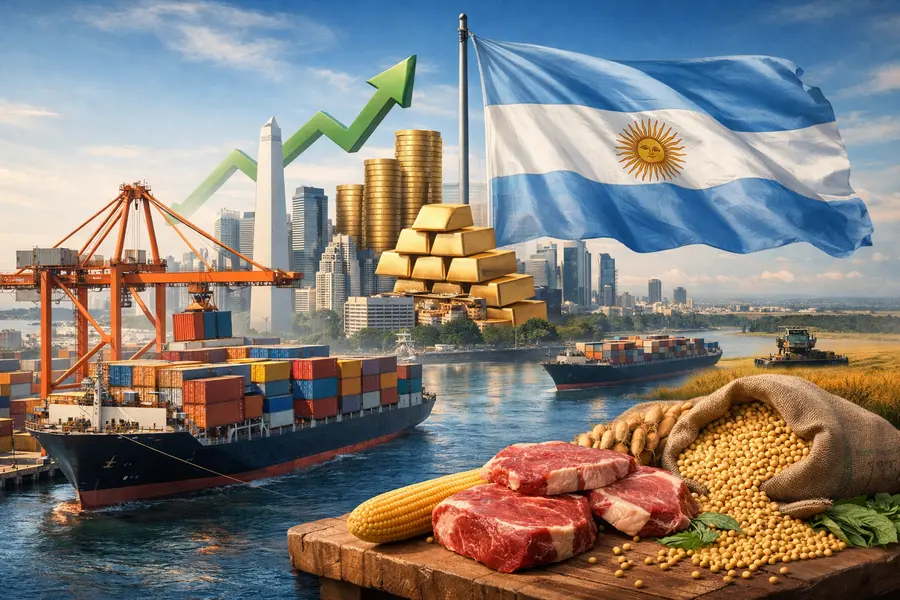
Argentina's trade surplus hit $11.7 billion in the first five months of 2026, as President Javier Milei's austerity agenda reshapes the country's external accounts and draws IMF validation of one of Latin America's most aggressive stabilization programs.
- Argentina recorded a $3.5 billion trade surplus in May 2026, the largest for any single month on record, as exports hit $9.5 billion.
- Energy exports surged 167% year-over-year in May, powered by the Vaca Muerta shale formation, which set an oil output record of 861,000 barrels per day.
- Inflation fell from 211% at end-2023 to approximately 33% by early 2026, while GDP expanded 4.4% in 2025 after a 1.7% contraction in Milei's first year.
Lead
Buenos Aires — Argentina's trade balance continued its remarkable turnaround in the first half of 2026, with a cumulative surplus of $11.7 billion through May — a figure that already exceeds the total for all of 2025. The run of monthly surpluses, confirmed by the national statistics agency INDEC, marks the most sustained improvement in Argentina's external accounts in decades and reflects the structural realignment that President Javier Milei set in motion when he took office in December 2023.What Happened
Monthly trade data released by INDEC traced an ascending trajectory across 2026. January posted a surplus of $1.99 billion, up sharply from $162 million in the same month of 2025. March reached $2.52 billion, and May registered $3.5 billion — a monthly record — as exports touched $9.5 billion on the back of soaring energy shipments. Imports, meanwhile, remain suppressed relative to historic norms, the residue of deep fiscal consolidation that compressed domestic demand during the 2024 adjustment.
The cumulative $11.7 billion figure for January–May 2026 underscores the durability of the shift. Argentina's economy entered the Milei era running persistent current-account deficits and nearly depleted reserves. The reversal required both a collapse in import demand and a structural lift in export capacity — conditions that are now simultaneously present.
Energy Sector as the Primary Engine
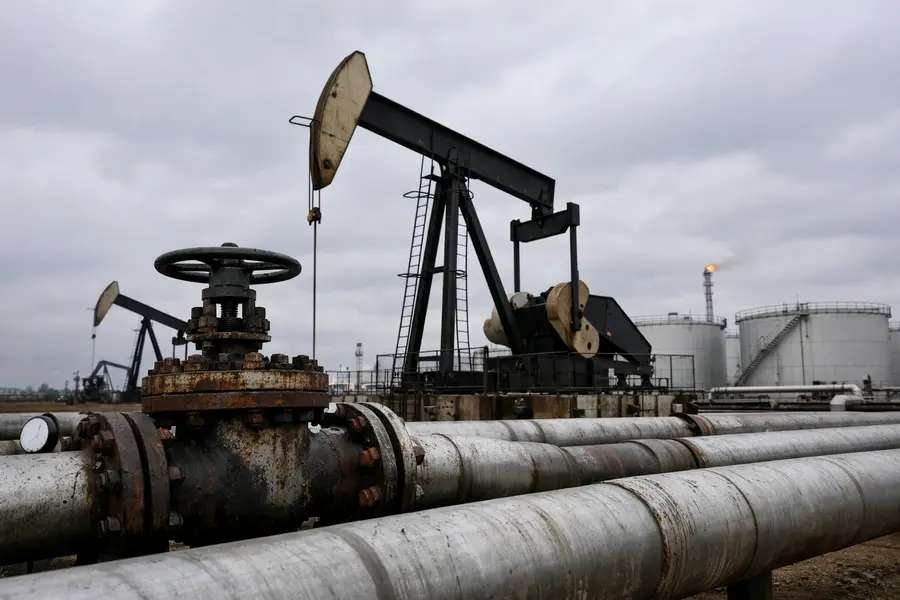
The most consequential driver of the surplus is the Vaca Muerta shale basin in Neuquén province. Fuel and energy exports rose 167% year-over-year in May 2026, reflecting sustained capital investment in upstream production and new pipeline and LNG export infrastructure. Oil output reached a record 861,000 barrels per day, and the energy trade balance generated a $7.8 billion surplus for full-year 2025, with projections pointing toward $14 billion or more in 2026.
Agricultural and agro-industrial exports — historically the backbone of Argentina's foreign exchange earnings — also contributed to the monthly totals, alongside a gradual recovery in industrial goods. The diversification reduces the surplus's dependence on a single seasonal cycle, a structural vulnerability that has repeatedly destabilized Argentina's economy in past decades.
Fiscal Discipline and Macro Stabilization
The external improvement is inseparable from Milei's fiscal shock therapy. The government posted a primary fiscal surplus of 1.4% of GDP in 2025, the first sustained surplus in over a decade, and is targeting 1.5% of GDP in 2026. Public spending was cut by roughly 30% in real terms in 2024 through a combination of subsidy reductions, public-sector workforce cuts, and the cancellation of public works contracts.
Inflation — which peaked at 211% on an annual basis in December 2023 — retreated to approximately 33% by early 2026. The Milei administration adopted a managed crawling-band exchange rate regime on January 2, 2026, replacing a fixed-peg framework with a system in which the band widens at a pace indexed to prior-period inflation. The IMF endorsed the approach as part of a $20 billion, 48-month support programme signed in April 2025, which provided $12 billion in upfront disbursements and set a target of at least $8 billion in net international reserve accumulation for 2026.
Sovereign credit reflected the progress: Fitch upgraded Argentina to B- — deep in speculative territory but a meaningful improvement from the default-proximate ratings of prior years.
Challenges Ahead
Despite the headline improvement, structural constraints remain. Monthly inflation has stalled near 3%, meaning annual disinflation from the current 33% level to the single-digit range will require institutional reforms — including durable central bank independence and a credible inflation-targeting framework — that are harder to legislate than spending cuts. Net international reserves remain only marginally positive, leaving the central bank with limited buffer against external shocks.
Socially, the adjustment imposed heavy costs. Real formal-sector wages in early 2026 remained approximately 9% below their November 2023 level. Poverty, while declining to 28.2% — the lowest since 2018 — had spiked sharply during the 2024 contraction. Large street protests against austerity have become periodic, and Milei's approval rating has declined to approximately 35%, narrowing his political runway for additional structural reforms including labour market liberalisation, tax code overhaul, and expanded mining access.
External debt obligations also present a near-term test: Argentina faces more than $20 billion in scheduled debt payments in 2026, and the government's ability to meet those obligations without fresh market access depends heavily on continued reserve accumulation.
Outlook
The trade surplus data through May 2026 confirms that Milei's reforms have successfully reoriented Argentina's external accounts. The energy sector, underpinned by Vaca Muerta's output ramp, provides a durable source of export earnings that previous administrations lacked. With GDP growth projected at 3.5% for 2026 and inflation on a downward path, the macro stabilisation programme retains credibility. The test for the remainder of the year is whether reserve accumulation keeps pace with debt obligations and whether the administration can sustain political support through mid-term congressional elections — a prerequisite for the deeper structural reforms that would lock in the gains already achieved.
Mentioned tickers: YPF