Pomegra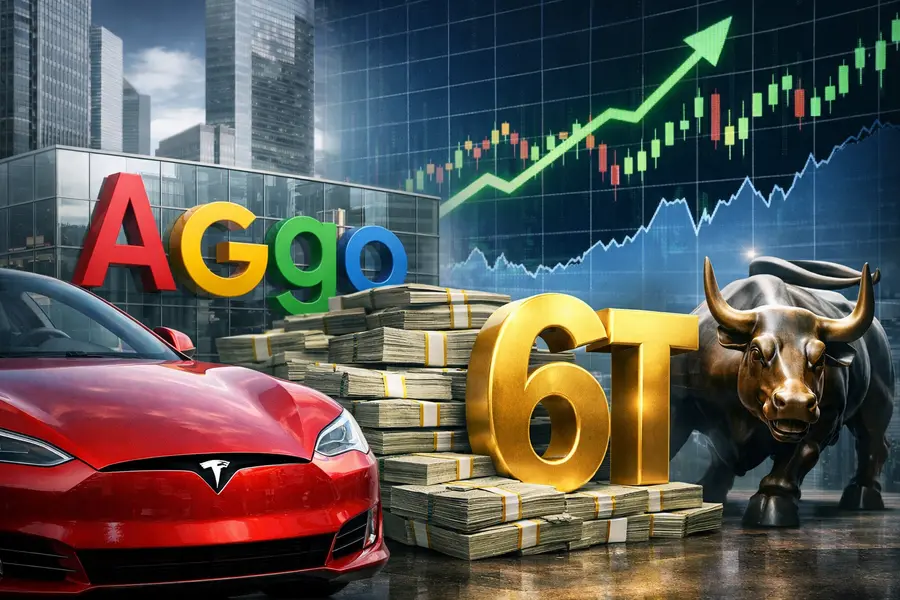
U.S. equity futures rebounded Monday as investors positioned for the most consequential Big Tech earnings week of 2026, with Alphabet and Tesla reporting Tuesday after market close against a geopolitically charged backdrop.
- S&P 500 futures rose 0.29% and Nasdaq 100 futures climbed 0.17% Monday, recovering from last week's 10% chip-stock selloff.
- Alphabet reports Q2 2026 results July 22 with consensus EPS of $2.89 on $116.84 billion in revenue; Tesla consensus sits at $0.52 EPS on $25.81 billion.
- Tesla's Q2 vehicle deliveries of 480,126 already topped analyst estimates of 406,024, raising expectations heading into the print.
Lead
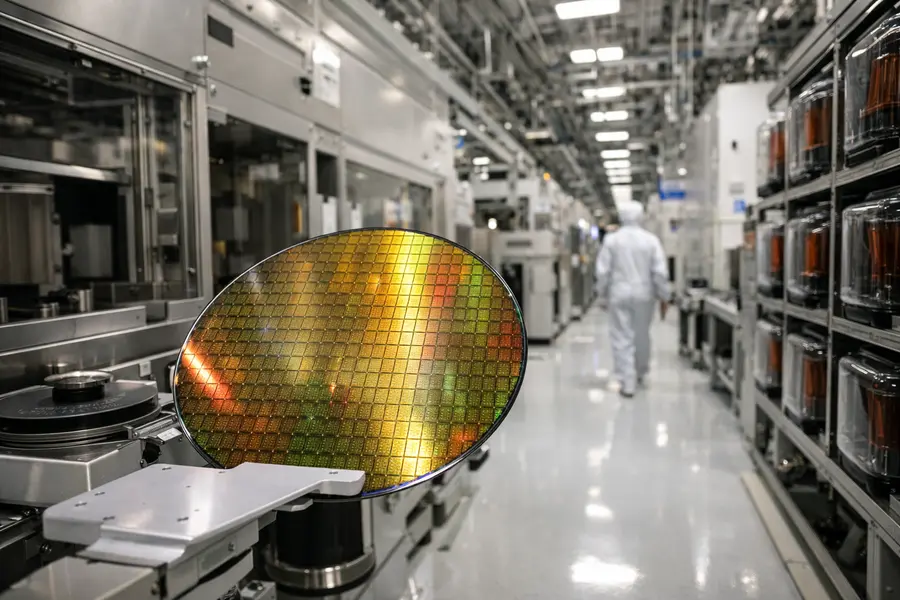
U.S. stock index futures edged higher on Monday, July 20, as Wall Street braced for the week's defining event: back-to-back second-quarter results from Alphabet (GOOGL) and Tesla (TSLA), two of the seven mega-cap names whose performance has anchored the market's year-long artificial intelligence rally. Dow futures gained 0.19%, S&P 500 futures rose 0.29%, and Nasdaq 100 futures advanced 0.17% in premarket trading, with the SPDR S&P 500 ETF (SPY) adding 0.44% to $746.53. The cautious optimism follows the worst week for semiconductor stocks since April 2025, when the PHLX Semiconductor Index shed 10%, dragging the S&P 500 down 1.55% and the Nasdaq down 2.9%.
What Happened
The stock market today opened to a familiar dynamic: geopolitical risk on one side, earnings anticipation on the other. Fresh U.S. airstrikes against Iran over the weekend kept oil prices volatile and rattled investor nerves, yet markets moved higher as diplomats signaled Iran had received proposals from mediators on resuming negotiations with Washington. Crude's retreat from intraday highs provided relief for equity bulls and freed attention to shift toward corporate fundamentals.
By the closing bell Monday, the S&P 500 had added 0.63%, the Dow 0.23%, and the Nasdaq 1.02%—a partial recoupment of last week's losses and a signal that institutional investors view the current dip as a positioning opportunity rather than a structural break.
Big Tech earnings July 2026 arrives at a critical inflection point. After more than a year of AI-themed multiple expansion, markets are demanding revenue proof. Alphabet and Tesla together represent roughly $3 trillion in market capitalization; combined with Intel and IBM also reporting this week, the four companies account for nearly $6 trillion in equity value, making this reporting season the highest-stakes since fourth-quarter 2024.Alphabet: Cloud and AI Monetization in Focus
Alphabet (GOOGL/GOOG) reports after Tuesday's close. The consensus calls for earnings per share of $2.89—a figure that has climbed 4.7% over the past 90 days as analysts grew more confident in the company's profit trajectory—on revenue of $116.84 billion. Forty-one analysts contributed to the estimate, with EPS projections spanning $2.59 to $3.60 and revenue forecasts ranging from $113.62 billion to $120.13 billion.The company has beaten consensus in each of the past four quarters, most recently delivering $5.11 per share against lower expectations. That track record underpins elevated expectations for Google Cloud, which the market projects to sustain approximately 60% year-over-year growth in the quarter, alongside continued strength in YouTube advertising and Search query monetization.
Alphabet's $190 billion capital expenditure commitment—its boldest AI infrastructure bet to date—will face scrutiny. Investors will parse commentary on data center buildout timelines, model deployment costs, and whether the company's Gemini AI suite is translating spending into measurable revenue. Operating expense leverage and free cash flow generation will also feature prominently in post-earnings analysis.
Tesla: Delivery Beat Elevates the Bar
Tesla (TSLA) reports the same evening. The setup is notably different from prior quarters: the company's second-quarter delivery figure of 480,126 vehicles exceeded the analyst consensus of roughly 406,000, providing a concrete demand signal ahead of the financial disclosure. Revenue is expected to reach $25.81 billion, a 14.8% year-over-year increase, with EPS consensus at $0.52.Options markets imply a post-earnings price swing of 7.6%—nearly double the stock's four-quarter average move of 4.4%—reflecting heightened uncertainty about the quality of the results beyond the headline delivery number. Automotive gross margin is the first critical line: investors want to know whether the delivery outperformance came with pricing discipline intact or required deeper discounting.
Beyond the vehicle business, Wall Street's attention has migrated toward Tesla's longer-term autonomy agenda. Progress on the robotaxi rollout, software revenue contribution, and capital allocation toward physical AI infrastructure will carry significant weight in how the stock trades Wednesday morning. The energy storage and services segment—which has grown into a material revenue contributor—will also be watched for margin trajectory.
Strategic Context: AI Credibility at Stake
This week's prints arrive as the market's AI narrative faces its most pointed scrutiny since the rally began. The chip-stock selloff last week—driven in part by export control uncertainty and demand-timing concerns—exposed the fragility of valuations predicated on continuous AI spending growth. Alphabet Tesla earnings now function as a referendum on whether that spending is delivering measurable business outcomes.
For Alphabet, the question is monetization: whether AI tools embedded across Search, Cloud, and Workspace are lifting revenue per user and margin. For Tesla, it is execution: whether autonomous driving ambitions remain on schedule and whether the core vehicle business can sustain the gross margin profile needed to fund the pivot. Both companies carry the implicit burden of validating the broader AI trade for institutional portfolios heavily weighted toward the Mag 7.
Also reporting this week: Intel (INTC), where investors will assess the foundry strategy's progress, and IBM (IBM), whose software and consulting mix offers a different lens on enterprise AI adoption.
Geopolitical Overlay
Middle East tensions add an additional variable. Continued U.S. military engagement with Iran has the potential to disrupt energy markets and supply chains if hostilities escalate, while any credible de-escalation signal would remove a premium from oil prices and relieve pressure on broader risk sentiment. Investors are monitoring diplomatic channels closely; markets moved higher Monday in part on reports that Iran remained engaged in back-channel negotiations.
Outlook
The week's earnings slate—anchored by Alphabet and Tesla on July 22—represents the clearest near-term test of whether AI-driven equity valuations remain justifiable on fundamentals. S&P 500 futures entering the week with modest gains suggest institutional positioning is tilted cautiously constructive, but conviction will depend on what the results reveal about cloud growth, AI monetization, and autonomous vehicle economics. A strong showing from either company could reset the narrative after last week's semiconductor turbulence; a disappointment from either risks extending the sector rotation that has pressured technology valuations since mid-July.
Mentioned tickers: GOOGL, GOOG, TSLA, INTC, IBM, SPY, QQQ