Pomegra
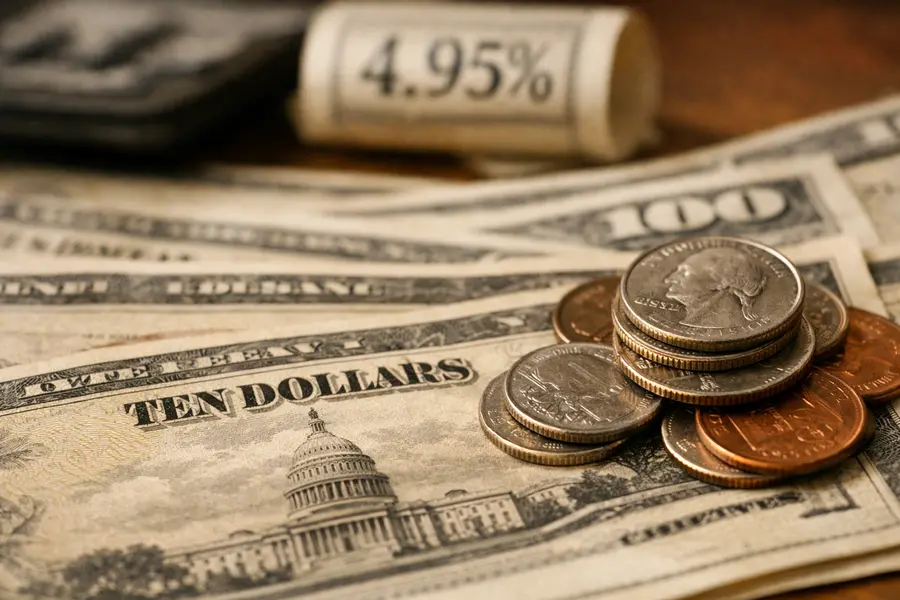
The 10-year Treasury yield fell 19 basis points to 4.95% on Thursday, its biggest one-day drop since March 2023, as a tech selloff sent investors into government bonds.
- The 10-year yield fell 19.3 bp to 4.953%, the largest daily drop since March 10, 2023.
- The Philadelphia Semiconductor Index fell nearly 7% and the Nasdaq Composite fell 2.6%.
- The odds of a Fed rate hike at next week's meeting fell to 7.2% from 27.7% a week earlier.
Lead
The benchmark US 10-year Treasury yield fell 19.3 basis points to 4.953% on Thursday, October 22, 2026. It was the steepest one-day decline since the banking crisis of March 2023. Investors sold technology shares on concerns about the scale of artificial intelligence spending and moved into the Treasury market, pushing prices up and yields down. The yield closed below 5% for the first time since late September. Two weeks earlier it had approached 5.4%.
What Happened in the Treasury Market?
Yields fell across the curve in a bull rally that was the largest in more than three years. The 2-year yield dropped about 18.5 to 18.8 basis points to roughly 4.64%, its biggest one-day fall since August 2025. The 30-year yield fell 15 basis points to 5.287%, its largest daily drop since August 2024.
A basis point is one hundredth of a percentage point, so a 19-basis-point move in the 10-year is unusually large for the world's deepest bond market, which is valued at about $32 trillion. The rally came even though the forces that had pushed yields higher remain in place. These include persistent price pressures, elevated energy costs and heavy spending on AI infrastructure.
Why Did Investors Rush Into Treasuries?
Investors moved into Treasuries because a sharp equity selloff, centered on AI-linked companies, triggered a flight to quality. The Philadelphia Semiconductor Index fell nearly 7%. The Nasdaq Composite dropped 2.6% and the S&P 500 fell 1.21%.
Meta Platforms (META) lost nearly 8% after its quarterly report showed negative free cash flow as AI outlays climbed. The company also announced new non-voting shares to help fund its AI expansion. Memory and storage names fell as well. Sandisk (SNDK) dropped 8.51% and Micron Technology (MU) fell 6.26%, though both remain far above their levels at the start of the year. Technology accounts for about 40% of the S&P 500 by market capitalization, so a sector-wide drop moves the whole benchmark.Oil prices added to the unease. WTI and Brent crude both rose above $100 a barrel, which keeps pressure on inflation. Concern about European sovereign debt markets also added to demand for US government paper.
How Do Falling Yields Change Expectations for Interest Rates?
The drop in yields sharply reduced the odds that the federal reserve raises interest rates at its October 27 to 28 meeting. Futures pricing put the probability of a hike of 25 basis points or more at 7.2%, down from 27.7% a week earlier and 55.4% a month ago. A hold is the broadly expected outcome.
Inflation expectations eased modestly. The 5-year TIPS breakeven rate slipped to 2.381% from 2.413% the previous day. The 10-year breakeven stood at 2.333%. Breakevens measure the inflation rate implied by the gap between nominal and inflation-protected Treasury yields.
Labor data did not signal a slowdown. Weekly initial jobless claims fell by 6,000 to a seasonally adjusted 194,000, below the 200,000 economists had forecast. Yields fell despite the solid data, which shows that the day's move came from risk appetite and positioning rather than from a change in the economic outlook.
Is This a Growth Scare or a Positioning Shift?
The move reflects a positioning shift more than a recession signal. Traders who had bet on higher yields and further Fed tightening unwound those trades, and short covering amplified the rally. Market participants broadly read the day as profit-taking after large year-to-date gains in AI-exposed shares, combined with doubts that current levels of AI investment can be sustained.
That distinction matters for the near term. A growth scare would typically lower yields alongside weaker jobs and consumer data. This week's labor figures stayed firm, and oil prices above $100 continue to support the inflation backdrop. The result is a bond market that rallied hard on a single session of equity stress while the underlying inflation picture stayed unchanged.
Demand from overseas investors also contributed. Korean investors, for example, bought roughly $1.37 billion in bonds between October 1 and 22, and Treasury exchange-traded funds recorded notable inflows.
What Comes Next for Yields and Equities?
The next catalysts are the October 27 to 28 Fed meeting, further AI-related earnings and the path of oil. A Fed hold with a tone that leaves the door open to tightening would test whether the yield decline holds. If the technology selloff deepens, the demand for duration could persist and push the 10-year further below 5%. If equities stabilize, the factors that lifted yields toward 5.4% earlier this month, including the cost of AI buildouts, heavy issuance and energy prices, are likely to reassert themselves.
Investors will also watch whether capital spending commitments by large technology companies are revised. Funding of AI expansion through new share structures and debt has become a market theme, and the cost of that funding is tied directly to Treasury yields.
Outlook
The 10-year Treasury yield ended Thursday at 4.953%, down 19.3 basis points in the largest daily drop since March 2023. The decline was driven by a semiconductor-led equity selloff, a reversal of rate-hike bets and safe-haven buying, while jobs data and oil prices continued to point to firm inflation. The Fed's meeting next week and the next round of technology earnings will show whether the move marks a durable shift in rate expectations or a one-day repricing.
Mentioned tickers: META, MU, SNDK