Pomegra
The Nasdaq fell 2.6% on Thursday, its worst day since June, as AI spending fears and an oil spike hit Amazon, Nvidia and Alphabet while Apple gained.
- The Nasdaq Composite fell 2.60% to 26,008.86, its worst session since June, while the Dow ended flat.
- Amazon fell 4.5%, Nvidia 4.4%, Alphabet 3.2% and Microsoft 2.1%. Apple rose 1.3%.
- The Philadelphia Semiconductor Index lost 6.72% and Brent crude settled at $113.17.
Lead
In stock market today's headline session on Thursday, October 22, 2026, mega-cap technology shares led the Nasdaq to a 2.60% loss, closing at 26,008.86. The S&P 500 fell 1.21% to 7,663.43. The Dow Jones Industrial Average edged up 0.02% to 52,867.98, held up by sectors outside technology. The Russell 2000 slipped 0.11%.
Amazon (AMZN) fell 4.5%, Nvidia (NVDA) 4.4%, Alphabet (GOOG) 3.2% and Microsoft (MSFT) 2.1%. Meta Platforms (META) dropped 6.98% to $648.85 after its quarterly results. Apple (AAPL) rose 1.3% and was the only member of the group to advance.Why Did Megacap Tech Fall on Thursday?
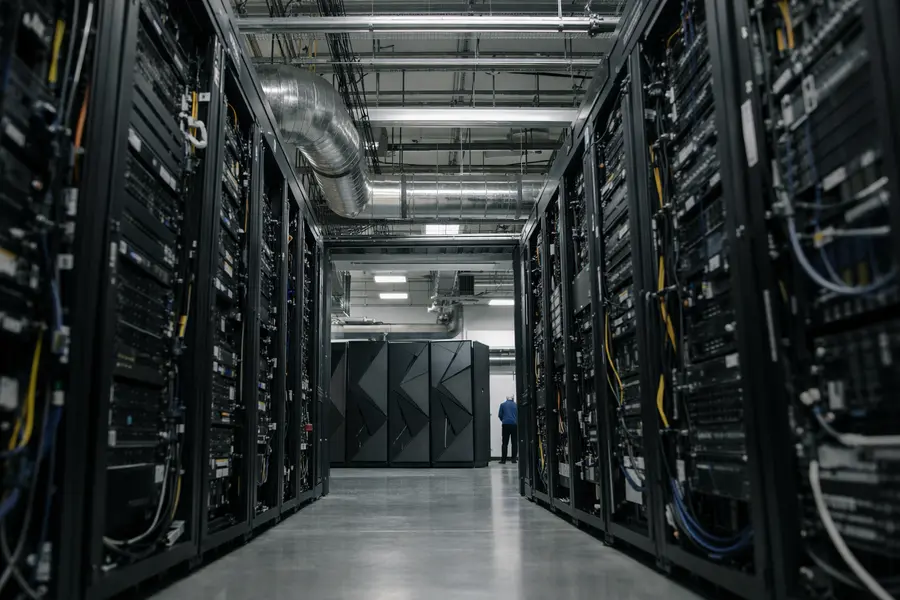
Megacap tech fell because investors reassessed how much the AI build-out costs and how it will be paid for. The trigger was Meta's earnings. Revenue beat expectations and guidance was upbeat, but the company's future lease and contractual commitments rose to roughly $825 billion from about $700 billion in July, mostly for AI infrastructure. Meta's five-year credit default swaps widened by as much as 8.9 basis points intraday to about 119.3 basis points, which showed investors pricing in more risk on the debt funding that spending.
Comments from Nvidia chief executive Jensen Huang added to the unease. Huang told CNBC that demand from AI cloud companies is explosive but that a shortage of capital is constraining growth. Investors read the remark as a sign that the pace of the AI build-out depends on financing conditions as much as on demand.
The result was a repricing of the companies with the largest capital programs. Amazon, Alphabet and Microsoft all run heavy data-center budgets, and each fell by more than 2%.
How Badly Were Chipmakers Hit?
Chipmakers were hit hardest, with the Philadelphia Semiconductor Index falling 6.72% to 10,731.98, its lowest close since July 29. All 30 constituents declined. Lam Research (LRCX) lost 11.76% and Applied Materials (AMAT) 8.18%. Advanced Micro Devices (AMD) fell about 8.1%.
Equipment makers sold off most sharply because their orders depend on the capital budgets of the same customers now under scrutiny. A warning on supply from Lam Research added to the pressure on the group.
Funds that track the Nasdaq-100, including the Nasdaq QQQ trust (QQQ), carry heavy weightings in these names, so the drop in megacaps fed directly into index-level losses.
Did Oil and Rates Add to the Pressure?
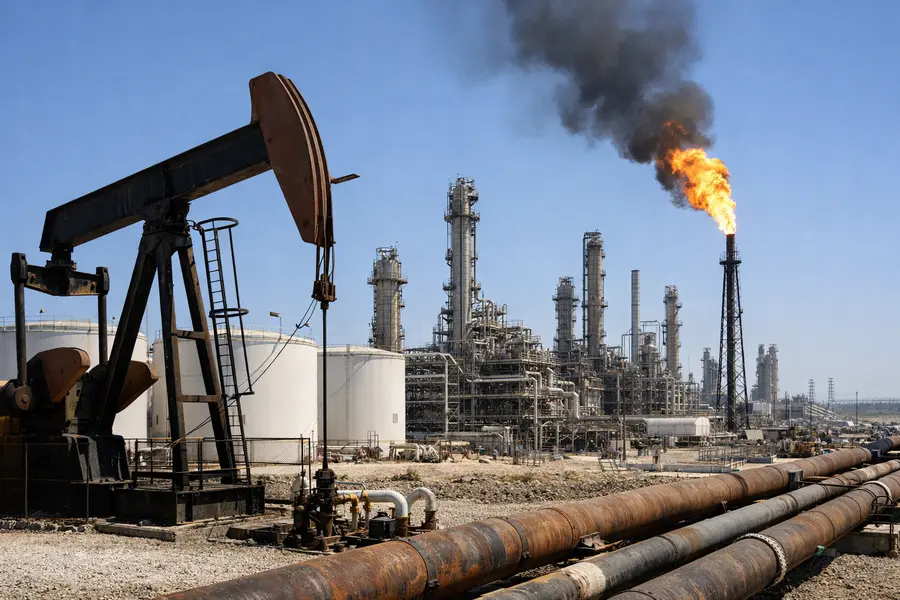
Oil and rates added to the pressure, though they were secondary to the AI story. Brent crude rose 4.00% to $113.17 a barrel and West Texas Intermediate gained 2.39% to $99.47. The move followed reports that the United States and Israel were preparing for potential military strikes against Iran. Higher energy costs feed into inflation and corporate margins, and they tend to weigh on growth stocks.
Treasuries rallied as equities fell. The 10-year yield dropped more than 18 basis points to 4.965%. The 2-year yield fell more than 17 basis points to 4.65%, the 5-year fell 13.1 basis points to 4.82%, and the 30-year fell 9.8 basis points to 5.317%. A move of that size in one session points to a flight to safety, with investors moving money out of equities and into government debt.
The labor market gave no sign of stress. Initial jobless claims fell by 6,000 to 194,000, a three-month low and below the 200,000 that economists expected. Continuing claims rose by 25,000 to 1.728 million. Data that strong keeps the federal reserve under pressure to hold interest rates steady, even as bond markets rally.
Why Did Apple Rise While Peers Fell?
Apple rose because its investment profile differs from that of the cloud and chip companies that sold off. The company spends far less on AI data centers than Amazon, Alphabet, Microsoft or Meta, and it sells consumer hardware rather than AI computing capacity. When the market questioned the returns on AI infrastructure, Apple drew buyers looking for exposure to large-cap technology without that spending risk. Its 1.3% gain stood out in a session when the technology sector fell about 3%.
The Dow's flat finish had a similar cause. The average carries fewer AI-exposed names than the Nasdaq, so it avoided most of the losses.
What Comes Next for Tech Stocks?
The next tests are further earnings reports from the large cloud and chip companies and any change in the Middle East that moves oil. Three questions will shape the near-term path.
- Capex guidance: Further increases in AI spending commitments will keep pressure on valuations. Signs of discipline could stabilize the group.
- Financing conditions: Huang's comments put credit markets and capital availability at the center of the AI discussion. Credit default swap pricing on Meta and similar issuers is now an indicator for equity investors.
- Energy prices: Crude above $110 raises the cost base for the economy, and a sustained rise would add to inflation concerns just as bond yields fall.
Futures were little changed after the close, which suggests the selling was a one-session repricing rather than a broad liquidation. The Nasdaq remains well above its summer levels, but the semiconductor index is now at its lowest since late July.
Outlook
Thursday's drop was concentrated in the companies most tied to AI infrastructure spending. Meta's commitments of about $825 billion, Huang's capital-shortage comment and a Brent price above $113 combined to hit the Nasdaq hardest. Apple's gain and the Dow's flat finish show the move was a sector rotation rather than a market-wide retreat. Earnings guidance, financing costs and Middle East developments will set the direction for technology shares in the coming weeks.
Mentioned tickers: AMZN, NVDA, GOOG, MSFT, AAPL, META, LRCX, AMAT, AMD, QQQ