Pomegra
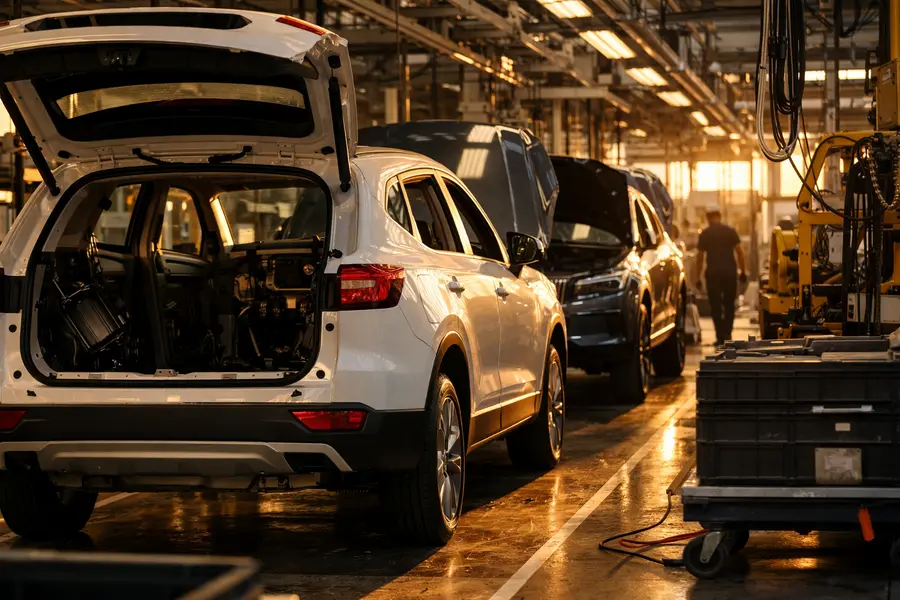
Volvo Cars shares fell about 25% after a SEK 5.6 billion Q3 2026 operating loss, 2,500 job cuts, a near-halving of China revenue and US tariff pressure.
- Volvo Cars posted a reported Q3 operating loss of SEK 5.6B, against a profit a year earlier.
- About 2,500 jobs will be cut, roughly 2,000 of them in Sweden, with SEK 5B of added savings.
- China revenue fell almost 50% year on year; US tariffs and lost EV incentives squeezed margins.
Lead
Volvo Cars (VOLCAR B) shares fell about 25% in Stockholm on Friday, touching a record low, after the Swedish premium carmaker reported a third-quarter operating loss of SEK 5.6 billion and said it would cut about 2,500 jobs. Revenue dropped to SEK 66.9 billion from SEK 86.4 billion a year earlier, roughly 10% below consensus. The sell-off was among the sharpest in the company's listed history.What Did Volvo Cars Report for the Third Quarter?
Volvo Cars reported a reported operating loss of SEK 5.6 billion, an operating margin of minus 8.4%, against a 7.4% margin in the same quarter of 2025. Adjusted operating loss was SEK 3.7 billion, a margin of minus 5.6%, compared with an adjusted profit of SEK 5.8 billion a year earlier.
Two one-off items widened the gap between the figures. A negative revaluation of US CAFE emissions credits, following changes to American legislation, cost SEK 1.1 billion. Losses at affiliate Polestar (PSNY) took a further SEK 0.9 billion. Earnings per share came in at minus SEK 1.63, against a profit of SEK 1.75 a year earlier.
Free cash flow was negative SEK 8.9 billion, double the negative SEK 4.3 billion of the prior-year quarter. Wholesale volumes fell 19% as the company worked down inventory, while global retail volumes declined 10.7%. Fully electric models made up 32% of sales, up from 22%, and reached 45% of sales in Europe.
CEO Håkan Samuelsson called the quarter "very disappointing" and said it reflects a year that "has become far more challenging than originally anticipated."
Why Did China Revenue Nearly Halve?
China revenue fell almost 50% because premium foreign brands now face intense price competition from domestic electric-vehicle makers. Local rivals have cut prices and launched new models faster than Western manufacturers can respond, and the pricing pressure has hit Volvo's mix and margins.
Samuelsson said the shift came "faster than we thought," pointing to the Chinese market as the main driver of the shortfall. For a company that relies on premium pricing, the loss of volume and price in the world's largest car market removes a profit pool that was once a pillar of its global growth plan. The pattern mirrors the squeeze on other European luxury and premium brands in China.
How Are US Tariffs Hurting Volvo Cars?
US tariffs raise the landed cost of vehicles built outside North America, and Volvo has absorbed part of that cost rather than pass all of it to buyers. The removal of federal EV consumer incentives has added to the strain by weakening demand for the electric models that make up a growing share of its range.
The CAFE credit revaluation shows the policy channel at work. Changes to American rules reduced the value of regulatory credits that the company had counted on as a source of income. Tariffs, lost incentives and credit writedowns together weigh on a US business that was meant to offset the weakness in China.
Cost Cuts and Strategic Response
The job reductions total about 2,500 roles, with roughly 2,000 in Sweden and 500 elsewhere. They will come through ending consultant contracts, natural attrition and targeted exit packages. Volvo also plans to cut a further SEK 5 billion from indirect spending and variable costs, with the full effect due by the end of 2027. The target is to bring indirect spending 25% below 2024 levels.
The measures add to earlier cost programs. They do not address the demand and pricing problems in China, which means the savings are aimed at limiting cash burn rather than restoring volume.
What Comes Next for Volvo Cars?
Volvo Cars now faces a negative cash flow, a lower share price and a profit outlook that depends on stabilizing its two largest markets outside Europe. The restructuring savings arrive over the next five quarters, while the revenue shortfall is already in the figures.
The next test is whether the inventory reduction that drove the 19% wholesale decline ends, allowing production to match retail demand. Management also has to show that its higher electric share can lift margins. The company is led by Samuelsson on an interim two-year term while a long-term successor is sought.
Outlook
Volvo Cars enters the final quarter with a SEK 5.6 billion quarterly operating loss, SEK 8.9 billion of negative free cash flow and a share price at record lows. The cost program targets SEK 5 billion of savings by end-2027, but China pricing and US trade policy remain the main variables for earnings into 2027.
Mentioned tickers: VOLCAR B, PSNY