Pomegra
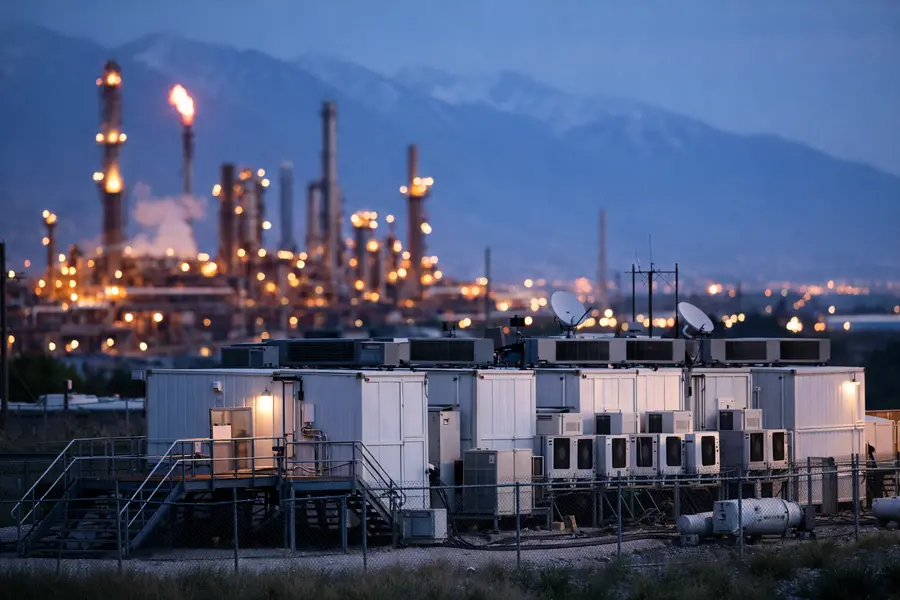
Kalshi faces a Utah gambling suit, a Washington court block and a CME-backed bid to stop its perpetual oil contract, testing CFTC authority over state law.
- Utah sued Kalshi and market maker Susquehanna, estimating $30.6 million to $61.2 million in Kalshi fees from Utah accounts.
- Washington joined Massachusetts, Michigan and Nevada in winning court orders restricting Kalshi.
- The Commodity Markets Council asked the CFTC to block Kalshi's WTI perpetual contract, filed October 20.
Lead
Prediction markets came under pressure on three fronts this week. Utah Attorney General Derek Brown sued Kalshi in Utah's Third Judicial District Court, alleging illegal gambling. Washington became the fourth state to win a court order restricting the platform. A trade group whose members include CME Group (CME) urged the Commodity Futures Trading Commission (CFTC) to refuse Kalshi's proposed perpetual crude oil contract, filed on October 20.Together, the actions challenge the position that a CFTC-regulated exchange can offer event contracts nationwide without state gaming approval.
What Is Utah Alleging Against Kalshi?
Utah alleges that Kalshi operates an illegal gambling business by hosting wagering events and taking a percentage fee on each trade. The complaint describes a "brazen pattern" of conduct in a state whose constitution prohibits gambling, and cites Kalshi's own marketing as "The First Nationwide Legal Sports Betting Platform."
The state estimates Kalshi earned between $30.6 million and $61.2 million in fees from Utah accounts, where users placed trades worth about $3 billion. It also names Susquehanna, one of Kalshi's principal market makers. Utah asks the court to:
- shut down Kalshi's Utah operations
- require third-party geolocation blocking
- order restitution for resident losses
- order disgorgement of defendants' profits
Kalshi maintains that its contracts are financial instruments, swaps used for hedging, regulated exclusively by the CFTC rather than sports bets. The dispute has a history. Kalshi sued Utah in February seeking an injunction, the state court denied that request in August, and the Tenth Circuit rejected an emergency injunction in September.
How Did Washington Become the Fourth State to Block Kalshi?
Washington became the fourth state after King County Superior Court Judge John McHale granted the state a preliminary injunction, finding the platform likely ran an illegal gambling operation. Massachusetts, Michigan and Nevada had already secured similar orders.
The August order requires Kalshi to stop Washington users from wagering on sports, elections, and entertainment, culture, technology and science events. Contracts on commodities, climate, economics and finance remain permitted. A preliminary geofence was due August 19 and full implementation September 2, with fines of $120,000 per day for non-compliance. A state appeals court declined to pause the injunction. Kalshi said it disagrees with the decision and is considering all legal options.
Why Is a Trade Group Targeting Kalshi's Perpetual Oil Contract?
The Commodity Markets Council (CMC) objects because perpetual futures lack the link to physical delivery that conventional contracts keep as expiry approaches. The council questioned whether such products can preserve that connection to physical commodity markets.
Kalshi's WTI perpetual has no expiration date and covers 100 barrels, one-tenth the size of a standard 1,000-barrel NYMEX contract. Daily funding payments keep its price aligned with a reference rate drawn from two nearby NYMEX futures contracts. It follows conventional oil futures trading hours, with weekend closures.
The CMC letter, sent about two days after the filing, asks the CFTC to withhold approval and to close what it describes as a retail access loophole. It also urges the agency to work with foreign regulators to limit U.S. retail traders' use of VPNs to reach offshore platforms. Kalshi has said it consulted industry groups before submitting the proposal, though some did not raise objections beforehand.
The CFTC has at least 45 days to act, and the unusual structure could extend the review to 90 days.
Strategic Context: The Preemption Fight
The CFTC under the Trump administration has told Kalshi to keep operating, arguing that federal law preempts state gaming restrictions, and has sued several states that moved against prediction markets. States counter that sports and election contracts are wagers regardless of the regulator's label.
Legal experts expect the question to reach the U.S. Supreme Court. Until then, Kalshi operates under a patchwork: geofenced in some states, litigating in others, and still serving most of the country.
The oil filing opens a separate front. Incumbent exchanges such as CME Group are not contesting state gambling law. They are contesting whether a prediction-market operator can list a retail-sized, always-on energy derivative. Kalshi's commodity, finance and economics contracts are the category the Washington order left untouched, so the CFTC's decision will show how far federal regulators will let the platform move into mainstream derivatives.
What Comes Next for Kalshi?
Three timelines now run in parallel. The Utah case moves through state court, with Kalshi expected to renew its federal preemption defense. Compliance with the Washington geofence and with Nevada's requirements remains under court supervision. The CFTC's 45-to-90-day clock on the WTI perpetual runs into December or January.
Outlook
Kalshi's legal exposure is widening from sports contracts to its expansion into commodities. Utah's fee estimate puts a dollar figure on the state-level claims, while the CMC letter shows that established exchanges will contest new retail derivatives at the CFTC. The Supreme Court is the likely final venue for the preemption question, and the CFTC's ruling on the oil contract is the next nearer-term marker.
Mentioned tickers: CME