Pomegra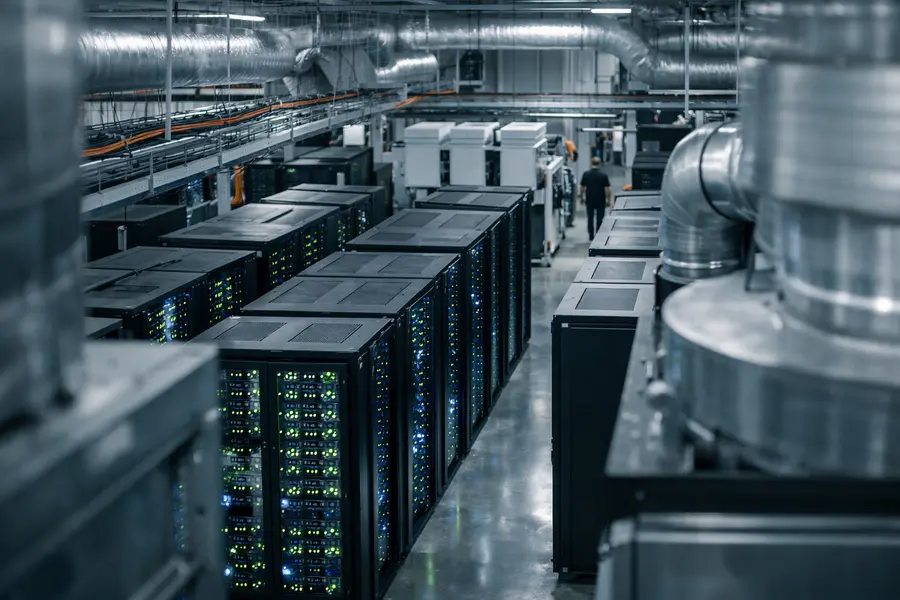
Vertiv Holdings raised full-year 2026 adjusted EPS guidance to $6.65-$6.75 and organic revenue growth to 30-32%, as hyperscaler AI data center power and liquid-cooling orders accelerate beyond prior management expectations.
- Vertiv lifted full-year 2026 adjusted EPS guidance to $6.65-$6.75, from $6.30-$6.40, well above prior Street consensus
- Order backlog surged 109% year-over-year to $15 billion, with a 2.9x book-to-bill ratio signaling sustained AI infrastructure demand
- Liquid-cooling solutions now embedded in the majority of AI customer engagements, driving higher-margin system-level wins
Lead
Vertiv Holdings (VRT) posted a sharp gain following its July 29 second-quarter 2026 earnings release, after the company raised full-year organic revenue growth guidance to 30-32% and lifted its adjusted diluted earnings per share target to $6.65-$6.75 - both ahead of Wall Street estimates - as orders from hyperscale cloud operators for AI data center power management and liquid-cooling systems accelerated beyond prior projections. Adjusted diluted EPS for Q2 came in at $1.52, up 60% year-over-year and above the $1.42 consensus estimate, on net sales of $3.27 billion representing 24% annual growth.What Drove the Guidance Raise?
Vertiv's guidance increase reflects an acceleration in bookings from hyperscale cloud and AI infrastructure operators rather than any improvement in near-term pricing or margin alone. The company's order backlog reached $15 billion at the end of Q2, more than doubling year-over-year, while a book-to-bill ratio of 2.9x - meaning $2.90 in new orders booked for every $1 shipped - points to sustained demand well into 2027. Management cited "intensifying" AI and general compute deployments that are growing more complex and infrastructure-intensive with each successive technology cycle. Prior full-year organic growth guidance of 29-31% and EPS of $6.30-$6.40 was set against a more conservative read of hyperscaler capital expenditure timing; the Q2 order inflow rendered both targets insufficient.
Why Did AI Data Center Orders Accelerate Beyond Expectations?
Hyperscale operators - the large cloud and AI platform companies now building out the next generation of AI training and inference clusters - are deploying increasingly dense, power-hungry compute hardware that requires integrated power and thermal management rather than discrete components. Vertiv benefits on both sides of that equation, supplying high-capacity power distribution and uninterruptible power systems alongside liquid-cooling infrastructure such as cold plates and heat rejection units. The company noted that liquid-cooling solutions now appear in the majority of its AI customer engagements, a structural shift from air-cooled deployments that dominated data center builds as recently as 2024. Two acquisitions - ThermoKey for heat rejection and Strategic Thermal Labs for server-side liquid cooling and cold plates - extended Vertiv's integrated offering and lifted the average contract value of system-level wins.
Market Reaction and Financial Context
VRT shares climbed sharply in after-hours and early session trading following the earnings release, though the stock's path in the days around the print remained volatile: Q2 net sales of $3.27 billion came in roughly $100 million below the $3.37 billion consensus estimate, as management attributed timing shifts in multiphase project execution and transient supply chain dynamics to the shortfall. The company framed those timing effects as a byproduct of increasing order complexity rather than demand erosion. Adjusted operating margin for Q2 expanded 340 basis points year-over-year to 23.8%, and the company raised full-year margin guidance alongside the revenue and EPS targets. AI stocks across the data center infrastructure segment - including NVDA and other components of semiconductor and power plays - held broadly firm as Vertiv's order metrics reinforced the consensus view that hyperscaler AI capital expenditure remains on an upward trajectory through the end of the decade.
How Does Vertiv's Backlog Position It Versus Competitors?
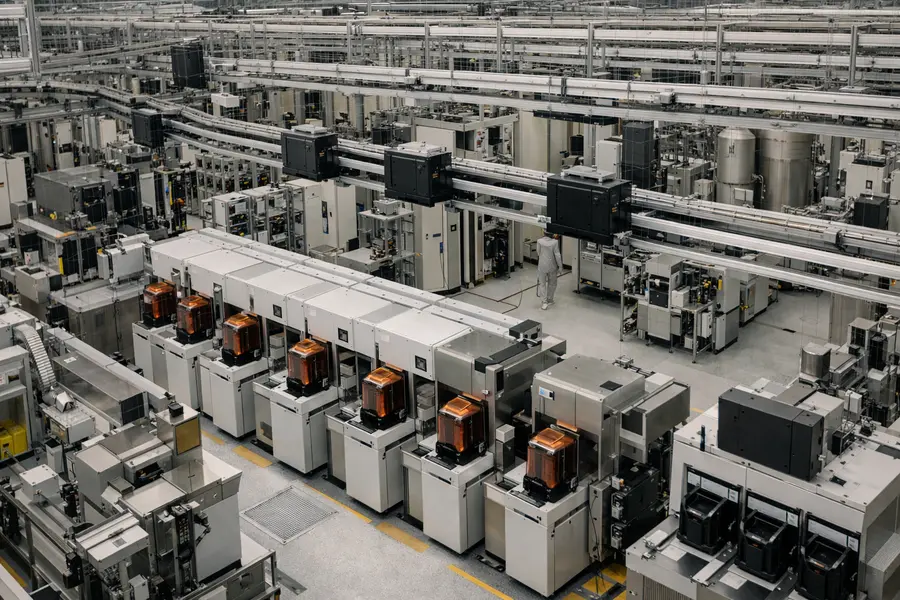
A $15 billion backlog with book-to-bill at 2.9x gives Vertiv roughly 12-18 months of revenue visibility, a buffer that insulates near-term results from single-quarter timing variability and makes the elevated guidance credible to the investment community. The company has paired that order momentum with capacity expansion - adding manufacturing floor space and assembly capacity - and has signaled that operational execution of large, complex, multiphase data center deployments is itself becoming a competitive differentiator. Rivals pursuing the same hyperscaler customers must match not only product performance but delivery capability at scale, a bar Vertiv's backlog and margin trajectory suggest it is clearing.
What Comes Next for VRT?
For the third quarter of 2026, Vertiv guided net sales of $3.65-$3.85 billion and adjusted diluted EPS of $1.77-$1.83, both implying continued sequential and year-over-year growth. Full-year adjusted free cash flow guidance stands at $2.4-$2.6 billion, supporting balance sheet flexibility after a completed $599.84 million share repurchase program. Management expects deployment complexity to keep rising as next-generation AI model training facilities call for tighter integration of power, cooling, and controls - dynamics that favor integrated infrastructure providers over component-only suppliers.
Outlook
Vertiv's Q2 2026 results and upgraded full-year guidance underscore the degree to which AI data center infrastructure build-out has become the dominant revenue driver across the power and thermal management sector. With a $15 billion backlog, a book-to-bill ratio nearly three times unity, and adjusted operating margins expanding at 340 basis points year-over-year, the company's revised organic growth target of 30-32% reflects order data already in hand rather than speculative demand. The primary risk to the raised guidance lies in project execution timing - the same dynamic that trimmed Q2 revenue - rather than any moderation in underlying hyperscaler investment. Near-term focus shifts to whether Q3 shipment rates confirm the revenue cadence implied by the new annual range.
Mentioned tickers: VRT, NVDA