Pomegra
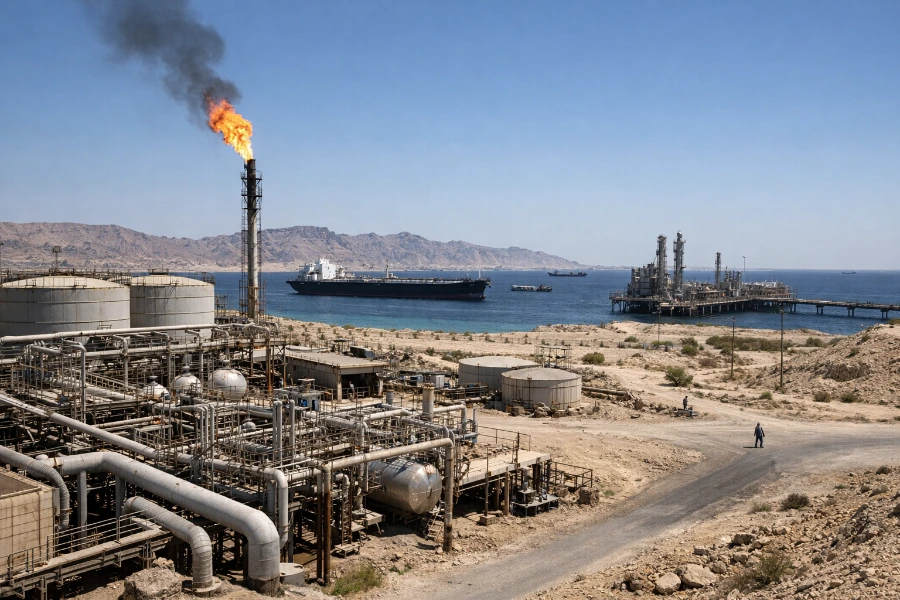
The US hit an Iranian air-defense site on Qeshm Island while Qatar's 48-hour Hormuz plan awaits Tehran's answer, keeping Brent crude near $100 a barrel.
- US forces struck an Iranian air-defense system on Qeshm Island on November 6, which Trump called a "minor" action.
- Qatar's plan would reopen the Strait of Hormuz within two days; Tehran ties it to sanctions relief and an end to the US blockade.
- Brent crude traded near $100 on Friday after one of its sharpest weekly declines since the pandemic.
Lead
The United States carried out limited strikes on an Iranian air-defense site on Qeshm Island, at the mouth of the Strait of Hormuz, late on November 6. President Donald Trump said the same day that peace talks with Tehran were making "a lot of progress." The strike was the first US military action since Democrats won the midterm elections, and it came as Qatar, the chief mediator, circulated a framework to reopen the waterway within 48 hours. Iran has not accepted it. It continues to set conditions that Washington has so far declined to meet.
What Happened on Qeshm Island?
US forces destroyed what Trump described as "a little bit of an anti-aircraft device" on Qeshm Island, a strategic position inside the strait. He said it was knocked out "in about 15 minutes, maybe five." Iranian state media reported that two missiles hit the Suza area of the island without identifying targets or damage.
Trump framed the operation as separate from diplomacy. "We are not fighting," he said, adding that negotiations led by Qatar had advanced. US officials characterized the action as defensive, aimed at a system that could threaten American aircraft and naval vessels operating near the strait. The episode follows an earlier round of strikes in the region and sits within a conflict now in its ninth month.
What Does Qatar's 48-Hour Framework Propose?
Qatar's proposal would reopen the Strait of Hormuz within two days of an agreed trigger. Iran's foreign minister said Qatari mediators asked Tehran to shorten its original seven-day timetable, and the two sides settled on 48 hours.
Tehran has attached conditions. These include:
- an end to the US naval blockade of Iranian ports
- the lifting of recent sanctions and restoration of oil waivers
- release of frozen assets
- compensation for war damage
- a reduced US military presence and recognition of new shipping routes
- a halt to hostilities on all fronts, including Israeli operations in Lebanon
Iran has said these steps must come before it engages on the nuclear file. Qatar has separately put proposals to Iranian officials on the atomic program and says it remains in close coordination with both capitals. Vice President JD Vance has said the sides have "certainly made some progress," while Trump has said there are no immediate plans for a larger strike but that a "heavy hit" remains possible.
How Are Oil Markets Reacting?
The crude oil price has fallen sharply on diplomatic hopes and now carries a smaller geopolitical premium. Brent futures slipped below $100 a barrel earlier this week for the first time since September, briefly touching about $96 before recovering. Brent was near $100 on Friday, and US benchmark West Texas Intermediate was in the high $80s after a drop of roughly 9% in a single session. Brent's weekly decline was among its largest since the 2020 pandemic crash.
Supply data has also eased pressure. Middle East exports have recovered to about 20.7 million barrels a day from a March low of 9.8 million, and the global market ran a surplus of roughly 1.4 million barrels a day in October. The gap between front-month and 2027 Brent contracts has narrowed to about $15 from $19, a sign that traders expect disruption to fade. Iranian exports remain close to zero under the blockade.
The Revolutionary Guard has claimed that four tankers were destroyed by mines south of the strait. That claim is unconfirmed, but it shows how a single incident can reverse the recent price decline.
Geopolitical Dimension
The Strait of Hormuz carries a large share of the world's seaborne oil and liquefied natural gas, so its status affects freight rates, insurance costs and energy prices in Asia and Europe. Tehran's approach uses the strait as leverage to secure sanctions relief and an end to the blockade. Washington's approach pairs limited force with negotiation, keeping pressure on while it avoids a broader escalation.
Domestic politics add a constraint. The midterm result was widely read as a rebuke of the war, which raises the cost to the White House of a prolonged campaign. Iran's position is also firm: its conditions go beyond Hormuz to regional questions that the US cannot settle alone, including Lebanon.
What Comes Next for the Strait of Hormuz?
The next decision point is whether Washington accepts any of Tehran's preconditions, which would start the 48-hour countdown. A partial deal would likely come in sequence: a limited reopening in exchange for waivers or an easing of the blockade, with the nuclear file deferred. In that case, the oil risk premium would shrink further, and Brent could test the mid-$90s again.
If talks stall, further limited strikes and mine incidents are the more likely path than a collapse into full-scale fighting. Under that scenario, the crude oil price would remain volatile around $100, reacting to each headline from Doha, Tehran and Washington. Over the next three to twelve months, the questions that matter are whether shipping insurers restore normal coverage, how quickly Iranian barrels return to the market, and whether producers outside the Gulf keep the market in surplus.
Outlook
A limited US strike and a Qatari 48-hour plan are running in parallel, with neither side yet willing to move first on sequencing. Markets have priced in a considerable chance of progress, which leaves Brent exposed to a rebound if the talks fail. A deal that reopens Hormuz would ease the energy and shipping pressures that have weighed on the global economy since the conflict began.
Mentioned tickers: None