Pomegra
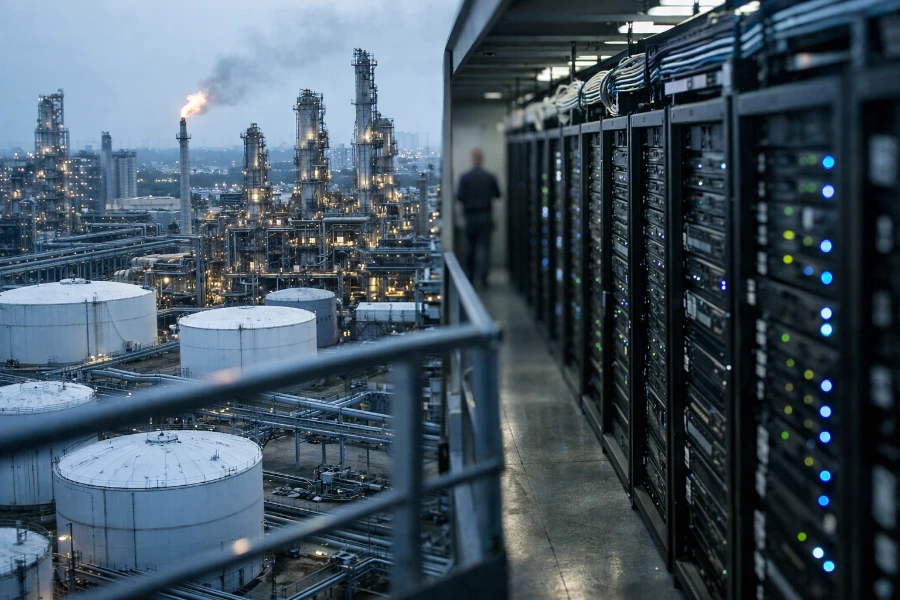
Wall Street posted its best day since April on Monday, with the Dow up 2.2% as Brent crude fell below $93 and chip stocks rebounded.
- The Dow gained 1,104.02 points to 52,389.75, the S&P 500 rose 2.3% and the Nasdaq Composite rose 2.7%.
- Brent crude fell 5.8% to $92.57 a barrel, down from above $112 at the start of November.
- AMD rose 13.3% and Broadcom 8.8%, while Nvidia fell 4.3% on a board investigation into its CEO.
Lead
U.S. stocks rallied sharply on Monday, November 9, recovering part of the prior week's losses as falling crude prices and a rebound in AI-linked shares lifted the stock market today across every major index. The S&P 500 added 173.08 points to close at 7,549.94, its second straight gain and its strongest session since April. The Nasdaq Composite climbed 673.71 points to 25,253.14, and the small-cap Russell 2000 gained 3.1% to 2,840.81.
What Happened in Monday's Session?
Stocks opened higher and extended gains through the day, with the Dow Jones Industrial Average finishing near its session high. The 1,104-point advance, or 2.2%, was the blue-chip index's largest one-day point gain in months.
Breadth was wide. Industrials, consumer discretionary and energy-sensitive transport shares joined technology in the advance. The Russell 2000's 3.1% gain outpaced the large-cap benchmarks, a sign that lower fuel costs and easing rate pressure fed through to smaller, more domestically focused companies.
Overseas, France's CAC 40 rose 1.2% and Japan's Nikkei 225 gained 2.3%. South Korea's Kospi slipped 0.8%.
Why Did Oil Prices Fall?
Crude fell because President Donald Trump said a renewed major military offensive in Iran is unlikely if negotiations progress, easing fears of supply disruption. Brent, the international benchmark, dropped 5.8% to $92.57 a barrel. West Texas Intermediate, the U.S. standard, fell about 4% to roughly $86.
Brent has retreated from above $112 at the start of the month, when uncertainty over the war with Iran was at its peak. Energy costs feed directly into inflation expectations and corporate margins, so the decline eased pressure on rate-sensitive sectors. The 10-year Treasury yield edged up to 4.87% from 4.86% on Friday, well below last month's peak near 5.30%.
Is the AI Sell-Off Over?
Monday's data show a pause rather than a resolution. Most AI infrastructure names rebounded after a punishing prior week, when concerns over political restrictions on data centers and rising power bills, following Democratic gains in the midterm elections, hit the sector.
Why Did Nvidia Fall While Peers Rallied?
Nvidia fell because its board opened an independent investigation into CEO Jensen Huang over reports that he was the target of a foreign intelligence effort linked to a relationship with a businesswoman identified as a Chinese spy. Nvidia (NVDA) closed 4.3% lower, after trading down as much as 6.4% during the session.
The decline made Nvidia the main laggard in a rising market. The episode adds governance and national-security questions to a company central to U.S. export-control policy toward China. Other AI hardware makers, including AMD, took the opposite path, a split that shows how the session's move was driven by sector repositioning rather than a uniform return of risk appetite.
What Comes Next for Stocks and Oil?
The next leg depends on Iran diplomacy and the AI sector's policy backdrop. A breakdown in negotiations could push Brent back toward $100, while a durable settlement would extend the decline in energy prices and support equities. Shares of AI-exposed companies will also trade on the outcome of the Nvidia board review and on any legislative moves on data-center power use.
The Nasdaq remains below its recent highs, and Monday's volatility shows how quickly sentiment has shifted. Investors will watch upcoming inflation readings and Federal Reserve commentary to judge whether lower oil can sustain the rally.
Outlook
Monday's rebound restored part of the prior week's losses and showed that falling crude can quickly lift broad equity indexes. The AI trade stabilized but remains fragile, with Nvidia's governance probe and midterm-driven policy risk still unresolved. Oil's path, tied to Iran talks, is the most immediate driver for the sessions ahead.