Pomegra
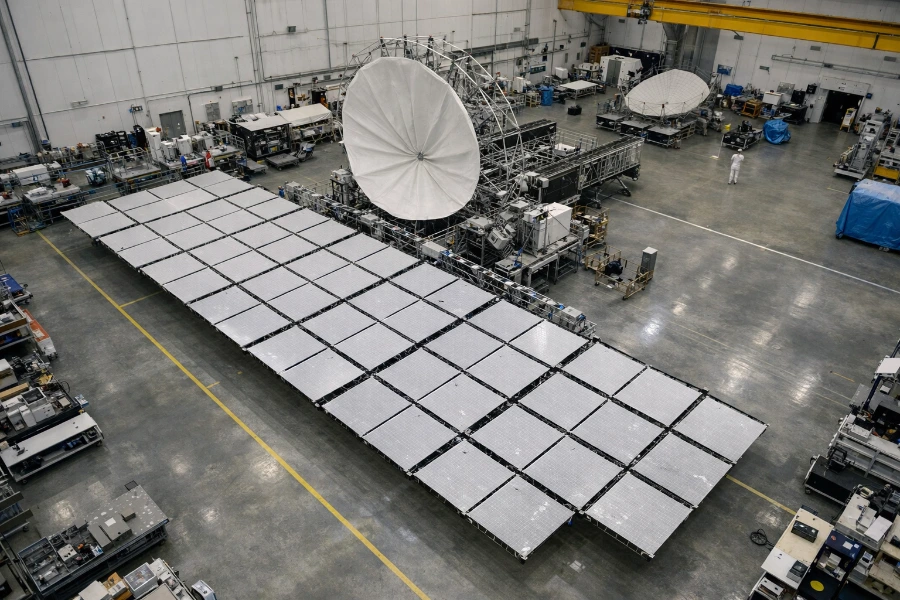
AST SpaceMobile (ASTS) rose 14% after forming Rakuten AST, a Japan direct-to-device satellite venture backed by about $1 billion in government funding.
- ASTS closed up 14.11% at $36.89 on Monday, Nov. 9, on volume of 27.4 million shares.
- Rakuten AST will receive up to 148 billion yen, about $1 billion, in Japanese government support.
- Rakuten holds 51% of the voting rights; an AST SpaceMobile subsidiary holds 49%.
Lead
AST SpaceMobile (NASDAQ: ASTS) shares gained 14.11% to $36.89 on Monday, Nov. 9, after the company and Rakuten Group (TYO: 4755) announced Rakuten AST, a joint venture to build a direct-to-device satellite network in Japan. The stock touched gains above 17% intraday. Volume reached 27.4 million shares, about double the 13.5 million daily average, lifting the company's market value to roughly $9.7 billion.What Is Rakuten AST?
Rakuten AST is a joint venture that will build and operate a low-earth-orbit satellite network connecting ordinary smartphones directly to space-based cell towers. Rakuten holds 51% of the voting rights and an AST subsidiary holds the remaining 49%.
The venture was selected by Japan's Ministry of Internal Affairs and Communications under its Japan Low Earth Orbit Satellite Communications project, known as J-LEO. The ministry is expected to provide up to 148 billion yen over three years. The award was made in June, and Monday's announcement formalized the corporate structure that will carry it out.
AST will supply satellites for the network. Rakuten Mobile brings Japan's spectrum, customer base and domestic operations. Domestic service is targeted to begin by the end of March 2029, with disaster and emergency communications as a core objective. Rakuten Mobile expects to start commercial testing of satellite-to-phone service by the end of 2026.
Why Did AST SpaceMobile Shares Jump?
Shares jumped because the venture converts a government award into a defined commercial structure with a major carrier partner. Public funding on this scale reduces the capital burden of building a regional constellation, and a 49% stake gives AST exposure to Japanese service revenue alongside satellite supply.
The move also followed a mixed third-quarter report. Revenue reached $42.3 million, nearly triple the prior-year figure but short of Wall Street expectations, and the company posted a loss of $0.44 per share. Management kept full-year revenue guidance at $150 million to $200 million. The Japan venture gave investors a concrete, funded growth channel after a quarter in which results lagged forecasts.
Strategic Context
Japan is a geography where satellite coverage has direct policy value. The archipelago is prone to earthquakes, typhoons and tsunamis that can disable terrestrial towers, and mountainous terrain leaves gaps in mobile coverage. A direct-to-device network works with unmodified handsets, which avoids the need for specialized satellite phones during emergencies.
For AST, the deal adds a government-backed market to its commercial roadmap. The company expects to have 45 BlueBird satellites in orbit by mid-2027 and anticipates intermittent coverage in the U.S. and other markets by the end of this year. The pace of launches remains the central variable for every regional rollout, including Japan.
What Comes Next for the Japan Network?
The next milestones are Rakuten Mobile's commercial testing, due by the end of 2026, and the build-out of the satellite fleet that will serve Japan ahead of the March 2029 service target. Government support is paid over three years, which ties funding to delivery of network milestones.
For AST, execution risk centers on manufacturing and launch cadence, while the financial picture still depends on turning revenue growth into narrower losses. Competing direct-to-cell efforts in other markets keep pressure on timelines.
Outlook
The Rakuten AST venture gives AST SpaceMobile a funded entry into Japan and a partner with an existing mobile subscriber base. Near-term attention turns to Rakuten Mobile's testing phase by year-end and to progress toward the 45-satellite target by mid-2027, which will determine how quickly the Japan network moves from approval to commercial service.
Mentioned tickers: ASTS, 4755