Pomegra
A reported $2.8 billion Nvidia and Tesla investment in Samsung Electro-Mechanics revived circular financing fears and hit AI stocks on Thursday, October 22.
- Nvidia and Tesla would fund 3.7 trillion won ($2.8B) of chip substrate capacity at Samsung Electro-Mechanics.
- Nvidia fell about 4.4%, AMD about 8% and Intel about 7% as the Philadelphia Semiconductor Index dropped roughly 7%.
- None of the three companies has confirmed the figures reported by Maeil Business Newspaper.
Lead
Nvidia (NVDA) and Tesla (TSLA) will invest a combined 3.7 trillion won, about $2.8 billion, in Samsung Electro-Mechanics (009150.KS) to build advanced chip substrate lines in South Korea, Maeil Business Newspaper reported on Thursday, October 22. The report landed in a market already unsettled over the returns on artificial intelligence spending. It pushed AI stocks sharply lower, with AMD (AMD) and Intel (INTC) among the hardest hit.What Did the Korean Report Say?
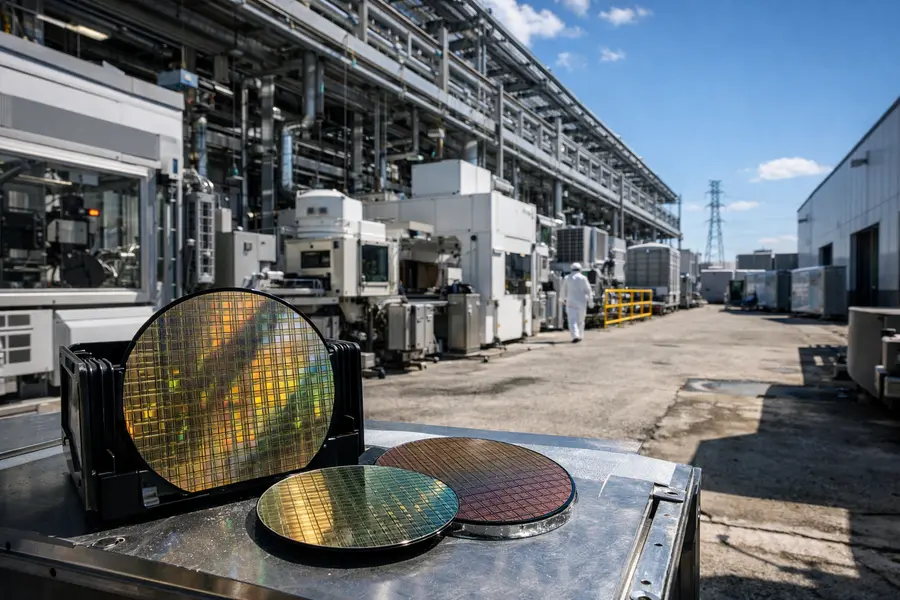
The report said Nvidia would contribute 2.6 trillion won and Tesla 1.1 trillion won toward production lines in Sejong, South Korea. The lines will make FC-BGA substrates, the high-density boards that connect advanced processors to the rest of a system. These components have become a bottleneck in global chip output because AI accelerators and autonomous driving chips need them in growing volumes.
The plant is under construction, with building completion targeted for the end of next year. Equipment installation and trial runs are scheduled for the first half of 2028, and mass production for the second half of 2028. Tesla would receive priority access under a five-year supply arrangement running from 2029 to 2033, with a dedicated line serving its autonomous vehicles and Optimus humanoid robot. Nvidia, Tesla and Samsung Electro-Mechanics have not confirmed the amounts.
Why Did the Report Hit AI Stocks?
The report hit AI stocks because it fed the view that AI demand is being financed by the companies that stand to benefit from it. Nvidia fell about 4.4% on the session. AMD dropped roughly 8%, and Intel shed about 7%. The Philadelphia Semiconductor Index fell close to 7%, its steepest decline in months, with every member lower. The Nasdaq Composite lost about 2.6% and the S&P 500 about 1.2%.
The report was not the only pressure. Lam Research flagged near-term supply chain constraints in its outlook after its earnings call on October 21, and chip equipment names sank. Higher oil prices and concern over rising AI spending commitments among large technology companies added to the selling. The Samsung report landed on top of that sentiment and gave it a specific target.
What Is Circular Financing and Why Does It Worry Investors?
Circular financing describes an arrangement in which a company funds a supplier or partner that then spends the money on the funder's products or services. Critics argue that such loops can inflate reported demand and hide how much of the AI build-out rests on outside customer spending. Here, Nvidia is a major buyer of advanced substrates and would also help pay for the capacity that produces them. That structure is a capacity guarantee, but some investors read it as a sign that supply for the sector's top customers needs subsidising.
The distinction matters for valuation. Nvidia's growth case relies on end-demand from cloud providers and enterprises. Any suggestion that the company must underwrite its own supply chain raises questions about margins and capital intensity, and about how far competitors without such balance sheets can keep pace.
Strategic Context
Substrate supply is a real constraint. Securing multi-year capacity gives Nvidia and Tesla insurance against shortages that could delay accelerator shipments and vehicle compute programmes. For Samsung Electro-Mechanics, the funding de-risks a large capital project in a segment where it competes with Japanese and Taiwanese producers.
Tesla's involvement also links the deal to its autonomy and robotics plans, which depend on custom silicon that needs the same packaging materials as data center processors. Because both buyers draw on the same constrained supply, an exclusive claim on output could squeeze rivals such as AMD and Intel. That competitive angle helps explain why those two shares fell more than Nvidia's.
What Comes Next for AI Chip Supply?
Substrate capacity will stay tight until the Sejong lines reach mass production in the second half of 2028, so near-term supply relief is limited. The next test is confirmation. If the companies verify the terms, investors will look for detail on whether the funding is equity, prepayment or a long-term purchase commitment, since each carries different accounting and risk implications.
Earnings from the remaining large chip and cloud companies will show whether AI spending plans hold. Lam Research's warning that bottlenecks may persist through 2027 suggests the constraint extends beyond substrates.
Outlook
The Samsung Electro-Mechanics report did not change AI demand, but it exposed how sensitive the sector is to any sign that spending is self-reinforcing. With the semiconductor index down about 7% in a single session, positioning depends on confirmation of the deal terms, supply-chain updates and the next round of AI spending disclosures.