Pomegra
Nasdaq Meta shares fell about 7% after Q3 revenue beat, as 2026 AI capex rose to $135-145B and free cash flow turned negative for the first time since 2012.
- Meta (META) stock fell about 7% on Oct. 22 to near $650 after a third-quarter revenue beat.
- Q3 free cash flow was negative $2.1B as $34.9B of capex outran $32.8B of operating cash flow.
- 2026 capex guidance moved to $135-145B, up from $130-145B, with Q4 revenue guided to $73-76B.
Lead
Meta Platforms (NASDAQ: META) shares fell about 7% on Thursday, Oct. 22, to roughly $650. The drop followed a third-quarter report that beat revenue forecasts but showed capital spending on artificial intelligence overtaking the cash the business generates. Revenue rose 26% to a record $64.6B, against a consensus of about $63.4B. The company raised the floor of its 2026 capital expenditure range to $135B-$145B and reported free cash flow of negative $2.1B, its first negative quarter since it listed in 2012.Why Did Meta Stock Fall Despite a Revenue Beat?
Meta stock fell because investors focused on spending and cash flow rather than the sales beat. Capital expenditures, including finance lease principal payments, reached $34.9B in the quarter, about 80% above the year-earlier level. Operating cash flow was $32.8B. In the same quarter a year ago, free cash flow was about $10.6B.
Reported earnings were also distorted by a $9.89B charge to resolve teen mental health litigation brought by state attorneys general. Diluted earnings per share were $3.83, or about $7.40 excluding the charge. Operating income was $13.0B, down 37% from a year earlier. Net income was $9.9B.
The advertising engine itself performed. Ad impressions rose 10% and the average price per ad rose 14%. Family daily active people reached 3.64B, up 3%. Meta said its AI investments are lifting engagement, recommendations and monetization. Headcount fell 15% to 66,775, which kept operating costs in check even as infrastructure spending climbed.
The Q4 revenue outlook of $73B-$76B sits close to the roughly $73.75B consensus, so the guidance gave the market little upside surprise to offset the spending.
How Large Is Meta's 2026 AI Capex Plan?
Meta now expects 2026 capital expenditures of $135B-$145B, narrowed from the prior $130B-$145B range. The midpoint is $140B. Total 2026 expenses are guided to $175B-$179B.
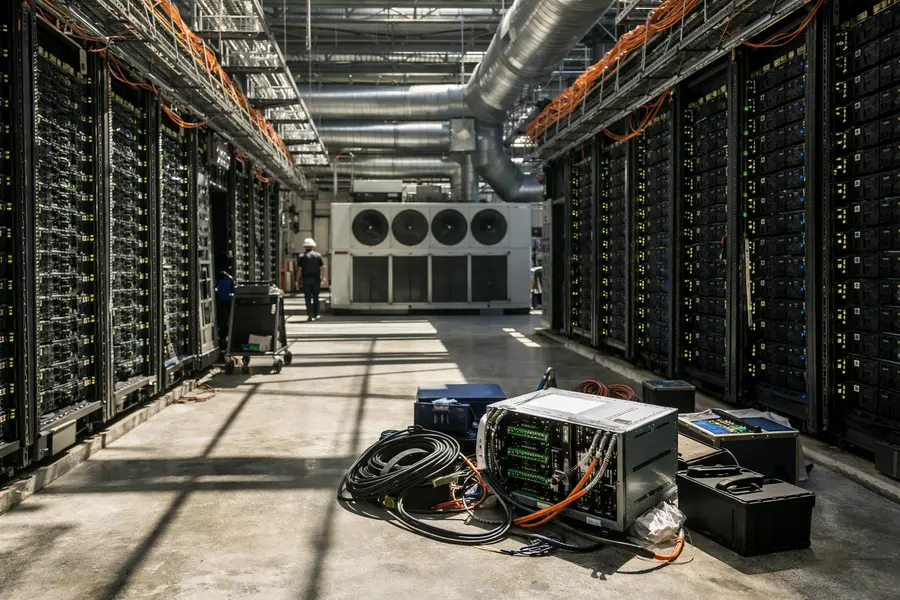
The spending funds data centers, servers and networking for AI training and inference, and for the company's consumer AI products. Muse, a personal AI agent launched in September, has become one of Meta's most used AI products since its debut. The company has not yet detailed how it will earn revenue from the product, and that gap sharpened the market's focus on the return on infrastructure spending.
What Does Negative Free Cash Flow Mean for Meta?
Negative free cash flow means Meta spent more on capital projects than its operations produced in the quarter. At $82.5B, the cash balance is large, and the quarter's shortfall is small at $2.1B. The change is in direction. Meta had funded heavy investment and large shareholder returns from internal cash for more than a decade.
The company paid $1.36B in dividends and made no share repurchases in Q3. The balance sheet gives it room to absorb the gap, but the 2026 capex range implies further pressure on free cash flow while spending stays above operating cash generation.
Strategic Context: The Class C Share Structure
Alongside the results, the board approved a new class of nonvoting Class C common stock, effective Jan. 19, 2027. Each Class A and Class B shareholder will receive one Class C share as a one-time dividend, which has the effect of a two-for-one stock split on the Class A share price.
The structure lets founder Mark Zuckerberg keep voting control while Meta gains flexibility to raise equity capital for AI investment. Its introduction alongside a higher spending range added to investor unease on the day. The broader market was lower, with the Nasdaq Composite down more than 1% as technology and chip stocks weakened.
What Comes Next for Meta After the Capex Reset?
The next test is the 2027 outlook. Management has pointed to continued infrastructure investment, and several brokerages that raised price targets after the report also flagged uncertainty over next year's spending. Shares are now about 15% below their September highs and roughly flat to slightly lower for the year, against a gain of about 12% for the S&P 500.
Three variables will shape sentiment into the Q4 report. The first is whether ad revenue growth, currently 26%, holds as the comparison base rises. The second is how quickly Muse and other AI products produce revenue. The third is whether cash flow recovers or the equity and debt markets become a larger source of funding.
Outlook
Meta delivered record revenue and strong advertising metrics in Q3, but a $34.9B quarterly capex bill and negative free cash flow shifted the focus to the cost of its AI buildout. The 2026 range of $135B-$145B, the Class C share structure and the open question of 2027 spending will define how the market prices the stock into year-end.
Mentioned tickers: META