Pomegra
Warp Sciences, led by ex-OpenAI exec Kevin Weil, raised $215M from Lightspeed at an $865M valuation to build an automated US chemistry lab for drug research.
Key Takeaways
- Warp Sciences emerged from stealth with $215M, led by Lightspeed, at a reported $865M post-money valuation.
- It is building a US chemistry contract research organization, a service pharma now often buys from China.
- The team is about 20 people and works with a small number of design partners. Its pricing and timeline are untested.
Lead
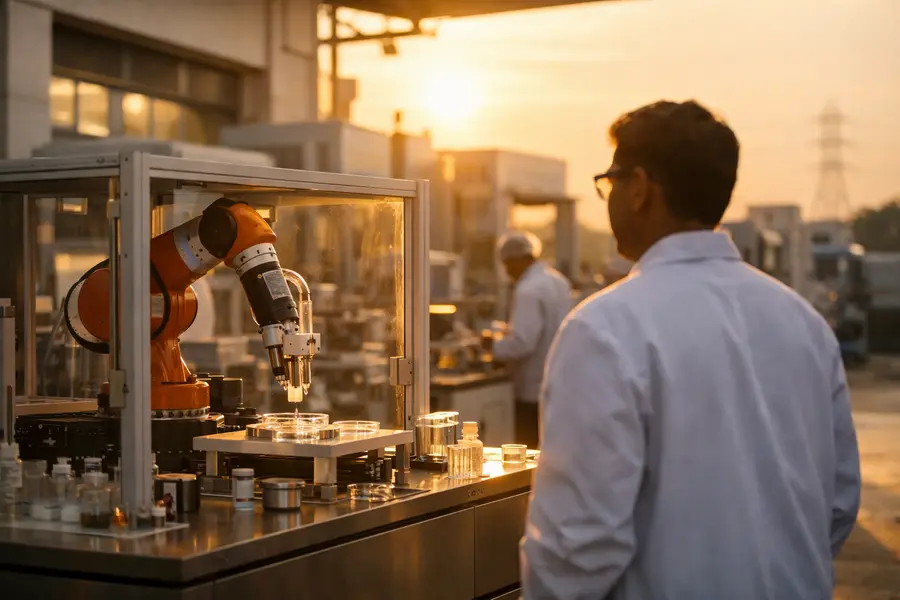
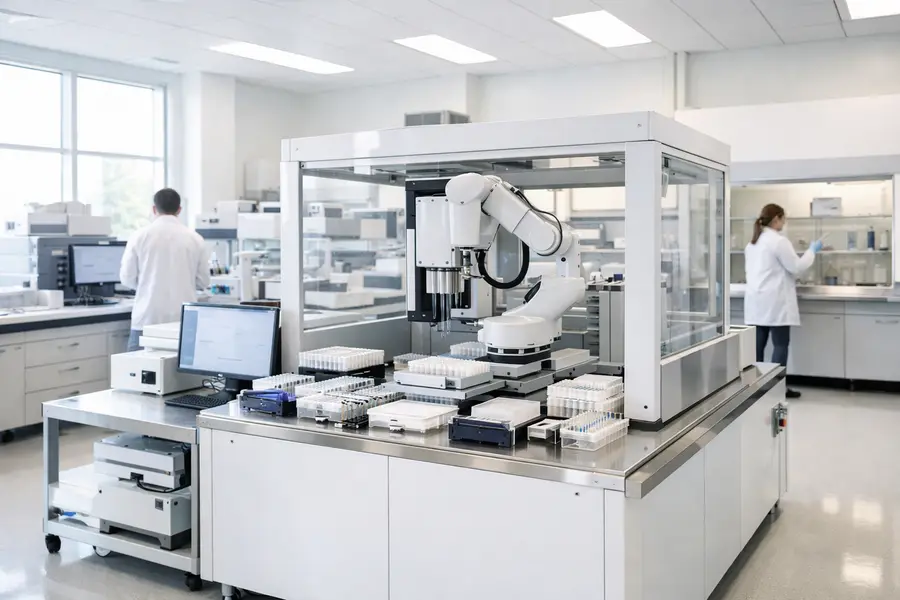
Warp Sciences, a startup founded by former OpenAI chief product officer Kevin Weil, came out of stealth on October 22, 2026 with $215 million in funding. Lightspeed Venture Partners led the round, which values the company at $865 million including the new money. Warp plans to run a US-based chemistry lab that combines experienced chemists, AI models and robotics. The lab will take on a stage of drug research that pharmaceutical and biotech companies have long outsourced to Chinese contractors.
What Does Warp Sciences Actually Do?
Warp operates as a chemistry contract research organization, or CRO, and it does not discover drugs. Once a customer has a promising molecule, the next step is lead optimization, in which chemists synthesize hundreds or thousands of close variants to improve efficacy and reduce side effects. Warp makes those compounds, from milligram to multi-gram quantities, on the customer's research agenda.
The company says it has no proprietary drug pipeline, so customers keep control of their programs. Its pricing model charges per compound delivered, and a customer pays nothing if Warp fails to produce one. That structure moves the risk of failed syntheses onto Warp, which is a confident choice for a company with roughly 20 employees.
Who Is Behind the Round?
Lightspeed led, with IVP, Premji Invest and Lux Capital participating. Other coverage also lists Mayfield and Menlo Ventures among the backers. Angel investors include OpenAI finance chief Sarah Friar, Coinbase chief executive Brian Armstrong and LinkedIn co-founder Reid Hoffman.
Outlets differ on how to label the round. Some call it a Series A and others a seed, and the company has not settled the question in public. Either label describes an unusually large first outside financing for a company with no disclosed revenue and a small group of design partners.
Weil is CEO. He led OpenAI for Science before leaving the company in April 2026. DJ Patil, the first US chief data scientist, is chief operating officer. Sol Reisberg, previously in medicinal chemistry leadership at Terremoto Biosciences, is chief scientific officer. Manohar Paluri, a former vice president at Meta Superintelligence Labs and a founding member of Meta's FAIR research group, is chief technology officer.
Why Is Drug Chemistry Moving Back to the US?
Pharma companies outsource this work to Chinese firms such as WuXi AppTec because those firms have been cheaper and faster than US alternatives. Rising US-China tensions and concerns over data sharing are now pushing some sponsors to look for onshore options.
The policy picture remains unsettled. The Pentagon listed WuXi AppTec as military-linked in June 2026, and a judge blocked that designation in August. A sponsor weighing a move away from China therefore has no settled rule to plan around. A US supplier that matches Chinese turnaround times would remove the question, but none has done so at scale.
How Will Robots Learn Chemistry?
Warp's human chemists wear cameras and pressure-sensing gloves while they work. The recordings train robots to carry out bench tasks, and the company hopes those robots can run around the clock. Warp has also hired people from Skild AI, 1X, Genentech and Lawrence Livermore National Laboratory, along with others.
The company describes a feedback loop in which physical experiments produce evidence, AI systems learn from it, and the models then guide the next round of experiments. Weil has said frontier AI models are not yet changing chemistry the way they are changing software engineering. Warp is betting that the missing ingredient is proprietary lab data, and that is the part of its case that has not yet been demonstrated.
What Are the Risks?
The central risk is economics. WuXi and its peers built their advantage on large pools of skilled, lower-cost chemists, and a robotic lab has to beat that cost base on price per compound or on speed. Warp has disclosed no throughput figures, no customer names and no unit costs.
Capital is not the constraint. At $215 million, the round funds facilities and equipment well beyond what a 20-person team needs today. The harder test is whether pharma buyers, who are cautious about switching suppliers mid-program, will move real lead-optimization work to a new entrant on the strength of design-partner results.
Outlook
Warp Sciences enters with $215 million, an $865 million valuation and a founding team spanning AI research, government data and medicinal chemistry. Its case rests on onshoring pressure and on automation that has not yet been shown at production scale. The first signals to watch are the names of paying customers, turnaround times against Chinese incumbents, and the location of the lab, which Warp has not disclosed. The outcome of the WuXi designation dispute will also shape how urgently US sponsors look for alternatives.