Pomegra
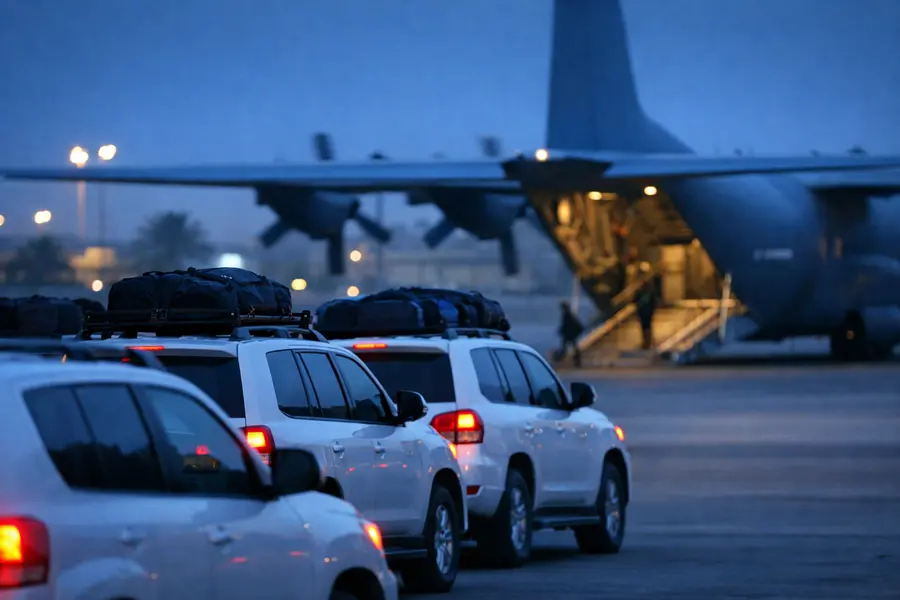
The US ordered non-essential embassy staff and families out of Saudi Arabia after deadly Houthi strikes, denying a wider Gulf evacuation as Brent neared $111.
- The State Department ordered non-emergency staff and family members to leave Saudi Arabia on October 21, 2026.
- Officials said the order covers only Saudi Arabia, rejecting reports of a Gulf-wide evacuation.
- Brent crude rose 1.7% to $110.63 a barrel on October 22 after a drone strike near Shaybah.
Lead
The United States ordered the departure of non-essential embassy personnel and their families from Saudi Arabia on October 21, 2026. The order cites a sharp rise in attacks by the Iran-backed Houthi movement on civilian airports and energy infrastructure. The State Department said the group has "increasingly engaged in hostilities against Saudi Arabia," with civilian casualties and severe travel disruption. The department also rejected reports that the measure would extend across the Gulf, calling those accounts inaccurate. Brent crude settled near its highest level in five months as the order was announced.
What Did the US Order, and Who Is Affected?
The State Department ordered non-emergency US government employees and their family members to leave Saudi Arabia. An ordered departure is a formal step below full embassy closure. Essential staff remain at post, and the mission in Riyadh continues to operate.
The directive follows near-daily Houthi attacks on the kingdom this month. The most severe struck King Khalid International Airport in Riyadh on October 10 and 11, killing 12 people in what was the deadliest attack on Saudi Arabia in more than a decade. Brent closed at $106.65 a barrel after those strikes.
Two further attacks came just before the order. A drone strike on King Fahd International Airport in Dammam killed one person and wounded eight. Another drone attack near Saudi Aramco's (2222.SR) Shaybah oil field killed two people when intercepted debris hit a contractor vehicle and started a fire.
Is the US Evacuating the Entire Gulf?
No. The State Department said the departure order applies only to Saudi Arabia, and its spokesman called the broader claim "inaccurate." Earlier reports had said family members at US missions in other Gulf states would also be told to leave.
The distinction matters for markets and for Gulf governments. A regionwide drawdown would signal that Washington sees the Houthi threat extending to the UAE, Qatar, Bahrain, Kuwait and Oman. A Saudi-only order frames the danger as specific to the kingdom, which sits within range of Houthi missiles and drones launched from Yemen. Diplomatic missions elsewhere in the Gulf remain at normal staffing for now.
Why Are Oil Prices Reacting?
Oil is rising because the attacks now reach the kingdom's export system, not just its cities. Brent gained 1.7%, or $1.81, to $110.63 a barrel on October 22, while West Texas Intermediate rose 1.4% to $98.52. The move extends a rally that took Brent to a five-month high on October 20.
Shaybah, in the Empty Quarter near the UAE border, produces about one million barrels of crude a day, and Aramco reported no operational disruption. The East-West pipeline is a greater concern. It can move about seven million barrels a day and serves as the main bypass around the Strait of Hormuz. An October 5 attack on the line halted crude flows. A tanker was also struck off Oman this month. Together these keep a security premium in prices, and Brent has held above $100.
Geopolitical Dimension
The escalation sits inside the wider confrontation between Iran and the US and its Gulf partners. The Houthis, aligned with Tehran, have widened their targeting from Red Sea shipping to Saudi civilian aviation and energy sites. That raises the cost of operating in the kingdom for airlines, insurers, contractors and diplomats.
Riyadh has spent several years diversifying its economy toward tourism, logistics and large-scale investment projects. These all depend on open airspace and foreign workforces. Repeated strikes on Riyadh and Dammam airports threaten that model more directly than attacks on remote oil facilities. The embassy drawdown is also a reputational signal. Corporate security teams and foreign governments commonly review their own staffing when Washington orders departures.
What Comes Next for Saudi Arabia and Oil Markets?
Over the next three to twelve months, three variables will drive outcomes: the frequency of strikes on Saudi infrastructure, the integrity of the East-West pipeline, and any move by other Gulf states to reduce diplomatic staffing.
If attacks continue at the current pace, expect further flight disruptions, higher war-risk insurance for tankers and a firmer floor under crude oil prices. If Saudi air defenses and diplomacy reduce the tempo, the premium built into Brent above $100 could narrow. A confirmed outage on the pipeline or at a major processing site would move prices faster than the strikes to date, because the pipeline is the kingdom's main alternative to Hormuz.
Washington's choice of an ordered departure, with no closure and no regional order, suggests it is hedging rather than predicting a broader collapse in Gulf security. Any widening of the order would be the clearest sign that assessment has changed.
Outlook
The US order removes non-essential diplomatic personnel from Saudi Arabia while leaving other Gulf missions unchanged. Brent at $110.63 reflects the risk to the kingdom's export routes. The next markers are further Houthi strikes on airports and energy sites, the status of the East-West pipeline, and whether Washington extends the departure order beyond Saudi Arabia.
Mentioned tickers: 2222.SR