Pomegra
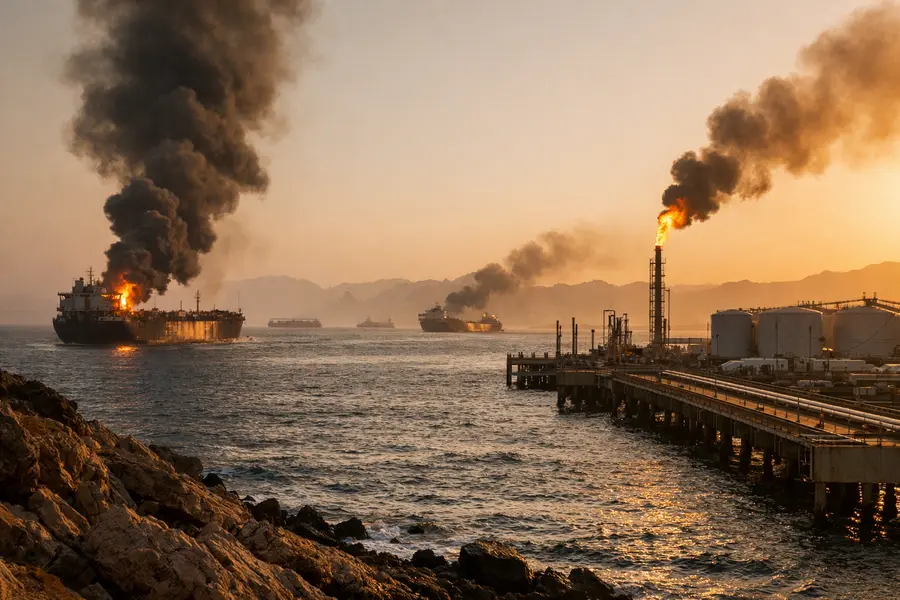
Iranian state TV says seven tankers were hit in the Strait of Hormuz overnight, the most in a day since the war began, as Brent crude rose to near $112 a barrel.
- Iranian state TV says seven tankers were hit overnight: four struck while transferring oil, three disabled by mines.
- The IRGC warned the conflict would extend to US bases if Washington keeps guiding commercial ships through the strait.
- Brent rose about 3% to near $112, its highest in five months. The US military rejects the mine claims.
Lead
Iranian state television reported on Thursday that seven oil tankers were struck by attacks or naval mines in the Strait of Hormuz overnight. If confirmed, that would be the largest number of vessels damaged in the waterway in a single day since the war began on Feb. 28. The Islamic Revolutionary Guard Corps (IRGC) navy also threatened US military bases in the region. Brent crude rose roughly 3% to about $112 a barrel, up from a Wednesday settlement near $109.
What Did the IRGC Say Happened in the Strait of Hormuz?
The IRGC navy said four tankers were set on fire while conducting ship-to-ship oil transfers in the northern Persian Gulf. Tehran describes such transfers as unauthorized. It said three more vessels were immobilized after hitting naval mines.
The statement named no vessels and gave no flag-state, operator or casualty details. The claims have not been independently verified.
Why Did the IRGC Threaten US Bases?
The IRGC tied the threat to US naval assistance for commercial traffic. "The US military must know that if this trend continues, the conflict will extend to its bases in the region," the navy said. The language points to US escort and guidance operations as the trigger for any wider response.
US Central Command said no US Navy warship was struck and that every attempted IRGC attack failed. It also rejected the mine claims, saying US forces have cleared the shipping lanes and that Iran is relying on missiles and drones. The command put successful vessel transits at 95% and described the attacks as a sign of Tehran's "desperation" under the US blockade.President Donald Trump accused Iran of "making up fake hits, mines, and everything else." He said more oil is moving through Hormuz than before the conflict and suggested the claims were meant to lift prices ahead of the US midterm elections.
How Did Oil Markets React?
Brent gained as much as 3.2% to $112.27 a barrel on Thursday, its highest level in five months. Crude had already hovered near $110 in recent sessions, as traders weighed when the war might ease enough for energy shipments to normalize.
The crude oil price reaction shows how little disruption the market is willing to dismiss. Roughly a fifth of global oil consumption normally passes through the strait. Even contested reports of damage raise war-risk insurance costs, tighten tanker availability and push up freight rates. Those costs reach refined products and consumer prices, which keeps energy at the center of the inflation debate for central banks.
Geopolitical Dimension
The dispute turns on two competing accounts of control over the waterway. Washington says it has restored safe passage and that traffic is close to pre-war levels. Tehran says it can still impose costs on shipping and, by extension, on the global economy. Neither account can be settled from outside the strait without shipping-registry data, insurer notices or maritime security advisories naming the vessels involved.
The threat against US bases widens the potential target set beyond merchant shipping. Several US installations in the Gulf sit within range of Iranian missiles and drones. An attack on one would shift the conflict from a contest over shipping lanes to direct confrontation with US forces.
What Comes Next for Oil Prices and Shipping?
Oil prices will likely track independent confirmation of the damage. If vessel names and locations are verified, the tanker toll would be the largest of the war and would probably keep Brent above $110. If the claims prove overstated, the premium could fade, as it has after earlier spikes.
In the next three to twelve months, the main variables are the durability of US escorts, the pace of any ceasefire diplomacy, and whether the IRGC follows its warning with action against bases. Each carries direct consequences for tanker insurance, Gulf export volumes and fuel costs in import-dependent economies.
Outlook
Seven tankers reported hit, a five-month high in Brent and an explicit threat to US bases make Thursday one of the most escalatory days of the war. The facts remain disputed, with Tehran claiming broad disruption and Washington claiming near-normal traffic. Markets are pricing the risk that Hormuz stays contested, and the next confirmed incident or US response will set the direction.