Pomegra
The Nasdaq is on track for its worst week since late June, down about 4.5%, as AI financing worries and Brent crude near $110 pressured tech and chip stocks.
- Nasdaq Composite fell about 2.1% Friday to near 26,140, leaving it down roughly 4.5% on the week.
- CoreWeave (CRWV) lost 25% on the week as AI debt fears spread to chipmakers and cloud providers.
- Brent touched $110 a barrel for the first time since May, adding inflation pressure ahead of the Fed's Oct. 27-28 meeting.
Lead
The Nasdaq Composite fell about 2.1% on Friday to close near 26,140, putting the index on course for a weekly decline of roughly 4.5%, its steepest since late June. The Nasdaq QQQ exchange-traded fund, which tracks the Nasdaq-100, was caught in the same slide as investors questioned how heavily indebted AI infrastructure companies will fund their buildouts while oil prices climb. The S&P 500 slipped about 1.1% to near 7,659 and is down about 2% on the week. The Dow Jones Industrial Average fell about 0.3% to near 52,000 but is still up 0.7% on the week, helped by energy and industrial shares.
What Happened to the Nasdaq This Week?
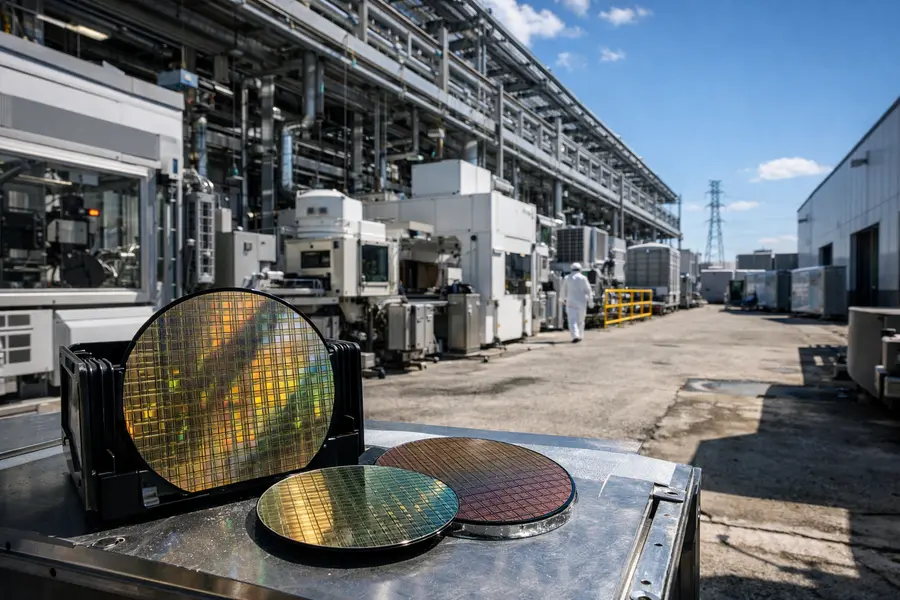
The Nasdaq lost ground on most sessions this week, and Friday's drop of more than 2% accelerated the decline. The Philadelphia Semiconductor Index fell about 11% on the week, its worst since April 2025, and the VanEck Semiconductor ETF (SMH) lost roughly 10%. The Cboe Volatility Index rose above 22 for the first time in four months.
Memory chip stocks led the losses. Micron Technology (MU) fell about 14.6% on the week. South Korea's SK Hynix dropped about 24% and Samsung Electronics about 18%, and the Kospi benchmark fell roughly 14.5%, its worst week since October 2008. Broadcom (AVGO) and Tesla (TSLA), which slipped 2.1% Friday, also traded lower.
Why Are AI Financing Worries Hitting Tech?
AI financing worries are hitting tech because investors doubt that debt-laden AI infrastructure firms can earn enough to repay their borrowing as costs rise. The concern centers on "neoclouds," companies that rent computing power to AI developers and have funded rapid expansion with debt.
CoreWeave (CRWV), the Nvidia-backed (NVDA) cloud provider, fell about 12% Friday and 25% on the week. Its total debt has risen above $51 billion. Yields on its 2031 bonds have topped 16%, and credit default swaps, which are insurance contracts against default, imply a 63% chance of default within five years. The shares are down more than 65% from their post-IPO peak in March 2025. Oracle (ORCL), which has also borrowed heavily to build data centers, closed 8.8% lower on Wednesday. Reports that investors in AI developer Anthropic have trimmed their valuation expectations ahead of a planned IPO, from about $2 trillion to roughly $1.5 trillion, added to doubts over how much capital the sector can raise.Chipmakers also faced pressure from renewed competition concerns tied to China, which compounded the financing worries.
How Do Higher Oil Prices Add Pressure?
Higher oil prices add pressure by raising inflation and the odds that borrowing costs stay high, which is the main risk for debt-funded AI projects. Brent crude touched $110 a barrel Friday for the first time since May, and West Texas Intermediate settled at $101.41, up 3.5% on the day. For the week, Brent rose 4.7% and WTI 10.7%.
Prices responded to heightened friction between the United States and Iran and between Russia and Ukraine. Inflation data had already come in hotter than forecast. Consumer prices rose 3.7% against an expected 3.6%, and producer prices rose 6.3% against an expected 5.5%.
The 10-year Treasury yield stood near 4.96% and the 2-year near 4.67%. Higher yields reduce the present value of long-dated tech earnings and raise refinancing costs for leveraged AI builders.
What Comes Next for the Fed and Tech?
The next test is the federal reserve's policy meeting on Oct. 27-28. Fed Chair Kevin Warsh told an IMF gathering this week that he does not "prejudge meetings," declining to signal the path of rates despite elevated inflation. Markets have priced in the risk that oil-driven inflation keeps the central bank from easing and could push it to raise rates further.
The oil backdrop could also shift quickly. A resolution of the Iran or Ukraine tensions would likely ease energy prices, while further escalation would extend the pressure on both inflation and growth stocks.
Market Context
Defensive and value-oriented parts of the market held up better than technology this week. The Dow's weekly gain against the Nasdaq's decline of about 4.5% shows how concentrated the selling was in AI-linked names. The stock market today reflects a rotation driven by funding costs more than by weak demand for AI services, which remain a central driver of corporate capital spending.
Outlook
The Nasdaq's worst week since late June reflects two overlapping pressures: doubts over how AI infrastructure is financed and an oil-driven rise in inflation and yields. Credit conditions at CoreWeave and Oracle, the path of Brent crude and the Fed's Oct. 27-28 decision are the near-term markers for whether the tech selloff deepens or stabilizes.
Mentioned tickers: QQQ, SMH, CRWV, NVDA, ORCL, MU, AVGO, TSLA