Pomegra
Morgan Stanley's July 2026 report signals a rotation in AI investment strategy, with hyperscalers like Microsoft, Amazon, and Meta poised to capture attention as chipmakers lose momentum.
- Morgan Stanley identifies recent semiconductor weakness as a sign of broadening market gains, favoring hyperscalers over chipmakers.
- Microsoft, Amazon, and Meta collectively plan ~$525 billion in AI-related capital expenditure in 2026.
- The five largest hyperscalers are on pace to spend $700–$900 billion on capex in 2026, a 36% increase over 2025.
Lead
Morgan Stanley issued a note dated July 6, 2026, arguing that the recent softness in U.S. semiconductor equities marks not the end of the AI investment cycle but a shift in its center of gravity — away from chipmakers and toward the large cloud and platform operators that consume those chips at scale. The bank named Microsoft (MSFT), Amazon (AMZN), and Meta Platforms (META) as its preferred hyperscalers, citing their combined $525 billion in planned 2026 capital expenditure as evidence that infrastructure spending remains firmly intact even as the equities commanding that spending rotate.What Happened
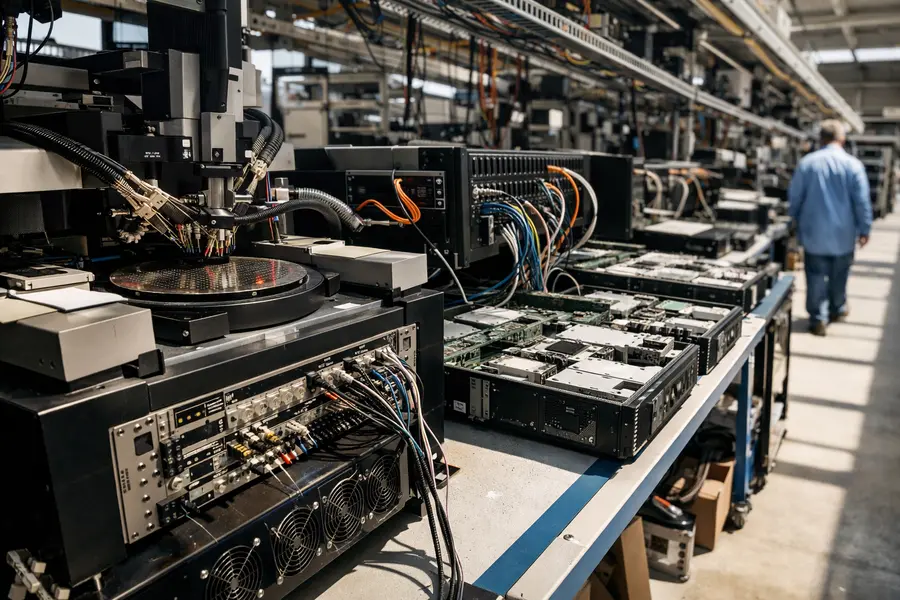
The Morgan Stanley AI report lands as semiconductor valuations come under pressure after a multi-year run that made the sector the default proxy for AI optimism. Shares of Nvidia (NVDA) and Advanced Micro Devices (AMD) have repriced from elevated levels — AMD trading around 83 times forward earnings and Nvidia at roughly 43 times — after investors began questioning whether AI-product revenues would grow fast enough to justify the infrastructure outlays driving chip demand.
Morgan Stanley's note characterizes this repricing as healthy broadening rather than a breakdown. The bank argues hyperscaler stocks have already absorbed their own underperformance phase and are now positioned to re-rate as AI monetization evidence accumulates. The investment thesis is simple: the companies spending hundreds of billions on AI infrastructure own the layer where revenue will be recognized.
The Scale of Hyperscaler Commitments
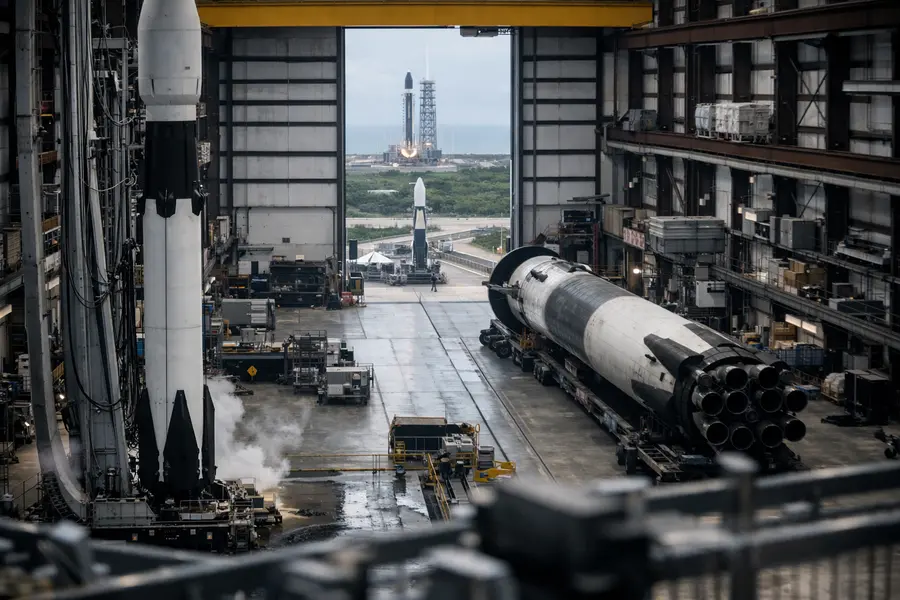
The numbers underscoring the tech investment strategy are striking in their scope. Amazon has guided to $200 billion in capital expenditure for full-year 2026. Meta Platforms raised its capex guidance to as much as $145 billion. Alphabet (GOOGL) doubled its guidance to a range of $175–$185 billion. Taken together, the five largest hyperscalers — Amazon, Microsoft, Alphabet, Meta, and Oracle — are on course to deploy between $700 billion and $900 billion in capital investment in 2026, a 36% increase versus 2025, according to CreditSights estimates.
Morgan Stanley Research projects nearly $3 trillion in AI-related infrastructure investment will flow through the global economy by 2028, with more than 80% of that total still ahead. That forward-spending runway is central to the bank's case that investor focus should shift to the entities translating capex commitments into deployed compute capacity and, ultimately, AI-enabled revenue.
The Chipmakers vs Hyperscalers Debate
The chipmakers vs hyperscalers framing is not simply about which stocks outperform in the near term. It reflects a structural question about where value accrues across the AI stack as the cycle matures.
During the infrastructure buildout phase — roughly 2023 through mid-2025 — semiconductor companies captured disproportionate investor attention because chip supply constraints made them the binding constraint on AI expansion. Nvidia's data center segment drove the narrative, with AMD's data center revenue reaching $5.8 billion in the first quarter of 2026 alone, a 57% year-over-year gain that illustrated broad silicon demand.
Morgan Stanley's current posture suggests the market is beginning to price a transition: from a phase defined by building infrastructure to one defined by operating it at scale and generating returns. In that environment, the hyperscalers — which control the software stacks, customer relationships, and monetization surfaces layered atop the hardware — absorb the computing spend and convert it into cloud and AI service revenue. The bank noted there could be "more capex discipline in the near-term," implying that the unbounded demand assumptions embedded in elevated chip multiples deserve scrutiny.
Market Reaction and Valuation Context
Semiconductor equities registered mixed reactions on July 6. Micron (MU) and AMD moved higher on the session as broader risk appetite supported the group, even as Morgan Stanley's note circulated. The divergence illustrates the complexity of the AI investment pivot thesis: near-term chip demand remains robust — the hyperscalers' own capex commitments guarantee that — but the valuation premium the sector commands as a pure-play AI vehicle may compress as the investment universe widens.
Morgan Stanley flagged that the rotation extends beyond just hyperscalers. The bank also expects market gains to broaden toward consumer discretionary, transport, and biotechnology as the AI cycle evolves, reinforcing the view that the initial narrow concentration of AI returns is giving way to a more distributed market dynamic.
Strategic Context
The Morgan Stanley AI report arrives at a moment when the central tension in technology markets is the gap between AI capital spending and AI-product revenue. The five largest hyperscalers have now committed to aggregate capex that exceeds the GDP of many mid-sized economies, yet enterprise AI adoption is still in early innings and consumer AI monetization models remain unproven at scale.
Morgan Stanley's framework — owning hyperscalers with the capacity to enforce pricing power on AI services, and positioning for AI-driven disruptions in adjacent sectors — implies that the next phase of the trade is less about who builds the hardware and more about who operates the services that hardware enables. That framing favors companies with massive installed customer bases, proprietary data assets, and distribution networks capable of converting AI capabilities into recurring enterprise and consumer revenue.
Outlook
The AI investment pivot Morgan Stanley describes is not a retreat from artificial intelligence as an investment theme — it is a maturation of where within that theme capital should concentrate. As chipmaker valuations reflect the infrastructure buildout at full stride, the bank's analysis points to hyperscalers as the next leg of the cycle: companies that have absorbed an underperformance phase, are committing unprecedented capital to AI infrastructure, and sit directly in the path of the monetization wave Morgan Stanley expects to define the 2026–2028 period. With $3 trillion in projected AI infrastructure investment still mostly ahead, the rotation thesis carries a structural rather than tactical rationale.
Mentioned tickers: MSFT, AMZN, META, GOOGL, NVDA, AMD, MU, ORCL