Pomegra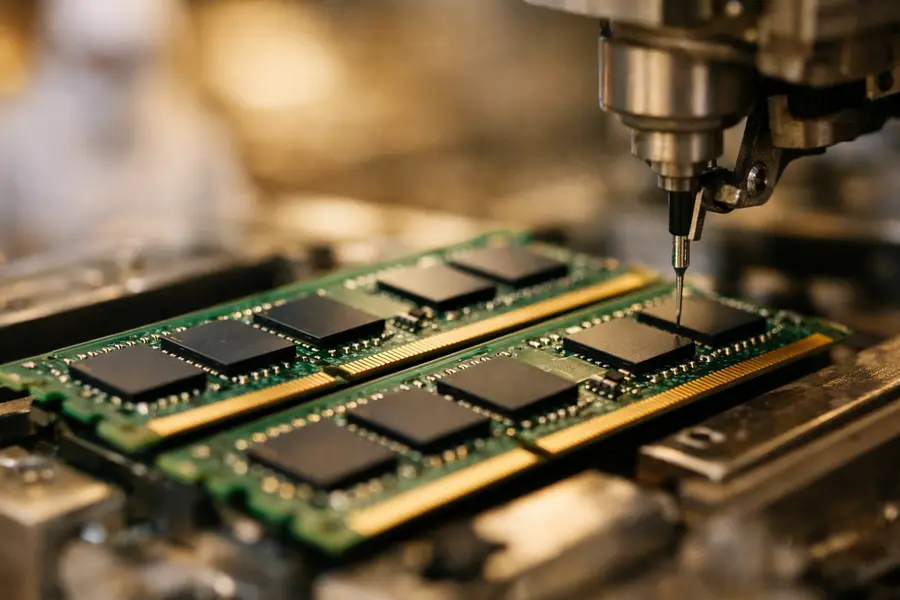
Micron Technology (MU) tops Wall Street watchlists ahead of September 30 Q4 earnings as analysts project a 992% EPS surge driven by the AI memory supercycle and record high-bandwidth memory demand.
- Analysts project a 992% year-over-year EPS increase for Micron's fiscal Q4 2026, the sharpest gain among large-cap semiconductor names this earnings cycle.
- Options markets are pricing a 7-11% post-earnings price swing in MU, reflecting elevated uncertainty around AI-driven demand guidance.
- Revenue guidance for fiscal Q1 2027 is expected near $10 billion, signaling continued momentum in high-bandwidth memory and NAND pricing.
Lead
Micron Technology (MU) stands as the most closely watched name on Wall Street heading into September 30, 2026, with the memory chip giant set to report fiscal fourth-quarter results after the closing bell. Consensus estimates call for earnings per share rising approximately 992% year-over-year - the steepest gain among large-cap semiconductor names this cycle - as surging demand for high-bandwidth memory in artificial intelligence infrastructure lifts the company's profitability to record levels. Shares have attracted the highest options volume in the semiconductor sector this week, with traders positioning for what analysts broadly describe as a pivotal inflection point in the AI memory supercycle.What Is Driving Micron's 992% EPS Jump?
The answer is high-bandwidth memory (HBM), the specialized chip architecture that underpins every major AI accelerator currently deployed at scale. Demand for HBM has expanded sharply as hyperscalers and cloud providers scale AI training clusters, with Micron competing directly against Samsung and SK Hynix for premium-tier contract pricing. HBM carries significantly higher average selling prices than standard DRAM, compressing the unit-volume requirements needed to generate outsized earnings leverage. The 992% year-over-year EPS projection also reflects a distorted base: the comparable period saw severe oversupply conditions weighing on DRAM and NAND pricing across the industry, amplifying the apparent magnitude of the current recovery.
Why Is Implied Volatility Pricing a 7-11% Swing?
Options markets are assigning implied volatility consistent with a post-earnings move of 7-11% in either direction for micron technology stock - a range that reflects both the scale of projected earnings growth and genuine uncertainty about the forward guidance. Revenue guidance for fiscal first quarter 2027 is the central variable under scrutiny. A consensus target near $10 billion in forward guidance would mark a continuation of the cycle's upward trajectory; a shortfall, or a cautious tone on HBM pricing dynamics, could trigger a sharp correction from current levels. Conversely, guidance above $10 billion - or commentary indicating incremental HBM market share gains against SK Hynix - would likely validate the elevated multiple MU carries into the print.
The AI Memory Supercycle: Structural or Cyclical?
The defining debate entering the September 30 report centers on whether current demand represents a durable structural shift tied to AI infrastructure build-out or an inventory restocking cycle approaching its peak. Capital expenditure commitments from major cloud operators remain at multi-year highs, and the transition to more advanced AI model architectures continues to demand progressively larger memory footprints per accelerator chip. NAND pricing has also recovered from prior cycle lows, adding a secondary tailwind to gross margin. Micron's commentary on customer inventory levels and order visibility into calendar 2027 will be closely parsed for signals on how much runway the current pricing environment retains.
Semiconductor Sector Implications
The Micron earnings print carries direct implications for the broader semiconductor complex. Leveraged products including the SOXL Direxion Daily Semiconductor Bull 3X Shares ETF and the SMH VanEck Semiconductor ETF reprice in real time alongside any significant MU move. NVDA, whose AI GPU revenue depends on closely matched HBM supply, faces secondary sentiment risk depending on Micron's demand commentary. Marvell Technology (MRVL), a competing custom silicon provider serving similar hyperscaler customers, enters the week with its own valuation linked to AI infrastructure spending confidence. A Micron beat reinforces the case that AI capex remains on an upward trajectory; a miss reopens sector-wide valuation questions.
Outlook
Micron enters its September 30 report at the center of the AI infrastructure trade, with the magnitude of its projected EPS recovery and the precision of its forward guidance carrying consequences well beyond a single company. A print confirming $10 billion or more in fiscal Q1 2027 guidance, alongside sustained HBM pricing discipline, reinforces the thesis that the AI memory supercycle retains momentum into 2027. A miss on either front would test whether the sector's elevated valuations can absorb disappointment at this stage of the cycle - and whether the 992% EPS recovery narrative holds as the bar for future quarters rises sharply.
Mentioned tickers: MU, SOXL, SMH, NVDA, MRVL